


Arthur’s Hill and Fenham are neighbouring areas of west Newcastle upon Tyne with different historical identities, architectural character and patterns of development. Arthur’s Hill grew strongly as a Victorian residential district, while Fenham retained large estates, military land and institutional sites for longer.
- How did Arthur’s Hill and Fenham develop within Newcastle?
- When were Arthur’s Hill’s main houses and streets built?
- What was Fenham like before its residential expansion?
- Why is Fenham Barracks important to the history of Newcastle?
- How does Fenham Hall explain Fenham’s changing social history?
- How do Arthur’s Hill and Fenham compare architecturally?
- Which area has the stronger connection with Newcastle’s industrial expansion?
- What historic features can still be seen in Arthur’s Hill today?
- What historic features can still be seen in Fenham today?
- Which Newcastle area is better for history enthusiasts?
- Which area provides the clearest example of Victorian Newcastle?
- Which area offers the wider historical story?
- What does the comparison reveal about Newcastle’s urban history?
- Is Arthur’s Hill or Fenham better for a historical visit?
- Why do Arthur’s Hill and Fenham remain historically important today?
Both areas sit within the historic west side of Newcastle. Their present streets reflect the expansion of the city during the 19th and 20th centuries. Their differences are particularly useful for understanding how Newcastle changed from a compact historic town into a large industrial city.
For history enthusiasts, cultural visitors and educators, the comparison also provides a clear study of urbanisation. Arthur’s Hill demonstrates the expansion of terraced housing and commercial streets. Fenham demonstrates the transition from estates and open land to barracks, schools, colleges and residential neighbourhoods.
Newcastle City Council describes the wider city as a place shaped by Roman settlement, medieval development and rapid industrial growth. The city’s population increased from about 28,000 in 1820 to 215,000 in 1900, creating sustained pressure for new housing and infrastructure beyond the historic core.
How did Arthur’s Hill and Fenham develop within Newcastle?
Arthur’s Hill developed primarily as a 19th-century residential district, while Fenham evolved from estates and open land into a mixed area containing military, educational, institutional and residential sites. Their contrasting origins explain much of their present architectural character.
Arthur’s Hill occupies elevated ground north of Westgate Road. The Newcastle Historic Environment Record identifies the area as being in the Wingrove area, north of Westgate Road, south of Studley Terrace and east of Newcastle General Hospital. It overlooks central Newcastle from a hillside position.
Fenham occupies a broader landscape to the west and north-west of the older city. Its historical development involved estates such as Fenham Hall, military land associated with Fenham Barracks and later residential expansion.
The distinction is important. Arthur’s Hill represents a relatively concentrated urban expansion associated with the demand for houses close to employment. Fenham contains evidence of several different land uses that developed over a longer period.
The wider Newcastle context explains both patterns. During the 19th century, Newcastle became one of Britain’s major industrial cities. Coal, engineering, manufacturing, railways and port activity increased employment and encouraged population growth. The city subsequently expanded beyond its medieval boundaries into surrounding districts.
The west side became particularly important because industrial employment in districts such as Elswick generated demand for housing. The Fenham and Spital Tongues heritage assessment records the development of residential districts for workers, managers and owners as industrialisation transformed the area.
This expansion produced a layered landscape. Earlier estates and open spaces remained beside newer streets, factories, schools, military buildings and public facilities.
When were Arthur’s Hill’s main houses and streets built?
Arthur’s Hill’s surviving terraced housing was largely established during the 19th century, following Isaac Cookson’s 1826 estate development. By the 1890 Ordnance Survey map, most of the characteristic terraced streets that define the area today were already established.
Isaac Cookson, an industrialist associated with Newcastle, developed an estate opposite Westgate Hill Cemetery in 1826. The estate was named after his first son, Arthur. The earliest streets were named after his other sons, including John, Edward and William.
Those earliest streets have since disappeared and were replaced by blocks of flats. The later Victorian terraces survived in much greater numbers.
The second edition Ordnance Survey map of 1890 provides an important historical reference point. It records the established residential streets that form much of Arthur’s Hill’s recognisable historic townscape.
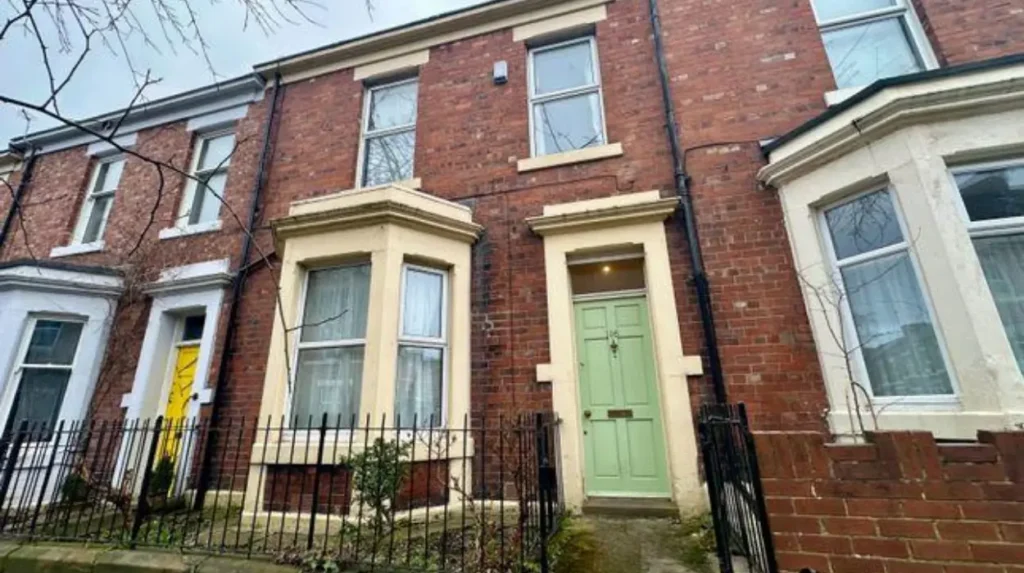
The houses generally follow a practical Tyneside urban form. Many are two-storey brick terraces with attic accommodation, dormer windows, slate roofs and brick chimneys. Sandstone details provide additional architectural definition.
Different streets display different designs because construction was undertaken by separate builders. This produced variations in façades rather than one uniform architectural scheme. Gainsborough Grove and Brighton Grove, for example, contain terraces with bay windows. Other buildings feature decorative sandstone lintels and distinctive entrances.
Studley House is another notable surviving feature. The building has a prominent corner turret and contributes to the architectural variety of the district.
Stanhope Street developed a different role. It became the principal commercial street, containing shops and restaurants within a predominantly residential neighbourhood. Historic shopfront insertions demonstrate how Victorian houses were adapted to changing commercial needs.
Arthur’s Hill therefore offers a particularly clear physical record of Victorian Newcastle. Its streets show how builders converted agricultural or semi-rural land into dense residential accommodation as Newcastle’s population expanded.
What was Fenham like before its residential expansion?
Fenham was historically more open and estate-based than Arthur’s Hill, with farms, common land and large residences including Fenham Hall. Industrialisation gradually transformed this landscape through housing, military development, schools, public facilities and other urban uses.
The Fenham and Spital Tongues heritage assessment records a landscape that contained estates, farms, common land and areas used for mining, farming and grazing. Fenham Hall was one of the major historic residences within this landscape.
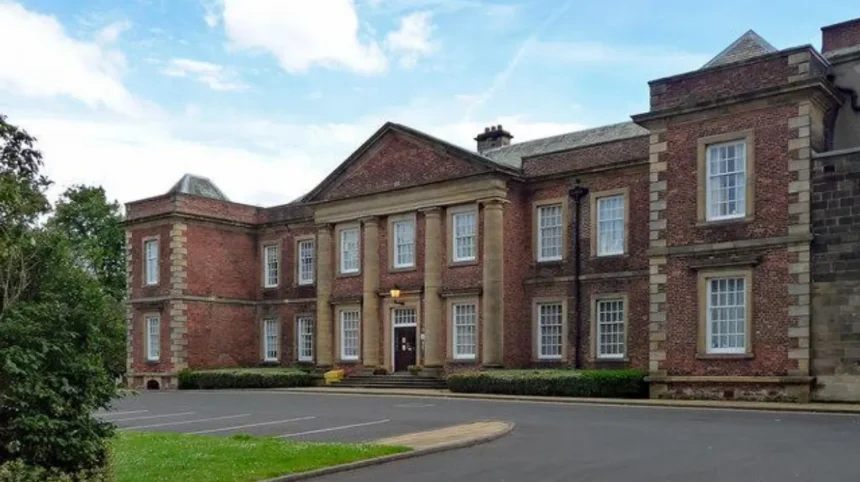
Fenham Hall provides the strongest architectural evidence of the area’s earlier elite landscape. Historic England dates the main house to 1748 and attributes it to D. Garrett. The building was commissioned for John Ord, who served as Mayor of Newcastle. Later additions altered the building during the 19th century.
The house was constructed in sandstone and brick, with an extensive architectural composition including a formal garden front, wings and later additions. Its scale contrasts strongly with the compact Victorian terraces of Arthur’s Hill.
Fenham Hall also demonstrates the changing social role of historic estates. In 1905, the Society of the Sacred Heart purchased the property and established a convent school and teacher training college. The complex subsequently incorporated educational buildings and accommodation.
Fenham therefore moved from an estate landscape to an institutional landscape before becoming part of the modern urban neighbourhood.
Other historic land uses also shaped the area. Nuns Moor and Hunter’s Moor were associated with mining, farming and grazing before parts of the landscape became recreational spaces. Nuns Moor also hosted race meetings from the 18th century until 1881.
This history gives Fenham a broader chronological range than its modern residential appearance suggests.
Why is Fenham Barracks important to the history of Newcastle?
Fenham Barracks is important because it represents Newcastle’s military response to political unrest after the French Revolution and remains a substantial surviving example of early 19th-century military architecture. Construction began in 1804 and the barracks opened in 1806.
Fenham Barracks began as Newcastle Barracks. The War Office acquired an 11-acre site from Newcastle Corporation in 1804. The development reflected concerns among local coal owners, landowners and businessmen about revolutionary unrest following the French Revolution.
Newcastle Lord Mayor James Rudmann had raised concerns about potential unrest with the government. The resulting agreement established a military presence on land associated with the Town Moor.
The original barracks were designed by James Johnson and John Saunders, architects working for the Barrack Department of the War Office. Construction was completed in April 1806. The reported cost was £40,000.
The original accommodation provided space for 271 men and 294 horses, or an alternative arrangement for 601 men and 292 horses. The scale reflects the military importance assigned to the installation.
James Wyatt, Surveyor General to the Ordnance Board, designed the officers’ mess. Historic England describes the building as a late Georgian structure constructed in 1804–06. It is now used as student accommodation.
The barracks expanded during the 19th century. Army reforms in the 1870s resulted in additional buildings, including a hospital, guardhouse, reading room, married quarters, magazine and mess facilities. Several original barrack blocks were demolished in 1938, but important historic structures survive.
Fenham Barracks is therefore more than a military site. It records the relationship between national political concerns, local government, military organisation and Newcastle’s physical growth.
Several structures received listed status. The former officers’ mess, former sergeants’ mess and guardhouses are recognised for their architectural and historic interest. Historic England records the former officers’ mess as Grade II listed and notes its later conversion to student accommodation.
The survival of these buildings makes Fenham particularly valuable for architectural study.
How does Fenham Hall explain Fenham’s changing social history?
Fenham Hall demonstrates the transformation of Fenham from an estate landscape into an educational and residential district. Built in 1748, the Georgian house later became a convent school and teacher training college before parts of the complex became university accommodation.
Fenham Hall was built for John Ord, a Newcastle mayor, in 1748. Historic England attributes the original design to D. Garrett and records a carved south tympanum by James Guthrie. The house subsequently received 19th-century additions.
The architecture reflects the status of the original estate. Its formal elevations, sandstone construction and large-scale composition contrast with the smaller brick terraces associated with Victorian working and middle-class housing.
The building’s transformation after 1905 illustrates another phase in Newcastle’s history. The Society of the Sacred Heart purchased Fenham Hall and created a school and teacher training college known as St Mary’s.
The complex included a convent, chapel, schools and higher education facilities. Historic England records that the University of Newcastle also used the site for student accommodation. The teacher training college closed in 1984, after which the complex continued as university accommodation.
This sequence demonstrates how historic buildings acquired new functions rather than simply disappearing as urban development advanced.
The educational history also gives Fenham importance for researchers studying the development of women’s education and teacher training. The Sacred Heart complex was not simply a private residence. It became an institutional centre that connected the district with wider developments in education.
Historic photographs preserved by Historic England document the campus during the 20th century. They show how new accommodation and educational buildings were added around the historic hall. Some later accommodation blocks were eventually demolished, demonstrating that historic landscapes themselves change over time.
For heritage visitors, Fenham Hall and its associated buildings provide evidence of several different periods within one site: Georgian domestic architecture, Victorian alteration, early 20th-century religious education and later university use.
How do Arthur’s Hill and Fenham compare architecturally?
Arthur’s Hill is defined mainly by Victorian terraced housing, while Fenham contains a more varied architectural inheritance including Georgian Fenham Hall, early 19th-century military buildings, institutional structures and later residential development.
Arthur’s Hill has a strong residential architectural identity. Its terraces use brick, slate, sandstone and repeated house plans. Yet the streets are not identical because different builders introduced individual designs. Bay windows, dormers, porches, sandstone lintels and corner features create local variation.
The architecture reflects the economic requirements of a rapidly growing industrial city. Terraced housing allowed builders to provide large numbers of homes on relatively limited land.
Fenham has a more complex architectural sequence. Fenham Hall represents 18th-century Georgian architecture. Fenham Barracks represents early 19th-century military architecture. St Mary’s represents institutional and educational development during the 20th century.
The barracks contain especially important examples of late Georgian military design. Historic England identifies the former officers’ mess as a two-storey building with a basement, symmetrical elevation, sandstone dressings and a central entrance with Tuscan columns and a pediment.
The contrast is useful for students studying urban morphology. Urban morphology examines how settlements develop through changes in buildings, streets, land uses and spatial patterns.
Arthur’s Hill shows the rapid creation of a dense residential district. Fenham shows the incorporation of large estates and specialist sites into a growing city.
The two areas therefore complement one another as a historical study rather than representing identical types of neighbourhood.
Which area has the stronger connection with Newcastle’s industrial expansion?
Arthur’s Hill has the clearer direct connection with Victorian residential expansion, while Fenham records the wider consequences of industrialisation through housing, estates, military infrastructure, education and public facilities across the west side of Newcastle.
Newcastle’s industrial expansion transformed land beyond the historic centre. The city’s industrial economy was driven by coal, engineering, manufacturing, railways and shipping. Newcastle City Council records the exceptional scale of the city’s 19th-century growth, including a population increase from approximately 28,000 in 1820 to 215,000 in 1900.
Housing became one of the most visible consequences.
Arthur’s Hill developed as part of this residential response. Its terraces provided accommodation close to employment areas and transport routes. The survival of the housing stock makes the relationship between industrial growth and urban housing especially easy to understand.
The wider Fenham and Spital Tongues landscape demonstrates the same transformation through a more varied collection of sites. The heritage assessment identifies industrial sites including Arthur’s Hill Brewery and the Spital Tongues ropery, alongside residential development and large residences such as Wingrove House, North Elswick Hall and Fenham Hall.
The Arthur’s Hill Brewery is particularly relevant because it provides a direct industrial connection within the historic environment record. The brewery is recorded as a Victorian industrial site.
The social geography also changed. Workers required houses, schools, shops, places of worship and recreational spaces. Managers and owners occupied larger properties, creating architectural differences within the same expanding urban landscape.
This produced a layered west Newcastle in which terraces, villas, industrial premises, military sites, institutions and public facilities existed within a relatively compact area.
For visitors studying industrial Newcastle, Arthur’s Hill provides a concentrated residential example, while Fenham offers a broader cross-section of the institutions and land uses created by urban growth.
What historic features can still be seen in Arthur’s Hill today?
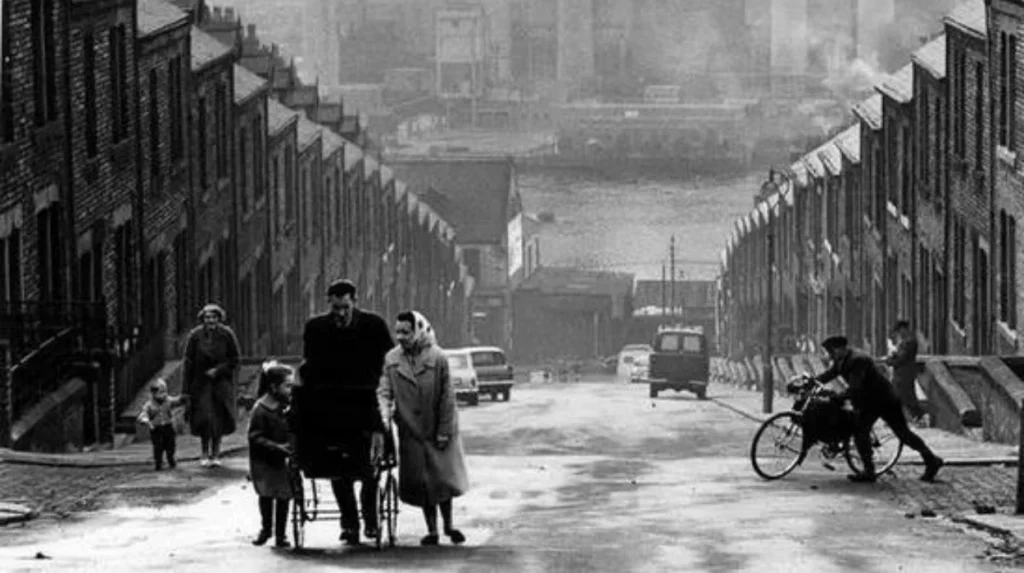
Arthur’s Hill retains substantial Victorian terraced housing, including streets with bay windows, sandstone details, dormer accommodation and surviving historic buildings. Stanhope Street also preserves the commercial character that developed within the residential district.
The Newcastle Historic Environment Record identifies the surviving terraces as one of Arthur’s Hill’s defining historic features. Their construction dates principally from the 19th century, with the second edition Ordnance Survey map of 1890 showing much of the established street pattern.
Gainsborough Grove and Brighton Grove contain examples with bay windows. Sidney Grove contains buildings with decorative sandstone lintels. Studley House and Oxley House on Studley Terrace contribute additional architectural interest.
Some properties have been altered. Shopfronts were inserted into certain houses, reflecting changing commercial uses. Some buildings are Tyneside flats rather than conventional single-family houses.
The result is a neighbourhood in which historic form remains visible despite modern adaptations.
Stanhope Street is particularly useful for understanding the relationship between housing and local commerce. Shops and restaurants occupy properties within the historic residential environment, preserving the mixed-use pattern that supported dense Victorian communities.
The area can also be studied through historic photographs. Newcastle City Council’s West Newcastle Picture History Collection contains more than 20,000 photographs and documents relating to the history and heritage of west Newcastle. Its coverage includes Arthur’s Hill, Fenham, Elswick, Benwell and Scotswood.
This collection provides an important research resource for comparing historic streetscapes with present conditions.
What historic features can still be seen in Fenham today?
Fenham retains major heritage evidence including Fenham Hall, surviving buildings and walls associated with Fenham Barracks, educational buildings and the historic landscape framework created by earlier estates, military uses and public institutions.
Fenham’s heritage is distributed across several types of site.
Fenham Hall remains the most important surviving reminder of the area’s Georgian estate history. Its 1748 origins, later additions and institutional conversion give it an unusually long documented history.
Fenham Barracks provides another major concentration of historic buildings. The former officers’ mess and former sergeants’ mess survive as listed buildings. The guardhouses and sections of the historic military complex also remain.
The former sergeants’ mess was constructed in 1804–06 and later converted to student accommodation. Historic England records the building as Grade II listed.
The former north and south guardhouses also survive as listed structures. Their sandstone construction and military detailing provide visible evidence of the early 19th-century barracks.
The St Mary’s complex provides another layer. The 18th-century hall became a religious educational institution after 1905. The later development of the site illustrates the expansion of formal education in Newcastle during the 20th century.
These surviving sites make Fenham particularly useful for studying adaptive reuse. Buildings constructed for one social function later served schools, colleges, universities and residential purposes.
To experience this historic landscape in person today, consult our comprehensive [Insert Anchor Text for Things to Do Article Here] for itineraries and visiting parameters.
Which Newcastle area is better for history enthusiasts?
Fenham offers the broader range of historic periods and building types, while Arthur’s Hill provides a more concentrated study of Victorian residential expansion. The stronger choice depends on whether the priority is architectural variety or a coherent 19th-century streetscape.
Fenham has a particularly wide chronological range. Fenham Hall begins in the 18th century. Fenham Barracks begins in the early 19th century. The St Mary’s complex records early 20th-century religious education and later university use. Modern residential development adds another layer.
Arthur’s Hill is more concentrated historically. Its principal surviving architectural character is associated with the 19th-century expansion of Newcastle and the construction of terraced housing.
For architectural historians, this distinction matters. Arthur’s Hill allows detailed examination of repeated housing forms and builder variation. Fenham allows comparison between Georgian domestic architecture, military architecture and institutional buildings.
For genealogists, both districts are valuable. Housing expansion created new streets and addresses during the period when Newcastle’s population was increasing rapidly. Historic maps, directories, census records and photographs can help trace the development of families and properties.
The West Newcastle Picture History Collection is particularly relevant because its geographical coverage includes both Arthur’s Hill and Fenham. It contains photographs and documents covering the 19th century to the present day.
Newcastle’s Historic Environment Record is another important research resource. Newcastle City Council states that the Tyne and Wear Archaeology Service maintains a database containing more than 17,000 sites, including monuments, historic parks and gardens, industrial sites and 20th-century defence sites.
This evidence makes both neighbourhoods suitable for serious historical research rather than simply visual sightseeing.
Which area provides the clearest example of Victorian Newcastle?
Arthur’s Hill provides the clearest concentrated example of Victorian residential Newcastle because its surviving terraces record the physical expansion of housing during the city’s rapid population growth and industrial development during the 19th century.
The area’s streets illustrate the practical mechanisms of Victorian urban expansion.
First, an estate was developed in 1826. Later builders extended the district with terraces. By 1890, the majority of the surviving characteristic streets had been established.
Second, architectural details varied according to individual builders. This produced a recognisable neighbourhood identity without requiring a single master plan.
Third, commercial activity developed alongside housing. Stanhope Street provided shops and restaurants, allowing residents to access everyday services locally.
Fourth, the buildings survived sufficiently well to preserve the basic character of the historic district.
The importance of Arthur’s Hill is therefore not based on one monumental building. Its heritage significance comes from the cumulative relationship between streets, terraces, materials, architectural details and commercial uses.
This is typical of many 19th-century industrial cities, where ordinary houses collectively provide important historical evidence.
Newcastle’s wider growth makes this particularly significant. The city expanded from approximately 28,000 people in 1820 to 215,000 in 1900. Arthur’s Hill’s residential growth belongs directly within that period of extraordinary urban expansion.
Which area offers the wider historical story?
Fenham offers the wider historical story because its surviving heritage connects Georgian estates, early 19th-century military planning, Victorian urbanisation, religious education, teacher training, university accommodation and modern residential development within one locality.
Fenham’s history is not confined to one period.
Fenham Hall establishes an 18th-century starting point. Its construction for John Ord reflects the wealth and social status of Newcastle’s civic elite.
Fenham Barracks adds the political and military context of the early 19th century. Its creation followed fears of revolutionary unrest and strengthened Newcastle’s military infrastructure.
Industrialisation then transformed the surrounding landscape. Farms, estates and open land were increasingly surrounded by urban development. The heritage assessment records the replacement of earlier landscapes with housing, public buildings, churches, schools and other facilities.
The 20th century added another major layer through St Mary’s. Fenham Hall became part of an educational complex operated by the Society of the Sacred Heart. The site subsequently accommodated university students.
This makes Fenham a useful case study in continuity and adaptation.
Its heritage demonstrates that urban history is not simply a sequence in which old buildings disappear and new buildings replace them. Historic buildings often acquire new functions, while older landscapes become incorporated into expanding cities.
What does the comparison reveal about Newcastle’s urban history?
The comparison shows that Newcastle expanded through different forms of urban development. Arthur’s Hill demonstrates dense Victorian residential growth, while Fenham demonstrates the conversion of estates, common land and specialist sites into a complex modern urban district.
Arthur’s Hill and Fenham developed within the same broader period of Newcastle’s transformation, but they did not follow identical paths.
Arthur’s Hill’s principal historical mechanism was residential expansion. Its terraces answered the need for housing generated by population growth and industrial employment.
Fenham’s transformation involved more varied mechanisms. Estate land was divided or surrounded by development. Military requirements created Fenham Barracks. Educational institutions occupied Fenham Hall. Schools and public facilities followed the growth of the surrounding population.
The contrast also demonstrates the importance of land ownership and previous land use. Arthur’s Hill’s estate development created a framework for later streets. Fenham retained substantial traces of earlier estates and open spaces while absorbing new institutions.
This is why the two areas remain valuable to heritage researchers.
Their buildings provide evidence of economic change. Their street layouts provide evidence of urban planning. Their institutions provide evidence of social change. Their surviving structures provide evidence of preservation and adaptive reuse.
Newcastle City Council’s heritage policy recognises the importance of retaining visible connections with the past while managing change. The city operates conservation, archaeology, listed-building and heritage programmes to protect and interpret historic places.
Arthur’s Hill and Fenham fit this wider heritage framework because their significance lies in both individual structures and the historic relationships between buildings, streets and land uses.
Is Arthur’s Hill or Fenham better for a historical visit?
Arthur’s Hill is the stronger choice for a focused Victorian streetscape study, while Fenham is the stronger choice for a broader historical survey covering Georgian architecture, military history, education and urban expansion across several centuries.
Arthur’s Hill suits visitors researching Victorian housing, terraced architecture and the relationship between residential streets and local commerce. Its surviving terraces provide a coherent environment for examining 19th-century urban development.
Fenham suits visitors interested in architectural chronology. Fenham Hall introduces Georgian domestic architecture. Fenham Barracks introduces early 19th-century military planning. St Mary’s introduces religious education and teacher training. Later buildings demonstrate continued institutional change.
Neither area should be understood independently from wider Newcastle.
The city’s historic development created the conditions for both neighbourhoods. Roman settlement established Newcastle’s strategic importance. Medieval growth created a compact fortified town. Industrialisation then pushed the urban boundary outward. The 19th century produced unprecedented population growth and architectural expansion.
The heritage of west Newcastle is therefore best understood as a connected system.
Arthur’s Hill represents the housing required by the expanding industrial city. Fenham represents the wider landscape into which that city expanded.
For educators, the two areas provide a practical comparative case study. Students can examine how different land uses produce different architectural forms. They can compare terraces with institutional buildings, estate houses with military structures, and residential streets with planned specialist sites.
For genealogists, both areas offer opportunities to connect people with historic addresses. Census records, electoral registers, directories, maps, photographs and property records provide complementary evidence.
For cultural tourists, the principal attraction is the survival of ordinary urban history alongside nationally significant listed buildings.
Why do Arthur’s Hill and Fenham remain historically important today?
Arthur’s Hill and Fenham remain historically important because their surviving buildings and landscapes document Newcastle’s transition from an expanding industrial city to a modern urban centre while preserving evidence of housing, military activity, education, commerce and changing patterns of land use.
Arthur’s Hill preserves the physical form of a Victorian residential expansion. Its terraces show how builders responded to Newcastle’s extraordinary population growth. The surviving streets also demonstrate how housing could accommodate commercial uses without losing its basic residential character.
Fenham preserves a more varied historical record. Fenham Hall represents Georgian Newcastle. Fenham Barracks records early 19th-century military policy and architecture. St Mary’s records the development of religious education and teacher training. Modern uses demonstrate continued adaptation.
Preservation is particularly important because urban heritage exists within a changing environment. Historic buildings require continued maintenance and appropriate adaptation to remain useful.
Newcastle’s heritage infrastructure supports this process through the Historic Environment Record, listed-building controls, conservation work, commemorative plaques and heritage programmes. Newcastle City Council states that its archaeology service maintains more than 17,000 historic environment sites and associated records.
The West Newcastle Picture History Collection also provides an important documentary resource. Its more than 20,000 photographs and documents create a substantial record of west Newcastle from the 19th century onwards.
The historical importance of Arthur’s Hill and Fenham therefore extends beyond individual landmarks. Together, they provide evidence of how Newcastle grew, how communities were housed, how institutions developed and how earlier buildings survived through changing social conditions.
For a visitor seeking a concentrated Victorian residential landscape, Arthur’s Hill is the stronger historical choice. For someone seeking a broader architectural and social history covering several centuries, Fenham offers the wider range of evidence.
The most useful conclusion is that the two areas represent complementary chapters in Newcastle’s urban history. Arthur’s Hill explains the housing expansion of the industrial city. Fenham explains how estates, military sites and educational institutions became integrated into that expanding city.
Together, they provide a detailed local example of the transformation that reshaped Newcastle upon Tyne during the 18th, 19th and 20th centuries.