


Key Points
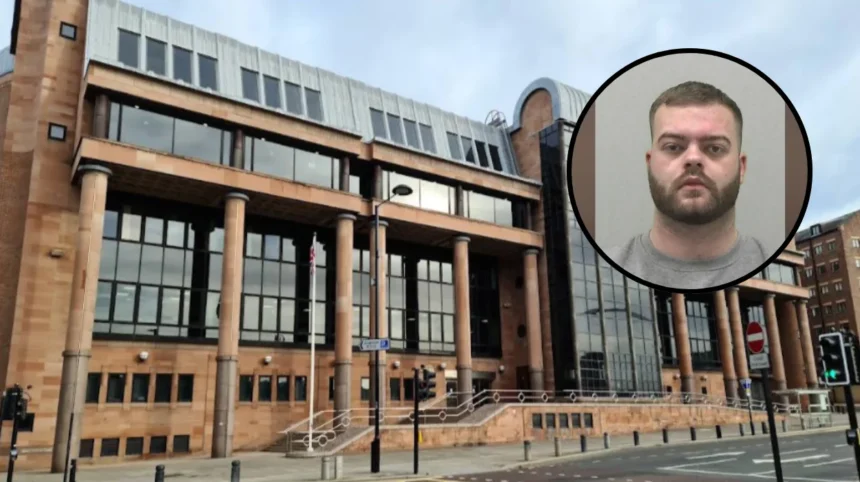
- Jailed Offender: Matthew Watson, aged 26, residing at Tewkesbury Road, Newcastle upon Tyne, has received a jail term of eight years after a hearing held at Newcastle Crown Court.
- Details of Conviction: Watson is guilty of committing 11 different offenses against children related to sexual offenses involving involvement in sexual activity with a child and causing or inciting a girl to commit sexual acts.
- Modus Operandi: Evidence in court revealed that Watson involved his underage and vulnerable female victim in drinking of alcohol and other controlled drugs before he committed a series of sexual assaults on her within different places in Newcastle.
- Victim Disclosure and Investigation: The victim confided the ordeal to trusted persons who brought about a thorough investigation involving the Northumbria Police Safeguarding Department.
- Official Charges: Official charges against Matthew Watson occurred in April 2025, and finally, he was found guilty and sentenced during a court hearing in August 2026 after a trial date of Friday, September 11, 2026.
- Life Monitoring Measures: Apart from jail term of eight years, Watson will be subjected to lifetime monitoring in form of inclusion in the Sex Offenders’ Register and Sexual Harm Prevention Order (SHPO). Watson as a “sexual predator” who targeted a vulnerable victim for personal sexual gratification.
Newcastle (New Castle Time) September 15, 2026 – A 26-year-old Newcastle man, Matthew Watson, has been handed an eight-year custodial sentence at Newcastle Crown Court after being found guilty of 11 counts of serious child sex offences against a vulnerable teenage girl. Watson, residing at Tewkesbury Road, targeted the victim by plying her with illicit drugs and alcohol before repeatedly assaulting her at multiple locations across the city. The sentence, handed down on Friday, September 11, 2026, concludes a comprehensive law enforcement operation that began when the young victim spoke out to trusted figures, enabling the Northumbria Police Safeguarding Department to mount a successful criminal prosecution.
- Key Points
- What led to the conviction of Matthew Watson at Newcastle Crown Court?
- How was the Northumbria Police investigation conducted?
- What long-term legal orders and restrictions face Matthew Watson?
- What is the Sex Offenders’ Register requirement?
- How does the Sexual Harm Prevention Order (SHPO) operate?
- What support services are available for victims of sexual abuse?
What led to the conviction of Matthew Watson at Newcastle Crown Court?
The prosecution of Matthew Watson stems from a series of predatory sexual assaults committed against a vulnerable teenage girl. Court proceedings revealed that Watson systematically used controlled substances and alcohol to incapacitate and lower the inhibitions of his young victim prior to carrying out repeated sexual assaults across different sites in Newcastle upon Tyne.
As reported by Owen Younger of ChronicleLive, Watson was charged by police in April 2025 following a thorough investigation into the alleged attacks. The formal prosecution moved to a full trial in August 2026, during which a jury evaluated the evidence gathered by specialist detectives. The court subsequently found Watson guilty on 11 counts of child sex crimes, including sexual activity with a child as well as causing or inciting a girl to engage in sexual activity.
During the sentencing hearing on September 11, 2026, the presiding judge ordered Watson to serve eight years in prison. In addition to his custodial term, the court imposed strict post-custodial measures designed to protect the public from future harm: Watson was made the subject of a stringent Sexual Harm Prevention Order (SHPO) and will remain on the Sex Offenders’ Register for the remainder of his life.
Explore More Newcastle Crime News
Former Church Leader John Grant Jailed for Sexual Offences North East 2026
Peter McMahon Murder: Sharon Swinhoe Case Revisited in Newcastle 2026
How was the Northumbria Police investigation conducted?
The law enforcement process was initiated after the teenage girl bravely broke her silence and disclosed the severe ongoing abuse to individuals she trusted. Following this initial disclosure, a formal report was made directly to Northumbria Police, triggering a multi-agency response centered within the force’s specialized Safeguarding Department.
As detailed by Bruce Unwin, Crime and Court Reporter for The Northern Echo, detectives spent several months collecting physical evidence, conducting forensic examinations, and taking statements to build a robust prosecution case against Watson. The intricate nature of child sexual exploitation cases required meticulous corroboration of events across the various locations where the offences occurred.
In a public statement released following the conclusion of court proceedings, Detective Constable Claire Ashurst, who spearheaded the investigation, emphasized the predatory nature of the defendant’s actions. As reported by Owen Younger of ChronicleLive, DC Ashurst stated:
“It’s clear that Matthew Watson is a sexual predator who has taken advantage of this vulnerable girl for his own sexual gain. This victim-survivor has shown great bravery and dignity through the entire investigation and court process – which has now ended with her abuser being put behind bars.”
DC Ashurst further reaffirmed the police department’s ongoing commitment to pursuing child sex offenders and supporting victims throughout the criminal justice system:
“The sexual abuse of children is horrific and, we’ll continue to relentlessly bring those who commit these offences to justice. No-one should ever have to experience this type of criminality, but please know if you have, we’re here and we’re ready to listen.”
What long-term legal orders and restrictions face Matthew Watson?
Under English law, individuals convicted of severe sexual offences face immediate registration requirements alongside protective civil orders tailored to restrict their future conduct and monitor their movement upon release.
What is the Sex Offenders’ Register requirement?
As a consequence of his conviction for 11 counts of child sexual offences, Watson has been placed on the Sex Offenders’ Register for life. This legal framework requires him to regularly notify law enforcement of key personal details, including his home address, any secondary residences, travel plans, bank accounts, and passport information. Failure to comply with registration notifications constitutes a distinct criminal offence carrying additional prison sentences.
How does the Sexual Harm Prevention Order (SHPO) operate?
The court additionally issued a Sexual Harm Prevention Order against Watson. Designed to mitigate future risks posed by sex offenders, an SHPO places strict, legally enforceable boundaries on an individual’s behaviour. Common restrictions under an SHPO include:
- Severe limits or total prohibitions on unsupervised contact with children under a specified age.
- Strict monitoring or restricted access to internet-enabled devices, social media platforms, and encrypted messaging applications.
- Curfews or prohibitions from entering designated geographic zones, such as areas near schools, playgrounds, or youth centers.
Breaching any term of an SHPO is a serious criminal offence that can lead to an immediate return to prison and up to five years of additional incarceration.
What support services are available for victims of sexual abuse?
Following the sentencing of Matthew Watson, Northumbria Police released guidance urging any individuals affected by sexual abuse—whether historical or recent—to come forward and access official channels of support and protection.
Members of the public seeking to report incidents or request help can contact law enforcement and support organizations through several avenues:
- Direct Police Contact: Reports can be submitted digitally via the dedicated ‘Report’ pages on the official Northumbria Police website or via verified social media channels.
- Telephone Reporting: For non-emergency situations, members of the public can dial 101. In situations where a crime is actively occurring or an individual is in immediate danger, emergency services should always be alerted via 999.
- Anonymous Disclosures: Individuals wishing to remain entirely anonymous can contact the independent charity Crimestoppers by calling 0800 555 111 or submitting an online report at their secure web portal.