


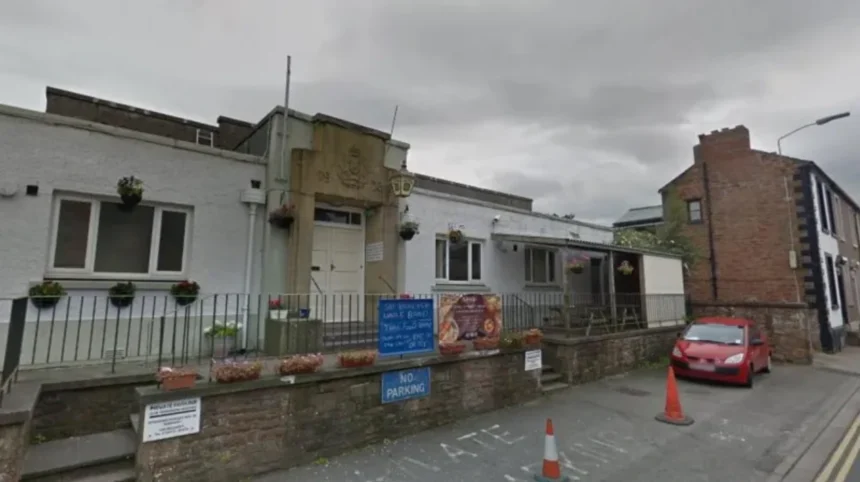
Key Points
- Planning Approval: Newcastle City Council’s planning committee officially approved plans on September 18th, 2026, to demolish the former Royal British Legion Club located on West Jesmond Avenue.
- Site History: The former men’s social club operated as a vital community hub and venue for veterans, local residents, and private functions for nearly 50 years before permanently closing in December 2022 due to declining membership and financial strain.
- Redevelopment Plan: The site will be redeveloped into a five-storey residential block containing 40 apartments (comprising 28 single-level apartments and 12 two-level maisonettes) along with a ground-floor residents’ gym, designed by Greatspace Architects and developed by Modo Bloc in consultation with DPP Planning.
- Zero Parking Provision: The residential complex will feature no car parking spaces, a decision justified by planning officers and developers due to its immediate proximity to the West Jesmond Metro station and public transport links.
- Community Reaction & Objections: While local resident Samantha Taylor welcomed the conversion of unused space, third-year Newcastle University students Amelie Cumming and Olivia Oldham, alongside 15 formal objectors, expressed concerns regarding noise, traffic congestion, area density, and potential rental pricing affordability.
- Section 106 & Next Steps: Demolition works remain subject to a legal Section 106 agreement, which must be finalised by March 18th, 2027, to avoid potential planning refusal.
West Jesmond (Newcastle Times) October 23, 2026 — Newcastle Council’s planning committee has greenlit plans to demolish a long-vacant social club on West Jesmond Avenue to clear the site for a five-storey residential building comprising 40 apartments. The approval brings an end to the historic Royal British Legion Club, which served the local community for nearly five decades before its closure in late 2022. While local planning authority members unanimously supported the redevelopment, nearby residents and university students have voiced concerns regarding construction disruption, area overpopulation, and the potential impact on local parking and housing affordability.
Why Did Newcastle City Council Approve the Demolition of the Royal British Legion Club?
As reported by Eleanor Urry of JesmondLocal, Newcastle City Council’s planning committee officially approved proposals to demolish the former Royal British Legion Club on West Jesmond Avenue during its committee meeting on September 18th, 2026. The former men’s social club operated for nearly 50 years as a focal point for the West Jesmond community, serving as a venue for military veterans, local residents, and private functions. Following years of declining memberships and severe financial strain, the venue closed its doors for the last time in December 2022 and has since remained derelict and boarded up.
Following its closure, developers submitted proposals to clear the site for housing. As detailed by Eleanor Urry of JesmondLocal, full planning permission has now been granted for a new five-storey residential building housing 40 apartments. As reported by Daniel Holland of Chronicle Live, the development plan comprises 28 single-level one- and two-bedroom apartments alongside 12 two-level maisonettes.
Who Is Developing the West Jesmond Avenue Site?
As reported by Eleanor Urry of JesmondLocal, the construction project will be overseen by Modo Bloc, a Northeast-based developer currently undertaking a residential scheme in Ouseburn to create seven design-led, four-storey townhouses. Modo Bloc collaborated with Greatspace Architects and planning consultancy DPP Planning, who managed both pre-application consultations and the formal planning application stages.
According to statements highlighted by Eleanor Urry of JesmondLocal, representatives from DPP Planning expressed that they were
“delighted that the proposals for the former Royal British Legion site received unanimous support from Newcastle City Council’s Planning Committee.”
Furthermore, a spokesperson for Modo Bloc noted that
“this application presents an opportunity to deliver much-needed new housing within a high-quality, contextual architectural scheme that both celebrates Jesmond’s rich heritage and contributes positively to its future.”
As noted in the planning approval documents cited by Eleanor Urry of JesmondLocal, the residential building will include an ancillary residents’ gymnasium on the ground floor. The layout features zero dedicated car parking spaces. Council planning officers and developers justified the car-free design by highlighting the site’s close proximity to the West Jesmond Metro station, which offers direct transit links into Newcastle city centre and the wider region.
How Have Local Residents and Students Responded to the Redevelopment Scheme?
The decision has drawn mixed reactions from residents and students residing on West Jesmond Avenue. As reported by Eleanor Urry of JesmondLocal, permanent resident Samantha Taylor welcomed the council’s decision, stating:
“I think it’s a great thing to happen to Jesmond, as no space should be wasted with the population growing as it has in the last few years.”
However, nearby residents and students have expressed significant reservations regarding the development. As reported by Eleanor Urry of JesmondLocal, Amelie Cumming, a third-year Newcastle University student living on West Jesmond Avenue, raised concerns over the prospective construction phase. Amelie Cumming stated:
“I think apartment blocks would enhance the aesthetic of the area, but I do worry that the building work will be really noisy, especially with me and my housemates living practically opposite.”
Amelie Cumming further added:
“It could also create more traffic and general busyness in an area that’s already overpopulated.”
Area overpopulation was a key issue raised during the initial public consultation process. As reported by Eleanor Urry of JesmondLocal, municipal planners received 15 formal letters of objection from occupants of surrounding properties. Objectors highlighted potential loss of privacy, building scale, and increased pressure on local infrastructure as major points of concern.
Other local students reflected on the necessity of urban space utilization and economic accessibility. As reported by Eleanor Urry of JesmondLocal, Olivia Oldham, a third-year Newcastle University student, stated:
“It’s an eyesore, but more so it’s wasting space that could actively be used within the West Jesmond community.”
Olivia Oldham further observed:
“There’s an evident need for housing and jobs in Jesmond, both of which the land could be used for. I would be very interested to know how competitive the rent prices of these apartments would be, and if it would price anyone out.”
Regarding financial viability and affordable housing, as reported by Daniel Holland of Chronicle Live, city planning officers confirmed in their board report that an absence of affordable housing units within the scheme was considered acceptable, concluding that forcing affordable housing quotas would render the brownfield redevelopment unviable.
What Conditions Must Be Met Before Demolition Can Begin?
An exact date for the demolition of the Royal British Legion Club has not yet been established. As reported by Eleanor Urry of JesmondLocal, planning permission remains subject to the finalisation of a legal Section 106 agreement. This statutory agreement requires developers to contribute financial or non-financial measures toward local public infrastructure, such as drainage maintenance and local allotment funds.
As outlined by Eleanor Urry of JesmondLocal, if a satisfactory Section 106 agreement is not completed by March 18th, 2027, the planning application faces refusal unless Newcastle City Council grants a formal time extension. At the time of publication, neither Modo Bloc nor DPP Planning had responded to requests for comment submitted by JesmondLocal.
Background
The former Royal British Legion Club at 1–3 West Jesmond Avenue operated for nearly 50 years as a social hub, providing recreational facilities, private event spaces, and support services for armed forces veterans and local residents. In recent years, changing social habits, rising operational costs, and declining membership numbers across traditional social clubs led to severe financial difficulties, culminating in the club’s permanent closure in December 2022. Following its closure, the building remained vacant and boarded up, quickly becoming a visual eyesore in the residential streetscape.
Prior to the current approval, the site was subject to earlier planning applications. In 2021, Newcastle City Council refused a proposal to convert the upper floors of the social club into student accommodation. In July 2025, Modo Bloc and Greatspace Architects submitted an initial 43-unit residential design, which was subsequently refined into the current 40-home proposal submitted under application reference 2025/0826/01/DET. Newcastle City Council’s planning committee granted unanimous approval for the scheme on September 18th, 2026.
Prediction
The demolition of the Royal British Legion Club and the introduction of 40 new residential units will affect several distinct stakeholder groups in West Jesmond:
- Local Residents and Homeowners: In the short term, residents on West Jesmond Avenue will experience increased construction noise, heavy vehicle traffic, and dust during the demolition and building phases. In the long term, replacing a derelict, boarded-up eyesore with modern architecture is expected to improve visual amenities and streetscape aesthetics. However, because the development includes no off-street parking, surrounding terraced streets may experience heightened competition for on-street parking spaces if new occupants own vehicles.
- Students and Renters: The addition of 28 apartments and 12 maisonettes will increase residential housing capacity in a highly sought-after suburb. However, because the scheme contains no designated affordable housing quota, rental rates are likely to reflect market-rate prices for modern urban developments, which may prove cost-prohibitive for some student demographics while attracting young professionals working in Newcastle city centre.
- Local Businesses: The influx of up to 80 to 90 new permanent residents will increase daily footfall for shops, cafes, and amenities near West Jesmond Metro station and the surrounding commercial corridors, providing an economic boost to local traders.