

Key Points
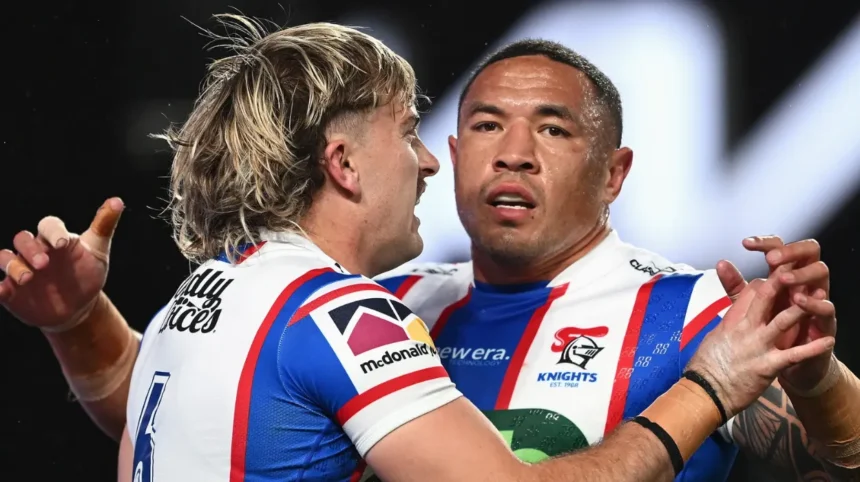
- Tyson Frizell, an experienced Newcastle Knights player, has qualified for his first ever NRL grand final in the 15th year and 305 games of his career.
- Fletcher Sharpe, a 22-year-old five-eighth, was not yet born at the time of the team’s previous championship win in 2001.
- The Newcastle locals have stood by the team, with the streets of Newcastle being lined across outer Newcastle, including Wallsend.
- Team legends, such as Paul Harragon and Immortal Andrew Johns, have motivated the team emotionally through the finals series.
- Justin Holbrook, the first-time coach of Newcastle, has transformed the club dramatically since the injury to Dylan Brown, the halfback star of the team.
Newcastle (Newcastle Times) September 29, 2026 – The Newcastle Knights have secured a place in the 2026 NRL Grand Final following a remarkable preliminary final victory, capping off an extraordinary turnaround for the Hunter-based franchise. The club’s surge to the season decider represents a career pinnacle for long-serving forward Tyson Frizell alongside emerging playmaker Fletcher Sharpe. Newcastle’s historic campaign has re-energised the local community, uniting experienced internationals and local products under head coach Justin Holbrook.
- Key Points
- How Are Senior Players and Local Youth Experiencing Newcastle’s Grand Final Run?
- What Role Have Newcastle Knights Legends Played in the Campaign?
- How Has Head Coach Justin Holbrook Reshaped the Squad’s Trajectory?
- Background of the Particular Development
- Prediction: How This Development Can Affect the Local Community and Football Pathways
How Are Senior Players and Local Youth Experiencing Newcastle’s Grand Final Run?
As reported by media sources covering the Hunter region, veteran back-rower Tyson Frizell has reached his inaugural Grand Final after a 15-year professional journey comprising 305 NRL appearances. Frizell revealed that in previous years, he found himself unable to watch the closing moments of season deciders once the final siren sounded, acknowledging the emotional weight of missing out on premiership celebrations. Having previously represented the New South Wales Blues and the Australian Kangaroos, Frizell’s finals experience with Newcastle over three of his past five seasons had not yielded a Grand Final berth until this campaign.
Frizell expressed his surprise at the scale of public support across the region, highlighting scenes in outer Newcastle suburb Wallsend where residents lined the main thoroughfares to support the team bus. He noted that parents and local children wearing Knights jerseys have frequently approached players during everyday family activities to express their gratitude for the team’s achievements.
At the opposite end of the squad’s age spectrum, 22-year-old five-eighth Fletcher Sharpe reflected on the significance of the club’s success for a region he has known all his life. Sharpe was not yet born when the Knights recorded their most recent premiership victory in 2001. He noted that his family frequently discussed the legendary 1997 and 2001 Grand Final victories, and explained that the current playing group deliberately immersed itself in the club’s history earlier in the season to grasp the regional importance of their campaign.
What Role Have Newcastle Knights Legends Played in the Campaign?
As reported by sports coverage across the region, former premiership-winning captain Paul Harragon addressed the playing squad earlier in the season to emphasize the cultural identity of the club and the Hunter Valley region. Additionally, immortal halfback Andrew Johns delivered a video message to the team prior to Sunday’s preliminary final victory. Johns, who currently serves as a commentator for Channel Nine, was seen becoming emotional following the full-time whistle that confirmed Newcastle’s place in the decider.
Sharpe described watching the emotional responses of former club icons as a deeply moving experience for the current roster. Raised in Cessnock, where Andrew and Matthew Johns began their rugby league careers, Sharpe explained that the brothers remain central figures in local sports culture. He remarked that remaining in the region keeps him connected to that heritage, admitting he still experiences “pinch me” moments when comparing his current journey to the historical achievements of 1997 and 2001.
Explore More Newcastle Sports News
Lewis Hall Targets England Redemption Under Thomas Tuchel Newcastle 2026
Young Newcastle United Star Wins Major Award in Newcastle 2026
How Has Head Coach Justin Holbrook Reshaped the Squad’s Trajectory?
As reported by sports analysts across major outlets, head coach Justin Holbrook’s arrival has been pivotal in restructuring Newcastle’s tactical approach and team culture. The campaign faced a significant challenge midway through the year when high-profile recruit Dylan Brown suffered a long-term injury. Signed on a lucrative contract from the Parramatta Eels, Brown’s absence threatened to disrupt the team’s spine and offensive structure.
Despite the setback, Newcastle adapted its team structure and maintained consistency throughout the remainder of the regular season and finals series. The squad’s resilience under Holbrook’s guidance enabled them to navigate the finals campaign successfully, culminating in a Grand Final appearance that has galvanized the Hunter region.
Background of the Particular Development
The Newcastle Knights were established in 1988 as a foundation entity of the modern national competition, representing the industrial and coal-mining heartland of the Hunter Region in New South Wales. The club built its historical identity on an uncompromising, work-rate-driven style of rugby league, securing its first premiership in 1997 through a famous last-minute victory over the Manly Warringah Sea Eagles, followed by a second title in 2001 against the Parramatta Eels. Both victories were anchored by local talents, most notably the Johns brothers, Paul Harragon, and Danny Buderus, establishing a tradition of homegrown reliance.
In the two decades following their 2001 title, the franchise experienced extended periods of structural transition, roster overhaul, and governance changes, including a difficult phase in the mid-2010s that resulted in three consecutive bottom-of-the-table finishes. Subsequent rebuilding phases focused on combining elite marquee recruitment—such as international forward Tyson Frizell and halfback Dylan Brown—with pathway development from local bush footy strongholds like Cessnock and Maitland. The appointment of Justin Holbrook as head coach marked the latest tactical reset, aimed at converting top-eight finals appearances into sustained premiership contention.
Prediction: How This Development Can Affect the Local Community and Football Pathways
The Newcastle Knights’ return to the NRL Grand Final is expected to generate direct socioeconomic and sporting impacts across the Hunter Valley region.
- Economic and Commercial Engagement: Local hospitality venues, retail outlets, and merchandise distributors are projected to experience a short-term spike in consumer activity. Extended finals runs historically drive increased regional tourism and public event gatherings, providing direct revenue support to small businesses across Newcastle and surrounding regional centres.
- Junior Participation and Grassroots Retention: The visibility of local products such as Fletcher Sharpe performing on rugby league’s biggest stage is likely to boost junior registration numbers across the Newcastle Rugby League (Real NRL) and Group 21 competitions. Local grassroots clubs in towns like Cessnock and Wallsend typically see heightened youth engagement following major finals campaigns.
- Corporate Sponsorship and Club Membership: A Grand Final appearance significantly alters the franchise’s commercial leverage heading into subsequent seasons. The club is likely to see an acceleration in ticketed membership renewals and increased interest from major corporate sponsors seeking brand alignment with a successful, highly visible regional sporting team.