


Key Points
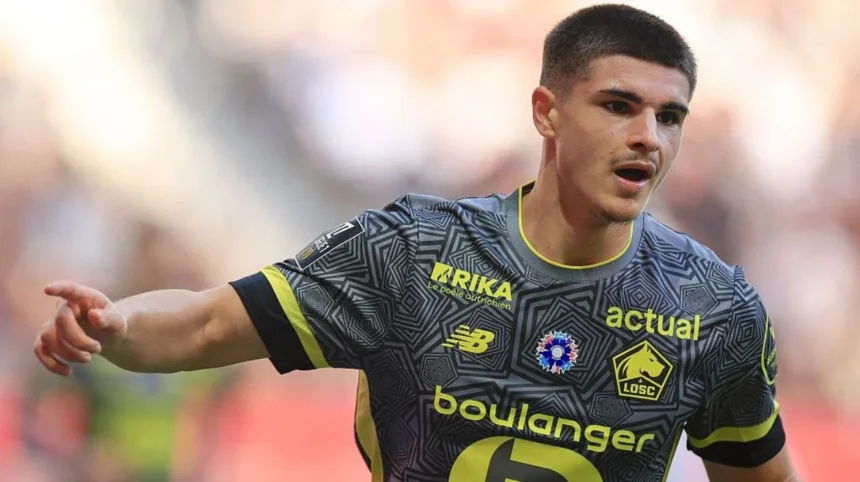
- According to Newcastle United finance director Simon Capper, there was no way Newcastle could have completed the transfer of Matias Fernandez-Pardo from Lille for £51 million without sending Nick Woltemade out on loan to Juventus.
- Chief executive officer David Hopkinson praised Capper as a “superstar” for handling the complexities of the UEFA Squad Cost Rule (SCR) regulations with Newcastle United.
- Even though the club avoided facing a 10-point deduction in the English Premier League by selling Elliott Anderson to Nottingham Forest and Yankuba Minteh to Brighton & Hove Albion, they still faced UEFA financial sanctions imposed in July.
- Woltemade was eager to continue playing at Tyneside only one year after his transfer from VfB Stuttgart for £69 million, but the signing of Fernandez-Pardo left him no choice but to leave temporarily.
- Newcastle United’s senior management team has adopted a strict policy to prevent player stockpiling, balancing incoming expenditure with outbound transfers to maintain acceptable risk levels under Financial Fair Play (FFP).
- The club currently remains fully compliant with UEFA and Premier League financial regulations, maintaining a controlled amount of financial headroom heading into future transfer windows.
- Major spending is not planned for the upcoming January transfer window unless significant first-team injuries force senior management to re-enter the transfer market.
Newcastle upon Tyne (Newcastle Times) September 16, 2026 – Newcastle United finance chief Simon Capper has admitted that the club would have been entirely unable to complete the £51 million purchase of winger Matias Fernandez-Pardo from Lille without first sanctioning the loan exit of striker Nick Woltemade to Italian giants Juventus.
- Key Points
- Why was Nick Woltemade’s loan exit required for the Matias Fernandez-Pardo transfer?
- How did financial regulations force Newcastle United into a strict transfer policy?
- What is Newcastle United’s current Financial Fair Play status?
- How will Newcastle United approach the upcoming January transfer window?
The internal operational details were detailed during an executive press briefing, highlighting the strict balancing act Newcastle United must navigate to remain fully compliant with European footballing regulations. Despite avoiding domestic disciplinary action earlier in the summer, the Magpies remain bound by strict financial constraints that directly dictate their recruitment strategy under Chief Executive Officer David Hopkinson and the broader board.
Why was Nick Woltemade’s loan exit required for the Matias Fernandez-Pardo transfer?
As reported by Chief Newcastle United Writer Lee Ryder of Chronicle Live, finance chief Simon Capper revealed that the £51 million acquisition of Matias Fernandez-Pardo from French Ligue 1 side Lille hinged entirely upon relieving the club’s financial balance sheet of Nick Woltemade’s salary and squad allocation costs.
Woltemade, who joined Tyneside in a headline £69 million move from German Bundesliga club VfB Stuttgart just 12 months prior, had expressed a clear desire to remain at St James’ Park. However, as Lee Ryder of Chronicle Live reported, his exit to Juventus was essentially sealed the very moment Newcastle United submitted an official enquiry to Lille for Fernandez-Pardo.
Explaining the operational dynamics behind the transfer window, Capper detailed the mandatory internal negotiations required between the financial and sporting departments before any acquisition could be finalized. As reported by Lee Ryder of Chronicle Live, Simon Capper stated:
“So the conversation we were having internally was ‘if you want to do that, you’re going to have to give me something back’, otherwise we’ll be in a position we’re not comfortable with. We managed to get that. That’s how we work together as a group, as a senior management team, to deliver the best result we can out of a transfer window.”
This rigid give-and-take strategy underlines how Newcastle United’s hierarchy must offset incoming transfer fees and wage obligations with immediate outbound movements to ensure total regulatory compliance.
How did financial regulations force Newcastle United into a strict transfer policy?
The underlying driving force behind Tyneside’s calculated transfer approach is rooted in European football’s governing regulations. As reported by Lee Ryder of Chronicle Live, Chief Executive Officer David Hopkinson hailed Simon Capper as a “superstar” within the organization due to his pivotal role in guiding Newcastle United through the complex UEFA Squad Cost Rule (SCR) framework.
The club had previously found itself in hot water with UEFA, picking up a financial penalty in July. To avoid a severe 10-point deduction in the Premier League, Newcastle United had already sanctioned the high-profile sales of academy graduate Elliot Anderson to Nottingham Forest and promising winger Yankuba Minteh to Brighton & Hove Albion.
However, as Lee Ryder of Chronicle Live noted, while those domestic sales successfully warded off Premier League punishment, they did not automatically clear the club’s path or eliminate the residual consequences of UEFA’s penalty. Consequently, Capper and the financial department established a firm rule against stockpiling high-value players without offloading corresponding liabilities.
Explore More Newcastle United F.C. News
Anthony Gordon Reveals Why He Swapped Newcastle for Barcelona Newcastle 2026
Leeds Thrash Newcastle 4-1 to Go Third at Elland Road 2026
What is Newcastle United’s current Financial Fair Play status?
Addressing the club’s current fiscal health following a high-stakes transfer window, Capper offered a transparent assessment of Newcastle United’s position regarding Financial Fair Play (FFP) and Profitability and Sustainability Rules (PSR).
As reported by Lee Ryder of Chronicle Live, Simon Capper stated regarding the club’s risk exposure:
“We come out of this transfer window, I wouldn’t say in an absolutely comfortable place. We have some risk around all of our Financial Fair Play measures. But it’s an acceptable amount of risk at this point. We are compliant as of today.”
Capper further explained that the administration has built in a buffer to absorb minor financial disruptions without breaching regulatory thresholds. As reported by Lee Ryder of Chronicle Live, Simon Capper added:
“Our forecasts are all compliant, and we can afford a few little things to go wrong and remain compliant. As an organisation, that’s the right place to be. We’re not going with £100m headroom just in case. I’m not going to say what the headroom is, but it’s not that.”
This strategy ensures that while Newcastle United operates close to its maximum allowable spending limits to remain competitive on the pitch, it maintains a calculated margin of safety to avoid administrative sanctions.
How will Newcastle United approach the upcoming January transfer window?
With the summer window closed and the club restored to full regulatory compliance, attention naturally turns to future trading periods. According to reporting by Lee Ryder of Chronicle Live, Newcastle United do possess the capacity to spend in the upcoming January transfer window, but senior executives are currently not planning a major mid-season financial splurge.
The club’s management philosophy mandates that every single player transaction—whether incoming or outgoing—is subjected to rigorous financial and sporting cost-benefit evaluations. Unless Newcastle United suffers a significant surge in first-team injuries that threatens on-field performance, the board intends to maintain its cautious stance.
As reported by Lee Ryder of Chronicle Live, Simon Capper reflected on the broader reality facing top-tier football organizations across the continent:
“Every top-level football club in Europe is managing their budget on every transfer. So every time we are buying or selling a player, we look at the impact of that, and one of the conversations we have on every player is, ‘Well, what does that do for us? Does that make us better or worse?'”
Under the leadership of head coach Matthias Jaissle, CEO David Hopkinson, and finance director Simon Capper, Newcastle United continues to balance its ambitious modern era with the strict financial governance demanded by European football’s administrative authorities.