


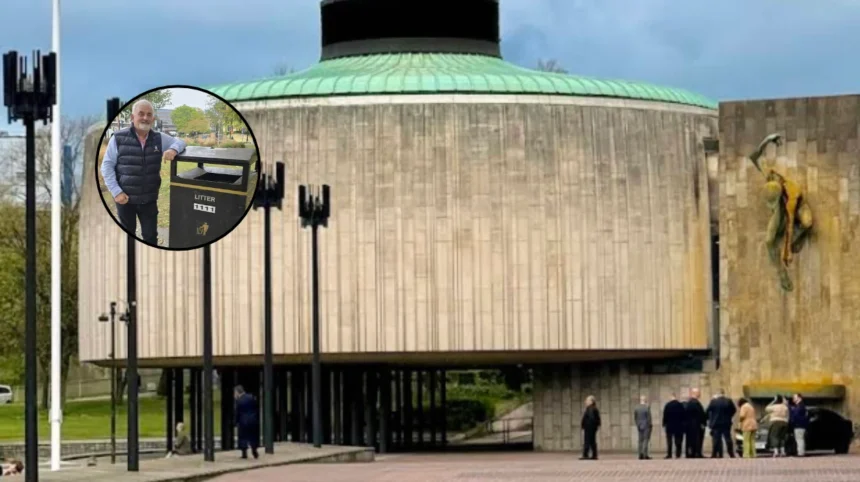
Key Points
- Expansion Proposal: Newcastle City Council is considering plans to install up to two additional litter bins in every city ward where an identified need exists.
- Smart Technology Integration: Bins will be equipped with smart sensor technology that monitors fill levels and uses intelligent software to predict capacity limits.
- Automated Scheduling: Emptying runs will be scheduled automatically when bins reach approximately 90% capacity, learning and adapting to usage trends over time.
- Public and Councillor Access: Residents will be able to view local bin fill levels and next collection dates online, while councillors will receive operational data to inform decisions.
- Funding & Infrastructure Criteria: Installations are restricted to adopted highways or council-owned land with safe access, funded via the council’s priority investment programme approved in July 2026.
Newcastle (Newcastle Times) October 15, 2026 – As reported by news reporter Kristy Dawson of Chronicle Live, new smart litter bins equipped with innovative sensor technology could be installed across Newcastle under new council proposals. The expansion plans, which are set to be discussed by Newcastle City Council’s Cabinet, aim to deploy up to two additional litter bins in every ward across the city where an identified need has been established.
The proposed litter bins utilise smart sensor technology to monitor the fill level of each unit in real time. The sensors operate alongside intelligent software that analyses data to predict exactly when a bin will reach capacity. Under this system, waste collections are scheduled automatically when the bins are expected to be almost full—typically when they hit approximately 90% capacity—allowing collection teams to operate on demand rather than on fixed, arbitrary schedules.
How Does The Proposed Smart Bin Software Work?
The technology continuously learns and adapts to changing patterns of public use, allowing collection routes to be dynamically adjusted based on seasonal variations and local events. As noted by Kristy Dawson of Chronicle Live, the software provides an interactive public element: local residents will be able to view operational information about their neighbourhood bins online, including real-time fill levels and the next scheduled collection date.
Furthermore, as outlined in official statements from Newcastle City Council, local ward councillors will be granted access to relevant operational data for requests within their areas. This information includes recorded bin fill levels, collection frequencies, and historic usage trends, ensuring that any future decisions regarding new installations or relocations are driven by empirical data.
Where Will The Bins Be Installed And How Are They Funded?
To ensure safe operational servicing by collection teams, strict site placement rules will apply. Bins will strictly be installed on adopted highways or council-owned land, provided there is suitable hardstanding and safe, unrestricted access for collection vehicles and personnel.
The initial capital expenditure required to install the new smart bins—or to relocate existing units—will be drawn from funding previously approved by the Cabinet in July 2026 under the administration’s priority investment programme. Meanwhile, ongoing operational expenses, including routine emptying and physical maintenance, will be absorbed by existing operational budgets within the council’s Neighbourhoods, Waste and Parks service.
According to official council documentation published by Newcastle City Council, Council officers are set to work directly alongside ward members to identify precise, suitable locations for any new units.
Background Of The Particular Development
The submission of this report to Cabinet follows persistent concerns raised by local residents and ward councillors regarding litter bin capacity and overflowing street waste in specific areas of the city. Historically, local authorities across the United Kingdom have relied on fixed-interval waste collection schedules, which can occasionally lead to vehicles servicing half-empty bins or missing sudden localized spikes in street litter during peak hours or hot weather.
In response to public feedback, Newcastle City Council initiated a review of its overarching litter bin policy. The administration sought to move away from rigid, routine street sweeping towards a responsive, data-driven framework. By securing preliminary funding in July 2026 under its priority investment programme, the council established the financial foundation required to expand street bin infrastructure while simultaneously upgrading its digital smart city footprint.
Prediction: How This Development Can Affect Residents And Local Communities
If Cabinet grants approval for the expansion, this development is expected to have a direct, positive effect on Newcastle residents, local businesses, and municipal maintenance crews:
- For Local Residents and Pedestrians: The targeted deployment of sensors will significantly lower the incidence of overflowing public bins. By automatically alerting collection staff when capacity reaches 90%, bins will routinely be emptied before rubbish spills onto pavements, helping to keep residential streets, high streets, and parks cleaner and reducing public health nuisances such as pest attraction.
- For Local Ward Councillors and Community Groups: Public transparency will improve markedly. Councillors will no longer have to rely solely on anecdotal complaints from constituents to request new bins; instead, they will possess verifiable fill-level data to justify infrastructure investment exactly where local demand dictates.
- For Council Waste Management Teams: The dynamic scheduling software will optimize vehicular collection routes across the city. Rather than driving fixed routes regardless of need, collection crews can be dispatched selectively to bins requiring urgent attention, improving fuel efficiency, reducing vehicle carbon emissions, and ensuring municipal resources are used effectively.