


Key Points
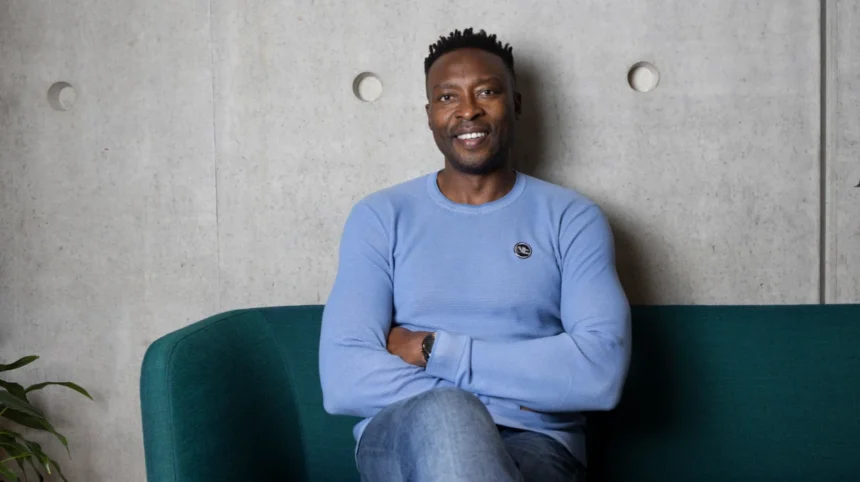
- New Executive Appointment: Former Newcastle United striker Shola Ameobi has officially transitioned into an executive leadership position as the club’s Head of Corporate Affairs, following a seven-year stint as the loans coordinator.
- Overcoming Childhood Adversity: Ameobi revealed that growing up as a young Nigerian immigrant in Newcastle during the late 1980s and 1990s involved severe racial harassment, forcing him to run for his life and building an enduring personal resilience.
- The Strategic Pathway: The structural transition was accelerated by a 100-day review led by Newcastle CEO David Hopkinson, alongside Ameobi’s completion of the Premier League’s Player to Executive Pathways Scheme.
- Anchor for Community Engagement: Ameobi holds a Master’s degree in Strategic Leadership and aims to leverage his executive mandate to make Newcastle United the civic, cultural, and community heartbeat of the city.
- Inspirational Legacy: Ameobi emphasized his commitment to serving as a visible role model for underrepresented groups, seeking to prove that executive mobility is achievable regardless of background or appearance.
Newcastle (Newcastle Times) October 22, 2026 – Former Newcastle United forward Shola Ameobi has stepped into the executive boardroom as the club’s Head of Corporate Affairs following an extensive career spanning playing, loan management, and strategic leadership training. Moving to Tyneside from Nigeria at age six, Ameobi overcame severe childhood racial harassment to become a legendary club figure, scoring 79 goals in 397 appearances. His appointment follows a 100-day review by CEO David Hopkinson and structured development through the Premier League’s executive pathways scheme. In his new capacity, Ameobi focuses on corporate planning, brand alignment, and deep civic engagement across the region.
- Key Points
- What Led to Shola Ameobi’s Appointment as Head of Corporate Affairs?
- How Did Childhood Experiences Shape Ameobi’s Professional Resilience?
- What Educational and Executive Development Prepared Ameobi for the Boardroom?
- Who Were the Primary Leadership Influences in Ameobi’s Career?
- How Does Ameobi View His Responsibilities Toward Diversity and Community Integration?
- Background of Newcastle United Executive Restructuring and Representation Initiatives
- Prediction: How This Development Can Affect Newcastle United, the Local Community, and Underrepresented Executives
What Led to Shola Ameobi’s Appointment as Head of Corporate Affairs?
As reported by Sam Dalling of The Guardian, Shola Ameobi formally assumed the post of Head of Corporate Affairs at Newcastle United in July after spending seven years operating as the football club’s loans coordinator. The career transition developed through a comprehensive 100-day review initiated by Newcastle United Chief Executive Officer David Hopkinson.
According to Dalling’s report, Hopkinson initially presented the executive option to Ameobi with an offer to take a weekend to evaluate the position. However, Ameobi pushed back on taking an immediate decision, choosing instead to engage in six months of detailed discussions to carefully define the operational shape and scope of the role. Ameobi explained that his seven-year experience establishing the club’s loan department during the ownership of Mike Ashley allowed him to build a foundational understanding of business planning, resource allocation, and team management from the ground up.
How Did Childhood Experiences Shape Ameobi’s Professional Resilience?
As documented by Sam Dalling of The Guardian, Ameobi experienced severe racial hostility after moving to Newcastle from Nigeria at six years of age during the late 1980s and 1990s. Reflecting on his youth spent near St James’ Park, Ameobi detailed how he had to sprint through local streets to evade groups targeting him because of his race while traveling to academy training sessions at Benwell.
As quoted by Sam Dalling of The Guardian, Ameobi stated:
“There were times where I feared for my life as a kid, being harassed and chased by different groups of people. There were situations where I had to sprint to get away from groups of lads who didn’t like me because of what I looked like.”
Ameobi further explained:
“It was almost as if I had to hide myself to be able to do what I love to do. It wasn’t a very nice feeling, having to worry about getting from A to B. It was just part of my world. I had to be more aware of my surroundings and what I was doing.”
Despite these systemic obstacles, Ameobi highlighted that surviving those hostile environments built high levels of personal fortitude. As cited by Sam Dalling of The Guardian, Ameobi noted:
“It built incredible resilience in me. That really helped me in a sporting context in my career, but also as a person, understanding that, irrespective of what people thought of me, what really mattered was the value I put on myself.”
What Educational and Executive Development Prepared Ameobi for the Boardroom?
As reported by Sam Dalling of The Guardian, Ameobi has actively prepared for executive governance throughout his post-playing career. He currently holds a Master’s degree in Strategic Leadership and served as part of an initial seven-person cohort in the Premier League’s Player to Executive Pathways Scheme launched in 2022. This initiative stemmed from his ongoing work with the Premier League’s Black Participants Advisory Group, which he joined at its inception in 2019 and which helped establish the No Room for Racism action plan in 2021.
As quoted by Sam Dalling of The Guardian, Ameobi shared how the professional pathway scheme strengthened his capability:
“It gave me a really good framework. It took us through, at a very high level, what the different streams of executive work look like, whether that’s finance, brand, the future of working, how organisations work. That gave me a little bit of confidence, if I’m honest, more than anything, to go: ‘Actually, a lot of the things I’m already doing translate into that world.’”
He added regarding his athletic background:
“One of the biggest things was working in a pressurised environment, which is what I’ve done for 20 years, and learning how that can really help you in those moments when things get a little squirrelly, when they aren’t going as planned.”
Ameobi recalled that his transition mindset began in November 2006 when a major hip surgery threatened his career. As cited by Sam Dalling of The Guardian, Ameobi reflected on those pivotal moments:
“Football wasn’t always going to be there so who am I outside of the footballer? There were some really hard questions I had to answer during a very, very difficult time. There were some dark moments.”
Who Were the Primary Leadership Influences in Ameobi’s Career?
As documented by Sam Dalling of The Guardian, Ameobi credits multiple figures for guiding his approach to executive authority and personal ethics. Professionally, he points to his late manager Sir Bobby Robson—who handed him his senior debut at age 18—and Alan Pardew, who managed him at both Newcastle United and Crystal Palace.
Regarding Pardew, Sam Dalling of The Guardian noted that the manager intentionally leveraged Ameobi’s natural influence within the dressing room to resolve squad challenges and reinforce team cohesion. Furthermore, Ameobi identified his father, a local church leader, as his foundational role model for leadership values.
As stated by Ameobi in the interview with Sam Dalling of The Guardian:
“I’ve always been fascinated with leadership, right from an early age. My father was a leader of a church and he’s been the biggest influence of my life when it comes to leadership and how to lead well.”
How Does Ameobi View His Responsibilities Toward Diversity and Community Integration?
According to Sam Dalling of The Guardian, Ameobi considers his appointment a platform to bridge the football club with the local Tyneside community and inspire young people from underrepresented demographics. Attending a supporters’ event hosted by The Black Geordie Club, Ameobi recalled how watching pioneering Black players like Andy Cole and Tino Asprilla during his youth reinforced his sense of belonging.
As reported by Sam Dalling of The Guardian, Ameobi remarked on his broader vision:
“We want to make this club the heartbeat of this city. But by being the heartbeat of the city, it’s making sure we integrate well into everything the city is about, whether that’s civically, whether that’s through our sport or through our community engagement.”
Summarising his personal mission in the boardroom, Ameobi told Sam Dalling of The Guardian:
“You need to feel like you belong, you need to see yourself there, and that is so important when it comes to inspiration and people who aspire to be great in whatever sphere… Being a young Black kid who has walked the walk throughout the club, from youth team to first team and now into this executive role, I want to show anything’s possible for anybody.”
Background of Newcastle United Executive Restructuring and Representation Initiatives
The appointment of Shola Ameobi as Head of Corporate Affairs comes amid a wider organizational transformation at Newcastle United following its operational expansion under current chief executive David Hopkinson and major ownership restructuring. Historically, major English football clubs relied primarily on traditional corporate figures to manage commercial operations, community affairs, and external civic communications. However, industry dynamics have shifted toward integrating former professional players who possess academic qualifications and specialized governance training.
Concurrently, the Premier League has faced ongoing scrutiny regarding the lack of Black, Asian, and Minority Ethnic representation within senior administrative, managerial, and executive positions across its member clubs. To address these structural discrepancies, the Premier League established the Black Participants Advisory Group in 2019. This framework directly contributed to the creation of the No Room for Racism action plan in 2021 and the implementation of the Player to Executive Pathways Scheme in 2022, designed to provide comprehensive business education and executive mentorship to former professional players from underrepresented groups.
Prediction: How This Development Can Affect Newcastle United, the Local Community, and Underrepresented Executives
The transition of Shola Ameobi into Newcastle United’s executive management is likely to influence several operational areas across the club and the wider sports sector:
- Strengthened Civic Alignment on Tyneside: Ameobi’s deep regional ties and long-standing affinity with the local fanbase position Newcastle United to build stronger relationships with local civic authorities, community programs, and regional outreach schemes. His leadership will likely ensure that corporate expansion remains aligned with local interests.
- Advancement of Executive Diversity Standards: Ameobi’s high-profile success within the Premier League’s Player to Executive Pathways Scheme serves as an operational proof-of-concept. His progression is anticipated to encourage rival top-flight clubs to adopt similar administrative talent pathways, increasing ethnic diversity across executive boardrooms.
- Enhanced Player-to-Executive Mobility: Former professional players possess practical knowledge of elite sports environments. Ameobi’s hybrid expertise—combining 20 years of pitch experience with formal qualifications in strategic leadership—may accelerate a trend where clubs systematically recruit qualified ex-athletes into senior operational, financial, and strategic management roles.