

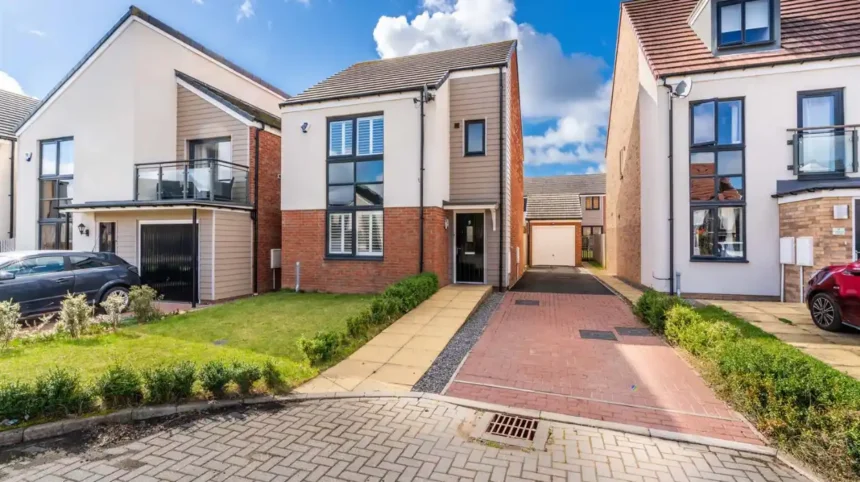
Newcastle Great Park is one of the largest planned residential developments in the north of Newcastle upon Tyne. Its new-build housing sits within a long history of Gosforth Park, agricultural land, racecourse development, strategic planning and suburban expansion. Understanding that history helps explain the area’s layout, infrastructure and buying costs.
- What is Newcastle Great Park and how did it develop?
- When did Newcastle Great Park become a major housing development?
- Why is the history of the Great Park area relevant when buying a new-build home?
- What are the main advantages of buying a new-build home in Newcastle Great Park?
- What are the disadvantages of buying a new-build home in Newcastle Great Park?
- What fees should buyers budget for when purchasing a new build in Newcastle Great Park?
- Does Newcastle Great Park new-build housing have estate management charges?
- How does council tax work for a new-build property in Newcastle?
- What planning charges affect Newcastle Great Park new-build development?
- How should buyers investigate the planning history of a Newcastle Great Park property?
- What should buyers check before reserving a Newcastle Great Park new build?
- What warranty protection applies to a new-build home?
- How does Newcastle Great Park fit into Newcastle’s wider urban history?
- What is the long-term significance of buying a new build in Newcastle Great Park?
What is Newcastle Great Park and how did it develop?
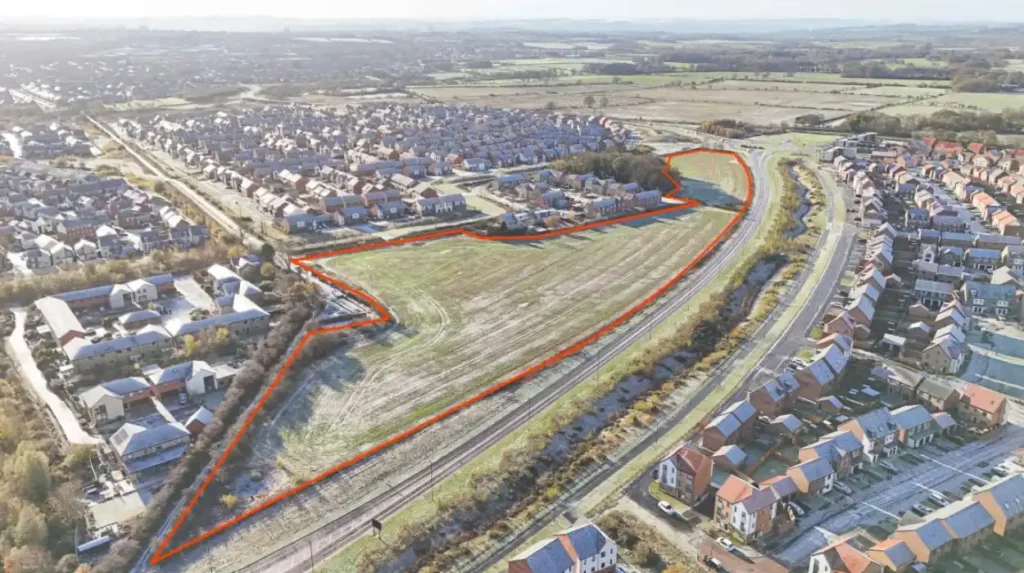
Newcastle Great Park is a major mixed-use development about three miles north-west of Newcastle city centre, combining housing, employment, education, open space and community facilities within a planned urban extension shaped by successive masterplans and planning policies.
Newcastle Great Park lies close to the A1 and north-west of Gosforth. Newcastle City Council describes it as a major development incorporating a business park, housing, a town centre and schools. Its location connects the residential area with wider Newcastle while retaining substantial areas of planned open space.
The modern development has a much longer historical setting. The surrounding Gosforth landscape was transformed during the post-medieval period when wealthy landowners reshaped agricultural land into designed parkland.
Newcastle City Council’s Historic Environment Record records that Sir Robert Brandling acquired North Gosforth in 1566. In 1760, Charles Brandling moved the family seat to the area and employed architect James Paine to design Gosforth House. Around half of the township was subsequently incorporated into the park surrounding the house.
The historic estate contained features associated with an eighteenth- and nineteenth-century designed landscape. These included plantations, a lake, park walls, gates, lodges, stables, walled gardens, an ice-house and other estate buildings.
The landscape changed again in the nineteenth century. The property was sold in 1852, and in 1880 the High Gosforth Park Company acquired about 1,807 acres and developed the area as a racecourse. Brandling House was adapted for later uses, while the wider estate became associated with High Gosforth Park.
This sequence is important when considering a new-build home. Newcastle Great Park is not an isolated housing estate created without historical context. It represents a later phase of land-use change in a landscape that has moved from agricultural land to designed parkland, recreational use and planned urban development.
When did Newcastle Great Park become a major housing development?
The modern Newcastle Great Park planning framework developed through detailed masterplanning in the early twenty-first century, with a revised Masterplan adopted in 2006 and later planning decisions adding substantial housing, schools, transport infrastructure, ecological measures and community facilities.
Newcastle City Council adopted the Revised Master Plan and Supplementary Planning Document for Newcastle Great Park on 18 May 2006. The document established planning guidance for future development across the site.
The significance of the masterplan lies in its integrated approach. Newcastle Great Park was planned as more than a collection of individual housing developments. Housing was linked to employment, transport, education, open space and community infrastructure.
This approach reflects wider British planning practice during the late twentieth and early twenty-first centuries. Large urban extensions were designed to address housing demand while limiting the pressure placed on established urban neighbourhoods.
Newcastle’s wider planning framework also established a strategic basis for housing and infrastructure. The Core Strategy and Urban Core Plan for Gateshead and Newcastle upon Tyne was adopted in 2015. The Development and Allocations Plan followed in 2020 and provides detailed policies and site allocations for development.
A major expansion of Newcastle Great Park received formal approval in October 2019. That scheme provided for 1,200 additional homes, with 75% designed for families, alongside a first school for 450 pupils and a middle or secondary school for up to 1,700 pupils.
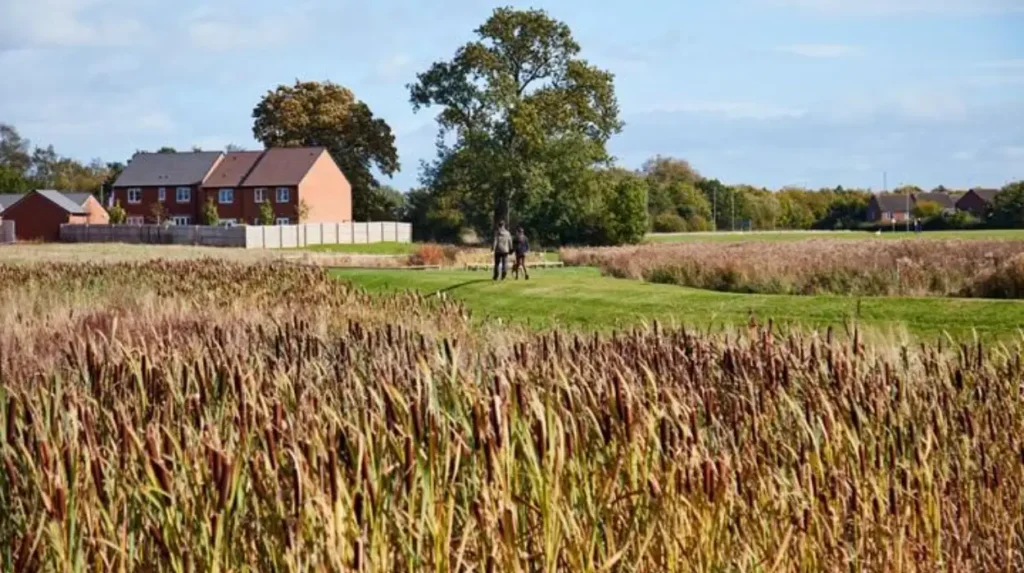
The same expansion incorporated wildlife habitats, ecological improvements, playing fields, a changing pavilion, parking and public open spaces. The development therefore demonstrates how modern housing schemes combine residential construction with planning obligations and infrastructure provision.
For a buyer, this history explains why different parts of Newcastle Great Park have different construction dates, house designs, roads, public spaces and infrastructure arrangements.
Why is the history of the Great Park area relevant when buying a new-build home?
The historical development of Gosforth Park and the modern planning history of Newcastle Great Park explain the area’s landscape, road structure, heritage features and phased construction, helping buyers understand why neighbouring streets can have different designs, facilities, building ages and planning histories.
The historical record provides useful context for understanding the surrounding environment.
The former Gosforth estate was a designed landscape rather than an ordinary agricultural holding. Its trees, water features, boundaries and estate buildings formed a structured environment around Gosforth House. Archaeological research has also examined the former Newcastle Race Course at High Gosforth Park and the Gosforth Park Walled Gardens.
Modern Newcastle Great Park occupies a landscape shaped by several different phases of development. A buyer therefore encounters contemporary architecture alongside remnants and archaeological evidence associated with earlier land uses.
This matters particularly for buyers interested in local history. Planning records provide information about how individual parcels were allocated, when applications were approved and which infrastructure commitments accompanied development.
Newcastle City Council provides an online planning search system that allows users to search planning applications by address, reference or map location. Planning documents can provide useful information about a particular development site and its approved proposals.
Historic research also helps explain the relationship between Newcastle Great Park and Gosforth. The modern neighbourhood belongs to a much longer process of northern Newcastle expansion, where rural and estate landscapes were gradually incorporated into the city’s urban structure.
What are the main advantages of buying a new-build home in Newcastle Great Park?
The main advantages of a Newcastle Great Park new build include modern construction, planned neighbourhood infrastructure, access to schools and open spaces, contemporary energy standards and a location connected to Newcastle’s established urban areas and major transport routes.
New construction provides a different ownership experience from purchasing an older property.
Modern homes are built according to current building regulations and incorporate contemporary insulation, heating, ventilation, electrical and plumbing systems. Energy performance is therefore an important part of the new-build proposition.
Newcastle Great Park also benefits from comprehensive planning. The development includes housing alongside schools, employment, open space and community infrastructure. Newcastle City Council identifies the A1 connection and proximity to Newcastle city centre as important characteristics of the location.
Education infrastructure has expanded alongside housing. Great Park Academy and other school projects formed part of the area’s planned educational provision. Newcastle City Council states that a new middle and secondary school at Newcastle Great Park was due for completion and occupation in September 2025.
Green infrastructure is another planned feature. The 2019 expansion included new habitats, ecological enhancements, playing fields and public open space.
The neighbourhood’s scale also creates access to a wider range of amenities than would normally exist within a small housing development. The presence of business, educational, recreational and residential uses creates a mixed-use structure.
For buyers who want to understand the wider neighbourhood rather than only the house itself, the planned nature of Newcastle Great Park is an important characteristic.
To experience the wider area and its attractions today, consult our comprehensive for itineraries and visiting parameters.
What are the disadvantages of buying a new-build home in Newcastle Great Park?
The main disadvantages involve construction phases, unfinished surrounding infrastructure, estate charges, developer-specific contractual terms, limited established landscaping and the difficulty of judging a home’s long-term surroundings while neighbouring plots remain under development.
Large masterplanned developments are built in phases. A completed home therefore does not always mean the entire surrounding neighbourhood is complete.
A buyer should distinguish between the finished property and the wider development programme. Roads, landscaping, commercial premises, schools and community facilities can have different delivery schedules.
The physical character of a street also changes as construction progresses. Newly planted landscaping takes time to mature, while neighbouring building sites create construction traffic, noise and temporary access arrangements.
New-build homes also have different legal and financial arrangements from older properties. Government guidance specifically warns buyers to check reservation fees, exchange deadlines and additional estate facility charges before purchasing a new build.
The contractual position deserves close attention. Buyers should establish whether the property is freehold or leasehold, identify any estate management arrangements and obtain details of charges associated with shared spaces or communal facilities.
A new-build purchase also involves assessing the exact specification. Show homes display a finished presentation, while the contractual specification determines what is actually included in the property.
Buyers should therefore compare the specification, floor plan, tenure, parking arrangements, garden boundaries, management arrangements and completion conditions rather than relying solely on the appearance of a show home.
What fees should buyers budget for when purchasing a new build in Newcastle Great Park?
New-build buyers should budget for the purchase price plus legal fees, mortgage costs, Stamp Duty Land Tax where applicable, searches, surveys or inspections, moving expenses, insurance and any estate or management charges attached to the property.
The total cost of buying a new build extends beyond the advertised property price.
The first major additional cost is legal conveyancing. A solicitor or licensed conveyancer checks the title, contract, searches, planning documents, restrictions and other legal matters associated with the purchase.
Mortgage costs form another category. These include lender arrangement fees, valuation charges where applicable and other costs specified by the mortgage provider. The exact amount depends on the mortgage product.
A new-build buyer should also consider a professional inspection or snagging assessment. A snagging inspection identifies defects or unfinished work that require attention after construction.
Stamp Duty Land Tax is another potential cost. HM Revenue & Customs states that SDLT applies to residential property purchases in England and Northern Ireland above the relevant thresholds. The rates depend on purchase price and buyer circumstances.
As of September 2026, the standard residential SDLT bands begin with a 0% rate up to £125,000, followed by 2% on the portion from £125,001 to £250,000 and 5% on the portion from £250,001 to £925,000. Higher bands apply above those thresholds.
First-time buyers receive specific relief where the qualifying property costs £500,000 or less. The current rules provide a 0% rate on the first £300,000 and 5% on the portion from £300,001 to £500,000. Properties above £500,000 do not qualify for this relief.
The SDLT position must be calculated against the rules applicable at completion. Tax policy changes over time, so buyers should use the current HMRC guidance and calculator when the purchase is progressing.
Does Newcastle Great Park new-build housing have estate management charges?
Estate management charges cover the maintenance of certain privately managed communal areas and facilities, with the exact liability determined by the property’s legal documents, development structure, tenure and management arrangements rather than by Newcastle Great Park’s name alone.
Estate charges are particularly important in large modern developments.
Some communal areas are maintained through private management arrangements rather than directly through the local authority. Charges can relate to landscaping, communal spaces, play areas, private roads or other estate facilities.
The exact arrangements vary between developments and phases. Buyers should therefore obtain the specific legal documents for the house being purchased.
Government guidance identifies estate facility charges as an additional cost associated with some new-build properties.
The buyer’s conveyancer should establish the amount payable, how it is calculated, who manages the estate and what services the charge covers.
The legal documents should also identify how charges can change. A low initial charge does not provide a complete picture of long-term ownership costs.
This issue is separate from council tax. Council tax is administered by Newcastle City Council, while a private estate charge relates to the contractual management of specified facilities.
How does council tax work for a new-build property in Newcastle?
A newly built home can initially lack an assigned council tax band because the Valuation Office has not yet completed its assessment, after which the property receives the appropriate band and Newcastle City Council calculates the bill using the applicable council tax rules.
Newcastle City Council states that a newly built property might not yet have a council tax band when the owner moves in. The Valuation Office Agency is responsible for assigning the band.
Council tax bands in England are based on the property’s estimated market value at 1 April 1991, rather than its current purchase price. Newcastle City Council specifically notes that the present-day price of a newly constructed property is not a direct guide to its council tax band.
This distinction is important in a new-build development. A £300,000 property purchased today is not assessed as though £300,000 were its value in 1991.
Once the valuation process is complete, the property is placed into one of the applicable council tax bands. The annual bill also depends on the council tax charge for the relevant year and any discounts or exemptions.
Buyers should therefore include council tax within their household budget separately from estate management charges, mortgage payments and utilities.
What planning charges affect Newcastle Great Park new-build development?
New-build development at Newcastle Great Park is shaped by planning obligations and the Community Infrastructure Levy, which help fund infrastructure associated with growth, including schools, transport improvements, open space, ecological measures, drainage and other development-related requirements.
Planning costs are primarily development costs rather than direct charges imposed on an individual home buyer.
Newcastle City Council uses Section 106 agreements under the Town and Country Planning Act 1990 to secure infrastructure and other measures associated with development. These agreements can require developers to provide facilities or make financial contributions.
The Community Infrastructure Levy, known as CIL, is another planning mechanism. Newcastle City Council charges CIL per square metre on qualifying development, with rates varying according to development type and location.
The council’s current information lists 2026 residential CIL rates of £87.27 per square metre for Residential Zone A and £43.64 per square metre for Residential Zone B. These are development-level charges, not standard fees added directly to a buyer’s conveyancing bill.
Section 106 obligations can address site-specific infrastructure. Newcastle’s planning guidance identifies access works, drainage, greenspace management and affordable housing among measures that can remain subject to planning obligations.
Infrastructure funding has also supported Great Park-related facilities. Newcastle City Council records funding for education and green infrastructure associated with strategic housing development at Great Park. One recorded scheme allocated £566,191 of Section 106 funding to a proposed allotment site serving the growing community.
These mechanisms demonstrate how the cost of a large housing development extends beyond individual houses and roads.
How should buyers investigate the planning history of a Newcastle Great Park property?
Buyers can investigate a property’s planning history through Newcastle City Council’s online planning system, using an address, application reference or map search to identify approved applications, conditions, development phases and documents affecting the surrounding site.
Planning history provides information that property marketing material does not always contain.
Newcastle City Council’s planning search allows users to search by address, reference or other text and also provides a map-search facility. Users can view application documents and decision information without registering simply to inspect records.
A buyer should examine the planning history surrounding the property rather than only the application for the house itself.
Neighbouring plots can have applications for additional homes, roads, landscaping, commercial units, schools, drainage infrastructure or changes to approved layouts.
The original masterplan is also relevant because it provides the wider planning framework for Newcastle Great Park. The 2006 Revised Master Plan was specifically created to guide future development proposals.
This research is particularly valuable when purchasing off-plan. An off-plan buyer is purchasing a home before the finished physical environment exists. Planning documents provide a formal record of what has been approved.
The legal adviser should also examine restrictive covenants, easements, rights of way, service arrangements and estate management documents relevant to the individual property.
What should buyers check before reserving a Newcastle Great Park new build?
Before reserving a Newcastle Great Park new build, buyers should verify tenure, total purchase price, reservation terms, exchange deadline, specification, parking, estate charges, service arrangements, warranty cover, council tax position and the planning status of the surrounding development.
The reservation stage creates an important financial and contractual checkpoint.
Government guidance states that new-build buyers can face reservation fees and that refund conditions should be checked before payment. Developers can also set deadlines for exchange of contracts and payment of deposits.
The reservation document should therefore be read alongside the proposed sale contract.
The buyer should confirm the exact house type, plot number, floor area, parking allocation, garden arrangements and included fixtures.
The specification should identify kitchen appliances, flooring, bathroom fittings, heating equipment and other included items.
The tenure also requires careful examination. A freehold house and a leasehold property have different legal structures. Any lease should be reviewed for its term, ground rent provisions where applicable, service charges and other obligations.
The buyer should also obtain information about estate management. This includes the current charge, management company, services covered and arrangements for future maintenance.
A professional snagging inspection provides another layer of protection by identifying construction defects or incomplete work.
What warranty protection applies to a new-build home?
New-build warranty protection is designed to provide cover for specified construction defects and structural problems, with the precise protection determined by the warranty provider and the terms of the individual policy issued for the property.
Warranty arrangements form an important part of new-build ownership.
Many UK new homes are covered by recognised structural warranty schemes. The buyer should establish which provider covers the property and obtain the relevant policy documents before completion.
Warranty protection is separate from the developer’s own customer-care obligations.
The purchaser should record defects as soon as they become apparent and follow the warranty provider’s procedures for notification and claims.
A warranty does not replace a careful inspection. Buyers should still inspect the property before completion and document visible defects.
The legal pack should identify the warranty provider, policy number and applicable coverage.
The distinction between developer responsibility and warranty responsibility is important because different problems can fall under different procedures.
How does Newcastle Great Park fit into Newcastle’s wider urban history?
Newcastle Great Park represents a modern stage in Newcastle’s outward growth, transforming land associated with Gosforth’s historic estates and recreational landscapes into a planned mixed-use neighbourhood connected to the city’s housing, employment, education, transport and environmental infrastructure.
The development illustrates how Newcastle’s urban geography has changed over several centuries.
The Gosforth landscape recorded in Newcastle’s Historic Environment Record began with agricultural land and estate ownership. Charles Brandling’s eighteenth-century park transformed the physical landscape around Gosforth House. The nineteenth-century racecourse created another major land use.
The twentieth century brought further changes to the wider Gosforth area as Newcastle expanded.
The twenty-first-century Great Park represents another phase. The 2006 masterplan established a formal framework for major development, while later planning approvals expanded housing and associated infrastructure.
This historical sequence matters because planned neighbourhoods are products of earlier land-use decisions. Roads, boundaries, open spaces and development parcels often reflect older landscape structures as well as modern planning requirements.
The archaeological record reinforces this continuity. Newcastle’s Historic Environment Record includes research into Gosforth Park, the racecourse and the former walled gardens, demonstrating that the area’s development history extends beyond the visible modern housing.
For history enthusiasts, Newcastle Great Park therefore provides a clear example of how an urban landscape can change function while retaining connections to its earlier geography.
What is the long-term significance of buying a new build in Newcastle Great Park?
Buying a new build in Newcastle Great Park means becoming part of a planned urban extension whose long-term character depends on housing delivery, schools, transport, green infrastructure, community facilities, estate management and continued implementation of Newcastle’s planning framework.
The area’s future character is tied to infrastructure as well as house construction.
Newcastle City Council’s local planning framework establishes policies for housing, employment, infrastructure and environmental management. The council reviews its planning framework to ensure that policies remain appropriate as development needs change.
The Great Park experience therefore differs from buying into a long-established Victorian or Edwardian neighbourhood. Its streets, facilities and landscape continue to reflect planned development.
For buyers, this creates a practical need to examine both the completed property and the development context.
For historians and educators, Newcastle Great Park provides a useful case study in urban expansion. The area connects medieval and post-medieval land ownership, eighteenth-century designed landscapes, nineteenth-century recreational development, twentieth-century metropolitan growth and twenty-first-century masterplanned housing.
The preservation of historic information remains important within this process. Newcastle City Council’s Local List framework encourages the retention and conservation of locally significant architectural and historic assets.
The result is a neighbourhood where modern housing sits within a landscape with documented archaeological and historical layers.
A well-researched purchase therefore involves more than comparing house prices. It involves understanding the property’s legal structure, ongoing charges, planning history, infrastructure programme, council tax position and warranty protection.
For buyers, these checks establish the actual cost and contractual obligations attached to the home. For researchers, the same records document another stage in the transformation of Newcastle’s northern landscape.
Newcastle Great Park is consequently both a contemporary housing destination and a significant chapter in the continuing urban history of Newcastle upon Tyne.