


Key Points
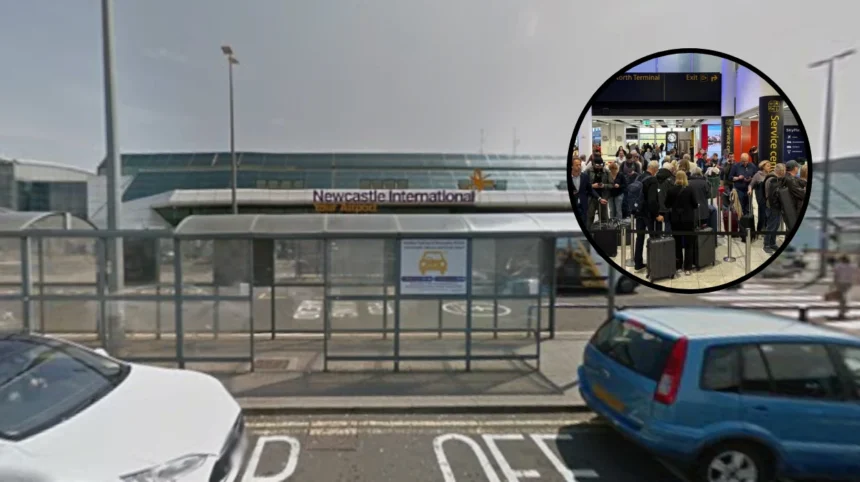
- There were flight delays at Newcastle International Airport due to a technical problem in the National Air Traffic Services (NATS) Prestwick control centre in Scotland.
- According to NATS, temporary traffic regulation measures were introduced in northern airspace due to traffic demand and safety standards as engineers tried to diagnose the problem.
- System engineers have managed to solve the technical issue with the system in the Prestwick center, with the assistance of NATS, airports, and commercial operators.
- Regulators and NATS stated clearly that the technical problem was not related to the major air traffic control system problem that happened earlier in the month.
- EasyJet and British Airways criticized NATS on network resilience and system stability after the technical problem happened in the past weeks.
- UK Transport Secretary Heidi Alexander was disappointed about the problem and suggested that all passengers check the flight status with the airlines directly.
Newcastle (Newcastle Times) September 21, 2026 – Executive Summary: Newcastle International Airport experienced operational delays following a technical breakdown at the National Air Traffic Services control centre in Prestwick, Scotland. Air traffic control managers applied temporary flow restrictions across northern airspace to maintain safety standards while specialist engineers investigated the fault. Although NATS engineers subsequently fixed the issue, commercial airlines and passengers faced lingering schedule disruptions while air traffic regulations were systematically lifted.
- Key Points
- What Caused the Delays at Newcastle International Airport?
- How Did Airport Officials and Government Ministers Respond to the Operational Disruption?
- What Reactions Have Commercial Airlines Expressed Regarding NATS System Resilience?
- Background of Newcastle Airport Air Traffic Control Disruptions
- Prediction: How Will This Development Affect Passengers and Regional Aviation?
What Caused the Delays at Newcastle International Airport?
As reported by Owen Younger of ChronicleLive, passengers traveling through Newcastle International Airport faced flight delays following a technical issue originating within the National Air Traffic Services (NATS) control facility in Prestwick, Scotland. Because the Prestwick facility directs air traffic movements across Scotland and Northern England, the technical fault immediately impacted departure and arrival management across the regional airport network.
To maintain safety standards during the system disruption, NATS officials implemented temporary flow regulations to manage aircraft volume in affected sectors. As reported by Owen Younger of ChronicleLive, NATS confirmed that air traffic regulations were put in place to “maintain safety” and “manage traffic demand” while specialist engineers were deployed on site to resolve the breakdown.
NATS subsequently confirmed that engineers resolved the technical fault and initiated recovery procedures alongside airport operators. As reported by Owen Younger of ChronicleLive, a NATS spokesperson stated:
“The issue in our Prestwick centre is now fixed. We are working with airports and airlines to safely lift air traffic regulations as quickly as we can to minimise any further disruption.”
NATS further extended an apology to affected travellers and advised passengers to check their flight status directly with their respective air carriers.
How Did Airport Officials and Government Ministers Respond to the Operational Disruption?
Airport management at Newcastle International Airport closely monitored flight operations and remained in communication with national air traffic control authorities throughout the incident. As reported by Owen Younger of ChronicleLive, a spokesperson for Newcastle International Airport confirmed the local impact, stating:
“We are experiencing some delays due to a technical issue at NATS’ Prestwick centre in Scotland.”
Airport officials highlighted their ongoing coordination with NATS to minimize disruption for passengers traveling through the North East hub. As reported by Owen Younger of ChronicleLive, the Newcastle International Airport spokesperson added:
“We are monitoring the situation closely and are in regular contact with NATS as they work to resolve the issue as quickly as possible. Passengers should check with their airline for the latest flight information.”
The system disruption also prompted reactions from central government ministers overseeing transport infrastructure. As reported by Owen Younger of ChronicleLive, UK Transport Secretary Heidi Alexander acknowledged the disruption caused to travellers, stating:
“I know this will be deeply frustrating for passengers after the previous issue. There may be some delays as things reset. Please check with your airline for updates.”
Explore More Local Newcastle News
Major Regional Employers Recruit at Upcoming Civic Centre Jobs Fair Newcastle 2026
Three Bedroom Townhouse Listed For Rent In Jesmond NSW 2026
What Reactions Have Commercial Airlines Expressed Regarding NATS System Resilience?
Commercial air carriers operating out of Newcastle International Airport voiced severe concern regarding the stability and operational reliability of national air traffic management systems. The sudden restriction of airspace capacity forced airlines to revise departure slots, manage delayed aircraft, and support affected passengers.
Airline leadership directed public criticism toward NATS regarding recurring technical vulnerabilities across its infrastructure. As reported by Owen Younger of ChronicleLive, a representative from EasyJet publicly challenged the provider’s technical reliability, stating that the breakdown “calls into question the resilience of NATS’ systems.”
Similarly, national flag carrier British Airways expressed growing concern over repeated technical issues impacting British aviation operations. As reported by Owen Younger of ChronicleLive, a spokesperson for British Airways highlighted that the disruption occurred following “yet another fault.”
Background of Newcastle Airport Air Traffic Control Disruptions
The technical fault at the Prestwick control facility represents the latest operational challenge facing the United Kingdom’s primary air navigation service provider. UK air traffic control operations are divided between two main NATS centres: the Swanwick centre in Hampshire, which manages airspace across southern England and Wales, and the Prestwick centre in Ayrshire, which controls high-altitude and regional air traffic across Scotland, Northern Ireland, and Northern England.
The disruption at Newcastle International Airport follows a major air traffic control software failure earlier in the month that caused widespread flight cancellations and multi-day delays across the entire UK aviation network. That earlier incident prompted extensive technical reviews and investigations by aviation regulators, government officials, and commercial airline operators.
In response to public queries connecting the two events, NATS explicitly clarified that the technical glitch at Prestwick was completely separate from the previous system failure. Although engineers resolved the Prestwick system fault relatively quickly, the quick succession of air traffic control restrictions has renewed demands from major airlines for structural reviews and increased investment in national navigation infrastructure.
Prediction: How Will This Development Affect Passengers and Regional Aviation?
The immediate impact of the Prestwick technical issue will be felt by passengers traveling through Newcastle International Airport and neighboring regional transit hubs across Northern England and Scotland. Because air traffic control restrictions create compounding flight delays, passengers should expect knock-on schedule adjustments, extended turnaround times, and potential flight reschedulings as airlines work to return displaced aircraft and flight crews to their scheduled positions over the next 24 to 48 hours. Commercial carriers will incur operational costs related to extended ground operations, crew duty-time adjustments, and passenger support obligations.
In the long term, this secondary system failure will intensify pressure on NATS, the Civil Aviation Authority (CAA), and the Department for Transport to demonstrate system reliability across all UK control centres. Expect major commercial operators to escalate calls for stricter regulatory oversight, binding operational resilience benchmarks, and formal financial accountability frameworks to cover carrier losses caused by air traffic infrastructure failures. For travellers, ongoing scrutiny surrounding NATS systems may lead to calls for accelerated technological upgrades across Scotland’s airspace management facilities.