


Key Points
- The bosses of Newcastle City Council claim that there is no proof of any misconduct or collusion in relation to the controversial sale of land in Newbiggin Dene.
- In 2025, the local authority agreed to sell a parcel of land to Persimmon Homes for 239 houses south of the A696 road, stating that the council could earn £3m if the planning permission was obtained.
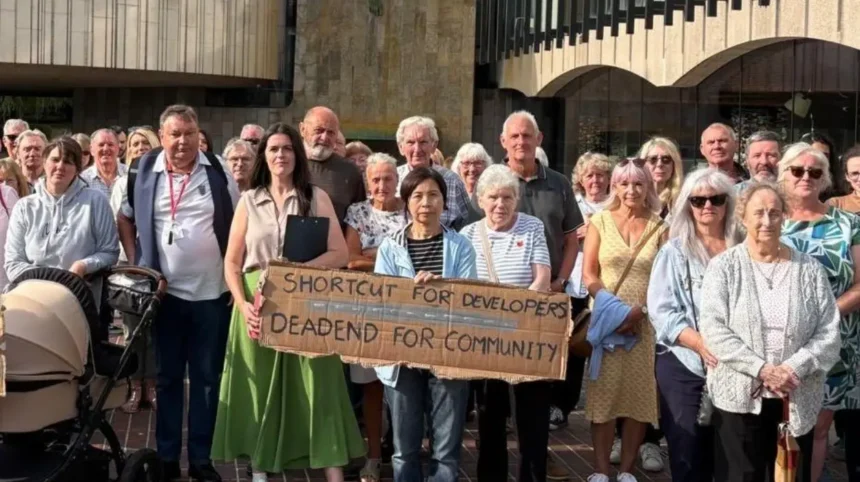
- Local people and the Reform UK councillors in opposition are fighting to preserve the green corridor from being converted into an access road, while seeking its transformation into a new country park.
- Council officials have approached Persimmon Homes with a request to consider termination of the deal mutually because of public opinion and finding another way of access.
- The Liberal Democrat-led council blames the previous Labour council, whereas the latter says that it never supported the building of an access road, and promised not to sell the land until the planning permission is received.
- UK Councillor Brian Moore suggests a practical solution in which there will be another access route from the north-western point.
Newcastle (Newcastle Times) October 6, 2026 – Council leaders in Newcastle have formally insisted that an internal review has revealed no evidence of improper conduct, collusion, or inappropriate contact surrounding a disputed land sale in the city’s north. The controversy centres on a 239-home housing estate proposed by Persimmon Homes south of the A696 in Newbiggin Hall, which has sparked intense local backlash over plans to run an access road through a valued green space known as Newbiggin Dene.
- Key Points
- Why Is Newcastle City Council Facing Scrutiny Over the Newbiggin Dene Land Sale?
- What Alternative Access Routes Are Being Considered for the Persimmon Homes Development?
- How Are Local Political Parties Responding to the Land Deal Controversy?
- Background of the Particular Development
- Prediction
Why Is Newcastle City Council Facing Scrutiny Over the Newbiggin Dene Land Sale?
The local authority has faced mounting pressure from residents who petitioned the council to designate the area as a new country park to safeguard a vital green corridor. However, public concern deepened when it emerged that the local authority had quietly struck a deal back in 2025 to sell the strip of land. According to public disclosures, the council stands to make £3 million if planning permission for the housing development is ultimately granted.
An extraordinary council meeting has been scheduled for Wednesday night to debate the issue. During the session, local residents and opposition Reform UK councillors plan to formally urge both the local authority and Persimmon Homes to cancel the land sale entirely.
In a report published ahead of the upcoming extraordinary meeting, council officials stated that an investigation found
“no evidence has been identified of inappropriate contact”
between the council’s property and planning departments regarding the Newbiggin Dene site. Furthermore, the report added,
“Similarly, no evidence has been found to substantiate allegations of collusion or improper conduct in relation to the handling of the transaction of associated planning matters.”
What Alternative Access Routes Are Being Considered for the Persimmon Homes Development?
With community friction intensifying, public reporting indicates that municipal authorities are actively seeking an exit strategy. As reported by the Local Democracy Reporting Service, the council report confirms that council officers have asked Persimmon to
“consider entering into a mutual agreement to terminate the transaction”
in light of severe community concerns. Concurrently, efforts are underway to identify an alternative access route that avoids the disputed wildlife corridor.
Persimmon’s planning application remains live. The developer has previously defended its layout, stating that the
“existing green space and existing public right of way would remain, either side of the new access road.”
The developer also pledged that these areas would be supplemented with
“significant amounts of public open spaces and new tree planting.”
How Are Local Political Parties Responding to the Land Deal Controversy?
Political fallout from the land deal has intensified across Newcastle’s council chambers. The current Liberal Democrat administration has sought to place political blame for the situation at the door of the Labour councillors who ran the authority prior to May’s local elections.
Responding to the mounting pressure, Newbiggin Hall’s former Labour councillors issued a joint statement on Monday. As reported by Newcastle Times, the former Labour councillors stated that they
“opposed the construction of an access road through Newbiggin Dene and want the land returned to public ownership.”
They added that they had previously been told detailed plans would be
“shared and scrutinised through public consultation”
and that the land
“would remain unsold unless planning permission had been granted.”
Adding to the political friction, Reform UK Councillor Brian Moore has publicly criticized the handling of the project. As reported by Newcastle Times, Councillor Moore called for developers and the council to pursue a “logical solution” of establishing a different access point from the north-west corner of the proposed housing development, thereby protecting the
“wildlife corridor that so many residents enjoy every day.”
Background of the Particular Development
The controversy at Newbiggin Dene stems from overlapping pressures of housing targets, urban expansion, and local environmental preservation in Newcastle upon Tyne. Local authorities across the United Kingdom frequently balance the statutory requirement to deliver new residential properties against the protection of urban green spaces. In this case, the proposed 239-home estate by Persimmon Homes south of the A696 was designed to meet local housing demand.
However, the designation of Newbiggin Dene as the intended access route collided directly with community reliance on the area as a recreational green corridor and wildlife habitat. The 2025 agreement to sell the land tied municipal financial gain—specifically a projected £3 million windfall contingent on planning approval—to a project that local residents had long expected would remain protected unless subjected to rigorous public scrutiny. This structural misalignment between prior administrative commitments, commercial real estate transactions, and grassroots community expectations ultimately catalyzed the political and public crisis now facing Newcastle City Council.
Prediction
This ongoing development carries significant implications for local residents, municipal governance, and housing developers across Newcastle. For the immediate community of Newbiggin Hall, the intense scrutiny and upcoming extraordinary council meeting could successfully force a revision of the access infrastructure, potentially sparing the local wildlife corridor or halting the land transaction altogether if Persimmon agrees to a mutual termination.
However, if the transaction proceeds, it risks deepening local distrust in municipal transparency and triggering prolonged planning delays. More broadly, this controversy sets a precedent for how Newcastle City Council handles contentious green-space developments under its current administration, likely leading to stricter oversight, earlier public disclosures, and heightened political sensitivity regarding council-owned land disposals. Developers operating in the region may also face tougher resistance and more rigorous vetting when attempting to secure access routes through urban green spaces.