


Key Points
- Public Debate Agreement: Newcastle City Council has agreed to organize an extraordinary special meeting to discuss the public outcry over the sale of the green land belonging to the city for a housing project in Newbiggin Hall.
- Special Meeting Date: The special council meeting has been fixed on Wednesday, 7 October 2026, just after the conclusion of the regular full council meeting held at Newcastle Civic Centre.
- The Major Issue: The developer Persimmon Homes is proposing to build 239 houses, but a scandal broke out when it was discovered that the council officials had already made an arrangement to sell an important strip of land linking Oulton Close to Newbiggin Dene for an access road.
- Allegations of Financial Gain and Predetermination: The opposition councillors have pointed out that the council stands to earn up to £3 million from the disposal of the land, with serious allegations of “the clear appearance of predetermination.”
- Backlash against Late-Night Debate Timing: It was pointed out by community residents and politicians that timing the debate at a late hour of the day would mean bus diversions in Blakelaw, which may keep people away from the event owing to antisocial behavior.
- Developer and Leadership Response: Liberal Democrat Council Leader Colin Ferguson insisted that there is “no conspiracy theory” and all agreements happened under the previous Labour administration, while Persimmon responded to the debate by claiming that it provides much-needed housing.
Newcastle (Newcastle Times) September 18, 2026 – Newcastle City Council has formally agreed to stage an extraordinary meeting to debate the mounting controversy surrounding a proposed 239-home development and the associated sale of public green space in Newbiggin Hall. The decision follows intense political pressure from opposition councillors and sustained protests from local residents who oppose the loss of a key environmental corridor. However, the scheduling of the debate late on a weekday evening has ignited further friction between community groups and civic leaders.
- Key Points
- Will the Extraordinary Meeting Provide Answers Over the Newbiggin Hall Land Deal?
- Why Has the Timing of the Public Debate Triggered Fresh Anger?
- How Have Council Officials, Developers, and Opposition Politicians Responded?
- Background of the Development
- Prediction: How This Development Can Affect the Local Community and Governance
Will the Extraordinary Meeting Provide Answers Over the Newbiggin Hall Land Deal?
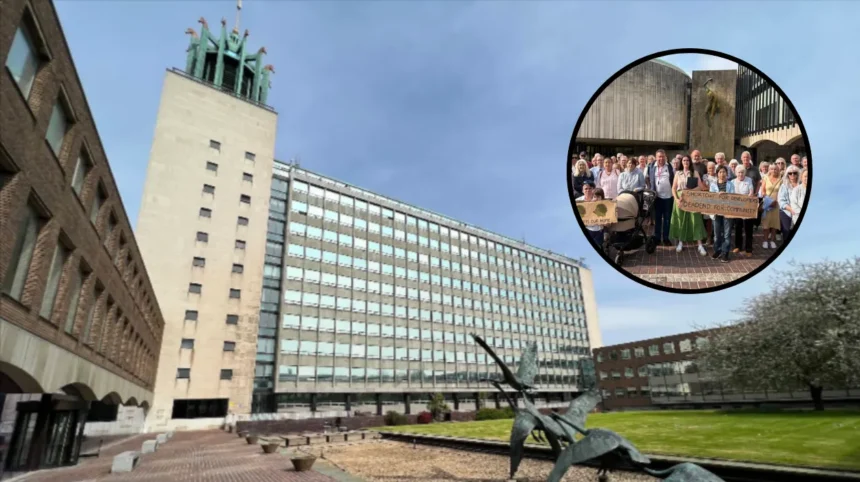
As reported by Daniel Holland, Local Democracy Reporter for Chronicle Live, Newcastle City Council bosses confirmed that a special meeting of the full council will take place on the evening of Wednesday, 7 October 2026, at the Newcastle Civic Centre. The meeting was officially requested under standing orders by elected members, led by Reform UK councillors and independent member Marc Donnelly, following community anger over the proposed development by housebuilder Persimmon.
The core of the dispute involves plans to build 239 residential properties in the Newbiggin Hall suburb on fields south of the A696. Although Persimmon’s formal planning application is currently live and subject to public consultation, details emerged that the local authority had previously agreed to sell a vital strip of council-owned green land. This land, connecting Oulton Close to Newbiggin Dene, is required to serve as an access road for the prospective housing scheme.
As noted in reporting by Daniel Holland of Chronicle Live, local residents have repeatedly campaigned for the site—comprising Newbiggin Dene, Linear Park, and Bluebell Dene—to be formally designated as the city council’s 34th country park instead of being opened up to residential expansion. Campaigners maintain that breaking up the green corridor off Meadow Rise will disrupt local wildlife habitats and strip the surrounding community of crucial recreational open space.
Why Has the Timing of the Public Debate Triggered Fresh Anger?
According to details reported by Daniel Holland of Chronicle Live, the decision to hold the debate immediately after the standard full council meeting has led to accusations that the local authority is attempting to limit public scrutiny. The regular council session is scheduled to run until at least 8:30 pm, meaning the extraordinary debate will take place late into the night.
As reported by Daniel Holland of Chronicle Live, Newbiggin Hall resident Megan Thomson-Stewart stated that the decision to schedule the discussion so late felt
“completely intentional to reduce participation from councillors and to reduce the likelihood of a big public turnout.”
Thomson-Stewart pointed out logistical barriers facing residents who wish to observe the proceedings in person. She highlighted that Stagecoach bus services in Newcastle have been subject to diversions after 6:30 pm due to persistent anti-social behaviour in the neighbouring Blakelaw area. Consequently, residents relying on public transport could find it impossible to return home from the Civic Centre via public transport if those transit restrictions remain active in October.
Echoing these concerns, Reform UK councillor for Newbiggin Hall and Callerton, Brian Moore, stated to Local Democracy Reporter Daniel Holland that he felt the timing of the meeting would “allow the council to guillotine debate.” Councillor Moore had previously alleged at a council meeting that the local authority stood to make £3 million from what he described as a “ransom strip” of land.
How Have Council Officials, Developers, and Opposition Politicians Responded?
Addressing the scheduling decisions, a spokesperson for Newcastle City Council told Daniel Holland of Chronicle Live:
“We can confirm that the Lord Mayor has called for a special meeting of council to discuss matters relating to planning proposals linked to Meadow Rise in Newbiggin Hall. This meeting was requested under standing orders by the required number of elected members. It will take place following the conclusion of the scheduled meeting of full council on Wednesday, October 7.”
Opposition politicians contend that the prior agreement to sell the land undermines the fairness of the upcoming planning decision. As reported by Daniel Holland of Chronicle Live, Steven Rutherford, leader of the council’s Reform UK opposition group, stated that the extraordinary meeting would give elected members the opportunity to discuss the
“clear appearance of predetermination”
that the land transaction creates ahead of Persimmon’s formal planning review. Rutherford added that the session must address the
“wider failure to protect a valued green corridor and to ensure proper transparency.”
According to details gathered by the Local Democracy Reporting Service and published by Chronicle Live, Newcastle City Council took an initial decision in April 2025 to enter into a transaction regarding the land designated for the access road. Subsequently, a statutory notice was published in February 2026 confirming the local authority’s intention to dispose of almost 35,000 square metres of open space at Newbiggin Dene. Records indicate the council has already received more than £13,000 as part of the initial agreement, with further payments contingent on the construction plans advancing.
In response to allegations of institutional bias, Liberal Democrat council leader Colin Ferguson insisted that the local authority was handling the matter correctly. As reported by Daniel Holland of Chronicle Live, Councillor Ferguson sought to lay blame at the feet of the previous Labour administration that ran the council prior to municipal elections, stating:
“This is one where there were decisions taken by the previous administration that have put us where we are today on this. Had I been in that position at that time, I don’t think I would have made them that way.”
Ferguson vowed that his administration would
“look at all the options and look at what we can do about that development,”
while adding he was satisfied that
“there is no conspiracy theory here.”
As reported by Daniel Holland of Chronicle Live, a spokesperson for Persimmon North East defended the proposed 239-home scheme, stating:
“We’re working closely with Newcastle City Council and councillors on these plans that would deliver much needed, high-quality new homes on land that has been allocated for housing since 2015. Substantial tree lines and tree buffers will be retained and supplemented with significant amounts of public open spaces for local residents to enjoy alongside allotments and a play area.”
The housebuilder added that the existing public right of way would remain on either side of the proposed access road.
Explore More Newcastle Council News
Scotswood Showbar Fights Council and Police Over Closing Time: Newcastle 2026
Newcastle Masterplan Aims to Overtake Manchester Economy: Newcastle 2026
Background of the Development
The land dispute at Meadow Rise and Newbiggin Dene forms part of a wider, multi-year debate regarding urban expansion, green infrastructure, and housing targets within the city of Newcastle upon Tyne.
Newbiggin Dene and its adjoining open areas—including Linear Park and Bluebell Dene—have historically served as a semi-natural buffer and wildlife habitat connecting residential estates in the north-western suburbs of Newcastle. Over recent years, local community groups have consistently advocated for formal conservation protections, seeking to establish a recognized country park to safeguard the area from surrounding suburban infill.
Tensions escalated significantly when housebuilder Persimmon prepared proposals for a 239-home estate bordering Meadow Rise on land allocated for housing since 2015. Because the proposed site lacked suitable high-capacity vehicular access, the developer required a section of public land to construct an access highway.
In April 2025, municipal records indicate that Newcastle City Council agreed to preliminary terms for a real estate transaction involving the required access land off Oulton Close. In February 2026, the council formally issued a public notice outlining its intention to dispose of approximately 35,000 square metres of open space at Newbiggin Dene. Despite statements made by cabinet members in July 2026 indicating no knowledge of an impending planning application, the revelation that municipal land was earmarked for sale provoked accusations of procedural predetermination from local environmental campaigners, resident groups, and opposition political factions.
Prediction: How This Development Can Affect the Local Community and Governance
The outcome of the extraordinary council meeting on 7 October 2026 and the subsequent planning determinations carry significant implications for several key stakeholder groups across Newcastle:
Local Residents and Community Groups
For the inhabitants of Newbiggin Hall and Meadow Rise, the progression of the land sale and housing development threatens to cause long-term alterations to their immediate living environment. The construction of an access road through the green corridor would reduce available recreational land, alter local pedestrian routes, and increase vehicular traffic near existing homes. Furthermore, if public transport disruptions persist, residents risk being functionally excluded from direct participation in the civic debate, potentially weakening trust between the local community and municipal authorities.
Newcastle City Council and Political Leadership
For Newcastle City Council, the upcoming debate presents a critical test of administrative transparency and governance. Moving forward with the land transaction amidst claims of predetermination could invite legal challenges or official complaints regarding planning integrity. Politically, the controversy has provided opposition forces—most notably Reform UK and independent members—with a central platform to challenge the ruling Liberal Democrat administration on urban planning, environmental stewardship, and public consultation protocols.
Property Developers and Future Housing Infrastructure
For private housebuilders like Persimmon, the debate highlights the operational risks associated with acquiring public land for infrastructure access. A prolonged political dispute or a potential reversal of the land disposition agreement could delay the project significantly, affecting local housing supply targets and influencing how private developers structure future joint infrastructure agreements with local councils across the North East.