

Arthur’s Hill is a residential district in west Newcastle upon Tyne with roots in early nineteenth-century estate development and a streetscape largely shaped by Victorian expansion. Its surviving terraces, Tyneside flats, historic cemetery and proximity to Newcastle city centre connect present-day residential life with the city’s industrial past.
- How did Arthur’s Hill begin as a Newcastle neighbourhood?
- Why did Victorian housing expand so rapidly in Arthur’s Hill?
- When were Arthur’s Hill’s main houses and streets built?
- What makes Arthur’s Hill’s Victorian terraces historically important?
- How is Westgate Hill Cemetery connected to Arthur’s Hill’s history?
- How did Newcastle’s industrial growth affect Arthur’s Hill?
- How did Arthur’s Hill’s housing change during the twentieth century?
- Why does Arthur’s Hill matter to students and young professionals today?
- What housing features should students understand before living in Arthur’s Hill?
- How can residents experience Arthur’s Hill as a historical neighbourhood?
- What does Arthur’s Hill reveal about Newcastle’s urban history?
- How should Arthur’s Hill’s heritage be preserved for the future?
- What is the long-term historical significance of Arthur’s Hill?
The district sits within the wider urban area that expanded rapidly as Newcastle became an industrial and commercial centre. Its history is closely connected with population growth, suburban housebuilding, employment around Elswick and the wider Tyne corridor, and the development of affordable urban housing.
For students and young professionals, this historical background explains much of Arthur’s Hill’s physical character today. The dense terraces, local shops, transport connections and mixture of housing types are products of earlier urban expansion rather than a recently planned residential neighbourhood.
How did Arthur’s Hill begin as a Newcastle neighbourhood?
Arthur’s Hill began as an estate developed by Newcastle industrialist Isaac Cookson in 1826, with the district named after his son Arthur. Its earliest streets honoured Cookson’s other sons, while later Victorian development created the surviving terrace-dominated streetscape.
The Tyne and Wear Historic Environment Record identifies Arthur’s Hill as an area of Newcastle within Wingrove ward, positioned north of Westgate Road, south of Studley Terrace and east of Newcastle General Hospital. The area occupies elevated ground overlooking the city.
Isaac Cookson was an industrialist associated with Newcastle. In 1826, he developed an estate opposite what became Westgate Hill Cemetery. The estate received the name Arthur’s Hill after his first son, Arthur.
The first streets followed the same family connection. John, Edward and William were used for the earliest roads, reflecting the naming conventions of nineteenth-century estate development.
Those original streets no longer survive in their former form. They were replaced by blocks of flats during later redevelopment. The surviving nineteenth-century terraces therefore represent a later phase of the neighbourhood’s development rather than the entire original Cookson estate.
The location was important. Arthur’s Hill stood close to Westgate Road and the expanding western side of Newcastle. The district therefore formed part of a broader movement of housing away from the historic core as the city expanded.
Newcastle experienced exceptional nineteenth-century population growth. Newcastle City Council records that the city’s population increased from about 28,000 in 1820 to 215,000 in 1900.
That expansion created sustained demand for residential accommodation. Arthur’s Hill developed within this wider demographic and economic transformation.
Why did Victorian housing expand so rapidly in Arthur’s Hill?
Victorian housing expanded because Newcastle’s population, industrial employment and commercial economy created sustained demand for accessible residential accommodation. Arthur’s Hill developed through successive terrace construction, producing dense streets close to employment and the expanding city centre.
The nineteenth century transformed Newcastle from an established regional town into a major industrial city. Coal, engineering, shipbuilding, manufacturing, transport and commerce supported substantial employment across the wider Tyne region.
The western districts were particularly affected by industrial expansion around Elswick and Scotswood. Newcastle Heritage records that the Elswick and Scotswood works associated with Lord Armstrong employed more than 20,000 people around the turn of the twentieth century.
Industrial employment generated secondary economic activity. Workers required housing, while shops, public houses, trades and services developed around growing residential districts.
Elswick provides a clear example of this transformation. Its population increased from 3,539 in 1851 to 14,341 in 1861 and more than 51,000 by the end of the nineteenth century.
Arthur’s Hill formed part of this wider western expansion.
The district’s location provided an urban residential environment within practical reach of employment areas. Developers constructed terraces incrementally rather than creating the entire neighbourhood during one coordinated building programme.
This explains why individual streets have different architectural details. Newcastle’s Historic Environment Record states that the terraces were constructed by different builders, producing variations in design.
The result is a neighbourhood with a common Victorian architectural language but without complete architectural uniformity.
When were Arthur’s Hill’s main houses and streets built?
Most of Arthur’s Hill’s surviving characteristic terraces were established during the nineteenth century, particularly as Victorian Newcastle expanded. By the second-edition Ordnance Survey map of 1890, most of the streets recognisable today were already established.
The 1890 Ordnance Survey map is an important historical reference for understanding Arthur’s Hill’s development. The Tyne and Wear Historic Environment Record confirms that the surviving terrace streets were already established by the time of the second edition map.
The westernmost surviving street identified in the heritage record is Gainsborough Grove. Beaconsfield Street and Prospect Place form part of the eastern side of the historic terrace area.
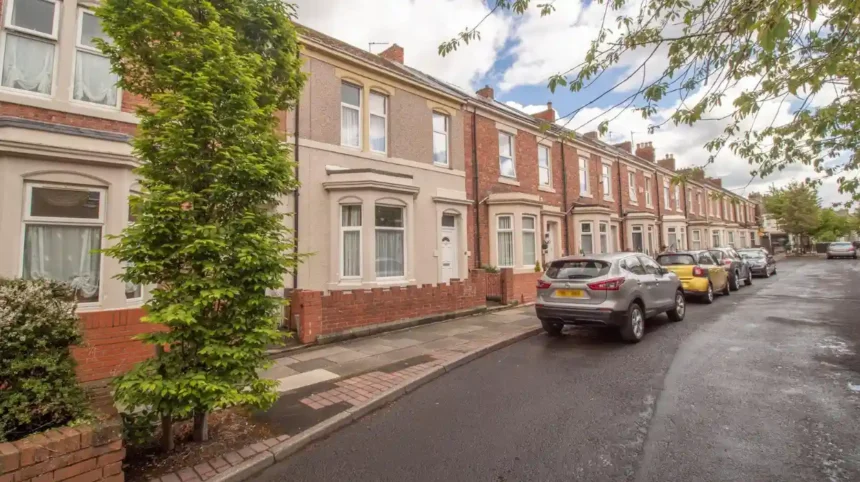
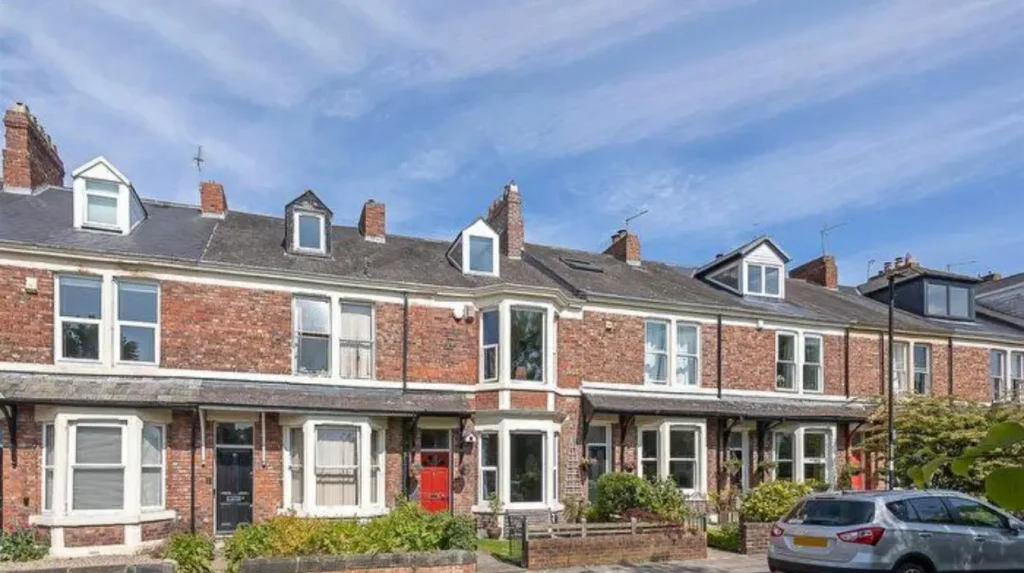
The houses generally use a two-storey form with attic accommodation. Dormer windows provide additional usable space within the roof structure.
Brick is the principal wall material. Slate roofs, brick chimneys and sandstone architectural details form other recurring elements.
This construction pattern reflects the practical requirements of nineteenth-century urban housing. Brick provided durable external walls, while slate offered a relatively robust roofing material suited to the region.
Some streets received additional decorative features.
Gainsborough Grove and Brighton Grove contain bay windows. Sidney Grove and houses including Studley House and Oxley House on Studley Terrace feature decorative sandstone lintels.
Studley House is particularly distinctive because of its prominent corner turret. These details demonstrate that Victorian speculative housing was not entirely plain or standardised.
For students interested in architectural history, Arthur’s Hill provides a useful example of how ordinary residential construction can preserve evidence of nineteenth-century urban growth without relying exclusively on monumental buildings.
What makes Arthur’s Hill’s Victorian terraces historically important?
Arthur’s Hill’s terraces preserve evidence of nineteenth-century Newcastle’s housing expansion through brick construction, slate roofs, sandstone detailing, dormer windows and varied street designs. Their survival demonstrates how ordinary residential buildings record industrial-era population growth and urban development.
The heritage significance of Arthur’s Hill rests largely on its collective streetscape rather than a single monumental building.
The terraces show how housing was produced for a growing urban population. Their repeated architectural forms demonstrate the economics of nineteenth-century residential development while their variations reveal the work of individual builders.
Tyneside housing traditions also shaped the district.
Some Arthur’s Hill properties are Tyneside flats. This regional housing form divides a terraced building into separate upper and lower dwellings, each with its own entrance. The arrangement increased residential density without requiring separate detached buildings.
This form is important when understanding the historic relationship between housing supply and population growth.
Arthur’s Hill also contains properties that have changed function. The Historic Environment Record notes inserted shopfronts within some terraces. Stanhope Street developed a particularly strong commercial character, with shops and restaurants occupying parts of the street.
The mixture of houses, flats and commercial premises demonstrates how residential neighbourhoods adapted to changing economic needs.
For a modern resident, this means that the physical environment is not simply a collection of old houses. It is a record of successive changes in household structure, commerce, property use and urban density.
How is Westgate Hill Cemetery connected to Arthur’s Hill’s history?
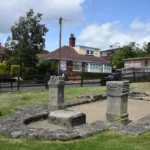
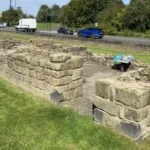
Westgate Hill Cemetery opened in 1829 on land at Arthur’s Hill and became one of the earliest garden cemeteries in England. Its surviving landscape, monuments and walls provide direct evidence of Newcastle’s nineteenth-century social, religious and architectural history.
Westgate Hill Cemetery is one of Arthur’s Hill’s most important historic landmarks.
Historic England identifies it as a Grade II Registered Park and Garden. It opened in 1829 after a private company acquired approximately three acres of land at Arthur’s Hill in December 1828.
The cemetery was planned during a period when purpose-designed burial grounds were becoming an important part of urban development.
Architect John Green was appointed to the project, while Gateshead nurseryman William Falla advised on landscaping. The site included curved paths, planting and an ornamental layout influenced by contemporary garden cemetery design.
The first burial took place in October 1829.
Historic England describes Westgate Hill Cemetery as one of the earliest garden cemeteries in England and the earliest of its type in the North East.
The cemetery continued to receive burials until 1957. Its chapel was demolished in 1970, and Newcastle City Council acquired the site in the early 1990s.
The cemetery contains monuments associated with nineteenth- and early twentieth-century Newcastle residents. Historic England records burials connected with public benefactors, surgeons, academics and manufacturers.
For genealogical researchers, the site is particularly relevant because Historic England identifies the surviving burial register as covering 1829 to 1957.
Its relationship with Arthur’s Hill also predates much of the surviving terrace housing. The cemetery therefore provides evidence of the area’s importance before the Victorian residential expansion reached its later density.
How did Newcastle’s industrial growth affect Arthur’s Hill?
Newcastle’s industrial growth increased demand for housing across western districts, while engineering and manufacturing employment around Elswick and Scotswood helped drive suburban expansion. Arthur’s Hill developed within this wider industrial urban system rather than in isolation from it.
The nineteenth-century expansion of Newcastle was closely connected with industrial employment.
Lord Armstrong’s engineering works at Elswick became one of the most important industrial complexes in the region. Newcastle Heritage records more than 20,000 workers at the Elswick and Scotswood works around the turn of the twentieth century.
The impact extended beyond factory gates.
Large workforces required houses, food shops, public houses, services, schools, places of worship and transport. Residential districts expanded to accommodate these needs.
Arthur’s Hill’s terraces belong to this wider urban process.
Newcastle City Council describes the nineteenth century as a period in which Newcastle experienced major increases in wealth, population and importance. The city became associated with railways, engineering, shipbuilding and electrical innovation.
Housing construction therefore reflected economic geography.
The district’s relatively dense residential form allowed a substantial population to live within a limited area. Tyneside flats further increased the number of households that could occupy terrace buildings.
This historical relationship remains relevant to modern residents. The compact urban form that developed during industrialisation contributes to Arthur’s Hill’s continued connection with central Newcastle and neighbouring western districts.
How did Arthur’s Hill’s housing change during the twentieth century?
Twentieth-century Arthur’s Hill experienced changes in housing use, redevelopment and urban density while retaining substantial Victorian terrace stock. Some early streets disappeared beneath later blocks of flats, but much of the later nineteenth-century streetscape remained identifiable.
The twentieth century brought significant changes to Newcastle’s housing system.
Industrial restructuring, population movement, housing policy and redevelopment affected neighbourhoods throughout the city. Some areas experienced extensive clearance and replacement housing.
Arthur’s Hill did not lose its entire Victorian housing framework.
The Historic Environment Record states that the earliest Cookson streets were replaced by blocks of flats, while the later terrace streets remained.
This distinction is important. The neighbourhood visible today is not an untouched survival of the 1826 estate. It is a layered urban environment containing nineteenth-century terraces, later flats, altered properties and commercial premises.
Newcastle’s wider housing policy also changed substantially after the First World War.
The Housing Act 1919, commonly known as the Addison Act, established housing as a national responsibility and encouraged local authorities to provide new housing. Newcastle subsequently developed council housing in several parts of the city.
Later twentieth-century redevelopment included slum clearance and replacement housing across Newcastle.
Arthur’s Hill’s survival of substantial terrace housing therefore forms part of a wider story of selective retention and redevelopment across the city.
Why does Arthur’s Hill matter to students and young professionals today?
Arthur’s Hill matters to students and young professionals because its historic housing stock combines central-west Newcastle location, dense residential streets, local commerce and access to the city’s universities, employment areas and cultural infrastructure. Its history explains the neighbourhood’s urban form.
The modern student population forms an important part of Newcastle’s housing system.
Newcastle City Council reported 37,730 full-time students aged 18 and over living in Newcastle at the 2011 Census. The figure represented 17.7% of the relevant permanent resident population, compared with a national average of 6%.
The city’s higher education sector has continued to influence accommodation demand.
A later council assessment states that the number of students enrolled at Newcastle’s two universities increased by 40% between 2000/01 and 2019/20, reaching a combined 56,395 students in 2019/20.
Purpose-built student accommodation has expanded significantly, particularly around the urban core.
This does not remove the importance of established residential neighbourhoods. Students and young professionals continue to interact with mainstream private housing, shared homes and converted properties alongside purpose-built accommodation.
Newcastle University describes its campus as being in the heart of the city and notes that its accommodation is either on campus or close to it.
Arthur’s Hill forms part of this broader urban housing market.
Its historic terraces provide a different residential model from purpose-built student accommodation. Their importance lies in the relationship between established neighbourhoods and the modern city.
What housing features should students understand before living in Arthur’s Hill?
Students should recognise that Arthur’s Hill contains historic terraces, Tyneside flats, converted properties, later flats and commercial premises. Building age, layout and conversion history therefore vary significantly from one property and street to another.
Historic housing requires practical interpretation.
A nineteenth-century terrace does not necessarily retain its original internal arrangement. Properties have been subdivided, combined, modernised or converted during successive periods.
Tyneside flats are particularly relevant because the original building form differs from a modern apartment block. Separate upper and lower dwellings can occupy the same terrace structure.
The external appearance can therefore provide only part of the information required when assessing a property.
Students should distinguish between architectural heritage and present-day accommodation standards. A historic building can contain modern kitchens, bathrooms, heating systems and internet infrastructure while retaining its original external structure.
The opposite is also possible: a property can retain historic architectural details while requiring substantial maintenance.
Newcastle University advises students to consider location, facilities, cost and accommodation type when comparing housing. Its housing advice also provides access to support concerning contracts and tenants’ rights.
The historical character of a property should therefore complement, rather than replace, practical checks concerning tenancy conditions.
How can residents experience Arthur’s Hill as a historical neighbourhood?
Residents can understand Arthur’s Hill through its surviving terrace streets, historic building details, Westgate Hill Cemetery, commercial streets and relationship with Newcastle’s wider industrial landscape. Walking the neighbourhood reveals how nineteenth-century development shaped its present urban form.
The most effective historical approach is to examine the district at street level.
Terrace construction becomes visible through repeated brick façades, rooflines, dormer windows, chimneys and sandstone details.
Different streets also reveal the work of different builders. Gainsborough Grove and Brighton Grove contain bay-windowed properties, while Sidney Grove and parts of Studley Terrace feature decorative sandstone details.
Stanhope Street provides a different historical experience because its commercial character demonstrates how local shopping developed within a residential neighbourhood.
Westgate Hill Cemetery provides another layer.
Its walls, paths, monuments and surviving landscape connect the district to Newcastle’s nineteenth-century social history. Historic England records its Grade II status and continuing heritage significance.
To experience this historic neighbourhood in person today, consult our comprehensive [Insert Anchor Text for Things to Do Article Here] for itineraries and visiting parameters.
Newcastle City Council also promotes local heritage through heritage interpretation, commemorative plaques, Heritage Open Days and archaeological initiatives.
These resources place Arthur’s Hill within the wider heritage network of Newcastle rather than treating it as an isolated residential district.
What does Arthur’s Hill reveal about Newcastle’s urban history?
Arthur’s Hill demonstrates how Newcastle transformed from a growing nineteenth-century industrial town into a modern city through estate development, terrace construction, population growth, commercial expansion, housing change and selective heritage survival. Its streets preserve this process in physical form.
The neighbourhood provides evidence for several major stages of Newcastle’s development.
The 1826 Cookson estate represents early nineteenth-century suburban expansion. Westgate Hill Cemetery, opened in 1829, represents changing approaches to urban burial and landscape design.
Victorian terrace construction represents the response to rapid population growth and industrial employment. By 1890, most of the characteristic streets that survive today had been established.
The twentieth century introduced different pressures. Housing policy, redevelopment, changing household patterns and industrial restructuring altered Newcastle’s urban landscape.
Arthur’s Hill retained much of its later Victorian residential framework despite these changes.
That survival is historically significant because ordinary housing often disappears more quickly than major civic or religious buildings. A surviving terrace street therefore records the everyday environment created for Newcastle’s expanding population.
The district also demonstrates the connection between housing and employment. Industrial expansion around Elswick and Scotswood helped create the demographic conditions that supported western suburban growth.
For students, young professionals, historians and genealogists, Arthur’s Hill therefore provides a compact case study in urban development.
How should Arthur’s Hill’s heritage be preserved for the future?
Arthur’s Hill’s heritage depends on retaining historic streetscapes, understanding individual buildings, maintaining significant structures and managing adaptation without losing architectural character. Westgate Hill Cemetery and surviving terraces provide important physical evidence for future research.
Heritage preservation does not require every historic building to remain unchanged.
Historic buildings have always adapted to changing social and economic needs. Shops have occupied former residential premises, terraces have been subdivided into flats, and buildings have received modern services.
The challenge is retaining the elements that communicate historical character.
Newcastle City Council’s character assessment approach recognises that ordinary neighbourhood features can possess heritage value and stresses the importance of protecting distinctive landscapes, townscapes and local identity.
The council also maintains a system of conservation areas and historic-environment information to guide decisions affecting buildings and places of architectural or historic interest.
Westgate Hill Cemetery illustrates why long-term management matters. Historic England currently records the registered park and garden as having generally unsatisfactory condition with major localised problems and a declining trend.
For researchers, preservation also means maintaining documentary evidence.
Maps, burial registers, historic photographs, planning records, directories and census material allow changes in streets and households to be reconstructed over time.
Arthur’s Hill therefore has value beyond its appearance. Its buildings and records form evidence for Newcastle’s social, architectural, demographic and industrial history.
What is the long-term historical significance of Arthur’s Hill?
Arthur’s Hill remains historically significant because its surviving Victorian terraces, early estate origins and Westgate Hill Cemetery preserve evidence of Newcastle’s nineteenth-century expansion. Its modern residential role continues a long tradition of adapting urban housing to changing populations.
The district’s history begins with the 1826 Cookson estate but extends far beyond its founder.
Its defining physical character emerged through nineteenth-century residential expansion. The construction of terraces reflected Newcastle’s population increase, industrial employment and demand for accessible urban housing.
Westgate Hill Cemetery adds an earlier institutional landscape to the story, while the surviving Victorian streets demonstrate the later transformation of the surrounding hillside into a dense residential district.
The twentieth century introduced redevelopment and new housing forms without eliminating the historic terrace framework.
The twenty-first century has added another layer through the continuing demand for housing from students, graduates and young professionals.
This continuity gives Arthur’s Hill particular value as an urban-history case study. It shows how a neighbourhood can retain physical evidence of nineteenth-century development while functioning within a modern university city.
For Newcastle Times readers, Arthur’s Hill is therefore more than a place to live. It is a surviving record of how Newcastle expanded, housed its growing population, responded to industrialisation and adapted its residential districts across almost two centuries.