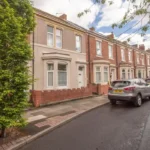


Benwell and Scotswood form a historic residential area on the western side of Newcastle upon Tyne. The area combines Roman archaeology, Victorian housing, industrial heritage, council-built estates, newer housing development and relatively accessible property prices, making it an important location for first-time buyers studying Newcastle’s housing market.
- Why are Benwell and Scotswood historically important to Newcastle?
- How did Benwell change from a Roman frontier settlement into a residential district?
- What types of homes are found in Benwell and Scotswood?
- Are Benwell and Scotswood affordable for first-time buyers?
- What should first-time buyers check before buying a property in Benwell?
- How has Scotswood’s housing changed since the twentieth century?
- What regeneration is taking place in Benwell and Scotswood?
- What Roman heritage can first-time buyers find around Benwell and Scotswood?
- How does the historic environment affect buying a home in Benwell and Scotswood?
- Is Benwell and Scotswood well connected to the wider Newcastle area?
- What parks and open spaces are important in Benwell and Scotswood?
- What are the main housing risks first-time buyers should understand?
- What does Benwell and Scotswood’s history mean for first-time buyers today?
Why are Benwell and Scotswood historically important to Newcastle?
Benwell and Scotswood developed through Roman frontier settlement, nineteenth-century industrial expansion, twentieth-century council housing and modern regeneration, creating a residential landscape where archaeological sites, Victorian buildings and newer homes remain closely connected.
Benwell occupies an elevated position west of Newcastle city centre, while Scotswood extends towards the River Tyne. Their historical development reflects the wider growth of Newcastle from a Roman frontier settlement into an industrial city and, later, a modern regional centre.
The Roman period provides the earliest major evidence. Hadrian’s Wall began construction around AD 122 under Emperor Hadrian. The frontier crossed modern Newcastle and continued westwards. Newcastle City Council records the wall as part of the Frontiers of the Roman Empire World Heritage Site. The wall extends about 73.5 miles from Bowness-on-Solway to Wallsend.
Benwell was particularly important because it contained the Roman fort of Condercum. The fort covered approximately 5.6 acres and measured about 581 feet from north to south and 417 feet from east to west. Archaeological evidence dates its construction to approximately AD 122–124.
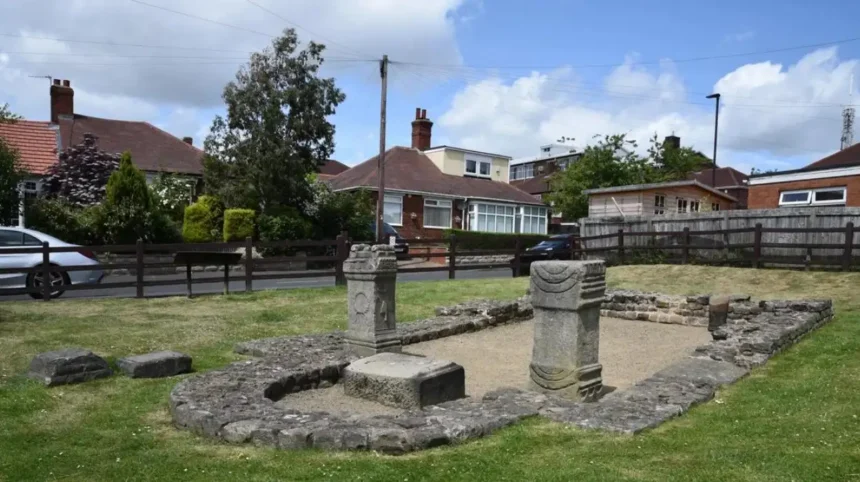
The Roman landscape extended beyond the fort. Benwell Roman Temple was dedicated to Antenociticus, a local deity, and an inscription dates the temple to approximately AD 178–180. The surrounding civilian settlement demonstrates that the area functioned as more than a military installation.
The Roman remains also influence modern planning. Archaeological deposits survive beneath later development, and the Benwell fort is a Scheduled Monument. The northern part of the fort site is beneath a reservoir, while the southern part lies beneath twentieth-century housing.
This long history matters to prospective homeowners because Benwell is not simply a modern suburban district. Its present streets sit above and alongside archaeological remains that form part of Newcastle’s protected historic environment.
How did Benwell change from a Roman frontier settlement into a residential district?
Benwell changed from a Roman military landscape into an agricultural area and then an urban neighbourhood as Newcastle expanded westward, with industrialisation, population growth, transport improvements and nineteenth-century housebuilding transforming its physical character.
For centuries after Roman occupation, the area remained substantially rural. Newcastle’s major nineteenth-century expansion altered that pattern.
Industrial growth increased Newcastle’s population and created demand for housing close to employment. Coal, engineering, shipbuilding, manufacturing and transport became central to the regional economy. Newcastle City Council describes nineteenth-century Newcastle as a rapidly expanding industrial city whose wealth and population increased substantially.
Benwell’s location west of the historic core made it suitable for urban expansion. Roads connected the district with central Newcastle and neighbouring settlements. Housing gradually replaced agricultural land.
The architectural record reflects this transition. St James’ Church on Benwell Lane began as a chapel of ease in 1832 and became a parish church in 1843. Architect John Dobson designed the original building, with later additions in 1864 and 1879–80 and further work in 1895. Historic England lists the church at Grade II.
The nineteenth century also produced buildings associated with education, philanthropy and local institutions. The former Royal Victoria School for the Blind on Benwell Lane was constructed in 1865 to designs by Alfred Waterhouse for Dr Thomas Hodgkin. It is listed at Grade II.
Hodgkin was a local historian as well as a medical figure. Historic England records that he gave the house to the Royal Victoria Home in 1894 and its grounds to the former Urban District of Benwell as a public park.
For first-time buyers, this architectural history explains why Benwell contains several different housing types rather than one uniform residential style.
What types of homes are found in Benwell and Scotswood?
Benwell and Scotswood contain Victorian terraces, interwar and post-war houses, flats, former council housing, semi-detached properties and newer developments, giving first-time buyers a broader range of property types than a single-period suburb.
Terraced housing became an important response to Newcastle’s industrial population growth. Such homes provided compact accommodation close to employment, streets, shops and public services.
Twentieth-century housing added another layer. The national Housing Act 1919, commonly known as the Addison Act, made housing a national responsibility and encouraged local authorities to build large numbers of new homes. Newcastle subsequently developed council housing estates across the city.
Scotswood became part of this municipal housing history. Newcastle City Council’s history of council housing records later redevelopment and investment in areas including Scotswood, alongside Elswick, Kenton and Byker.
The result is a housing market with different construction dates, ownership structures and maintenance requirements.
Some Victorian and early twentieth-century properties feature traditional masonry, slate roofs, timber windows and older layouts. Post-war properties often have different construction systems and estate designs. Newer developments provide modern insulation, contemporary kitchens and more recent building standards.
First-time buyers therefore need to assess the individual property rather than treating Benwell or Scotswood as one homogeneous housing market.
Are Benwell and Scotswood affordable for first-time buyers?
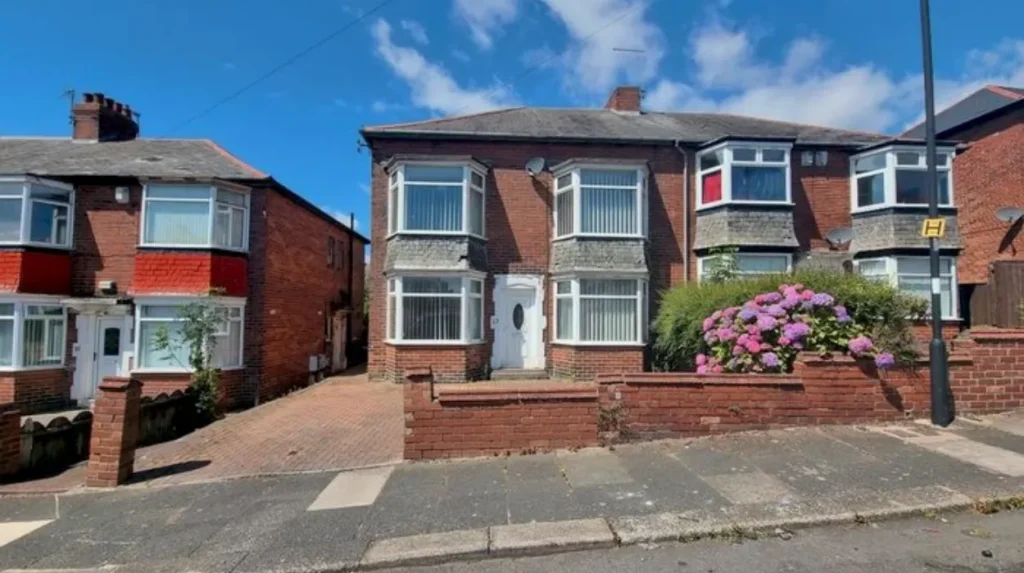
Benwell has relatively accessible sold prices compared with many established Newcastle neighbourhoods, although prices vary sharply by street, property type and tenure. Recent recorded sales show flats below £100,000 alongside houses selling above £150,000.
Current transaction evidence illustrates the variation. Rightmove’s compilation of HM Land Registry data records an overall average sold price of £148,499 in Benwell during the year covered by its latest update. Semi-detached properties averaged £162,280, terraced properties £151,214 and flats £86,744.
These figures are transaction averages rather than guaranteed asking prices. They also combine different property types and streets.
Individual transactions show the spread more clearly. A three-bedroom semi-detached property on Benwell Grange Terrace sold for £134,500 in March 2026, while another three-bedroom semi-detached property on Benwell Lane sold for £176,000 in July 2025.
Lower-priced flats are also present. Several recorded Benwell Close transactions were below £70,000, including a flat sold for £46,000 in January 2026 and another for £52,500 in February 2025.
Benwell Village Mews provides another example of mixed property values. Its latest recorded annual average was £95,000, with individual transactions including a two-bedroom flat at £68,000 and a three-bedroom terraced property at £129,950.
These figures make the area relevant to first-time buyers with smaller deposits, but purchase affordability depends on mortgage rates, deposit size, income, service charges, lease terms, insurance, maintenance and other transaction costs.
What should first-time buyers check before buying a property in Benwell?
First-time buyers should examine tenure, building condition, lease length, service charges, energy performance, renovation requirements, flood risk, planning constraints and the property’s exact street position before committing to a Benwell purchase.
The diversity of housing creates different purchasing considerations.
A freehold terraced or semi-detached house presents different responsibilities from a leasehold flat. Leasehold buyers need to examine the remaining lease term, ground rent provisions, service charges, building insurance arrangements and restrictions on alterations.
Property condition is equally important. Older terraces can contain traditional construction, ageing roofs, damp problems, outdated electrical systems or inefficient heating. A full building survey provides more information than a basic valuation.
Buyers should also investigate previous alterations. Extensions, loft conversions, replacement windows and structural changes require appropriate permissions or certificates where applicable.
Historic designations require additional attention in relevant locations. A listed building is protected because of its special architectural or historic interest. St James’ Church, the Royal Victoria School for the Blind and Benwell Waterworks Chimney are examples of listed heritage assets in the wider Benwell area.
Benwell Waterworks Chimney dates from 1904 and was associated with the Newcastle and Gateshead Water Company. Historic England lists it at Grade II and identifies its landmark value.
A listed building is not automatically unsuitable for homeownership. However, proposed alterations can require listed building consent, depending on the building and proposed work.
How has Scotswood’s housing changed since the twentieth century?
Scotswood experienced major twentieth-century housing intervention as Newcastle replaced older housing, built council estates and later introduced large-scale regeneration, creating a mixed neighbourhood of established homes and newer residential development.
Council housing became an important part of Newcastle’s response to housing shortages. The 1919 national legislation encouraged municipal housebuilding, while later programmes addressed overcrowding and poor housing conditions.
After the Second World War, Newcastle expanded slum clearance and redevelopment programmes. The city eventually invested in new council housing in Scotswood and other western districts.
This history explains the presence of large estates and different generations of municipal housing.
The late twentieth and early twenty-first centuries introduced another phase. Regeneration focused on replacing or redeveloping older housing, improving environmental conditions and increasing housing choice.
Newcastle’s planning documents identify the Scotswood Development Area as a major housing allocation. The Development and Allocations Plan identified approximately 1,422 homes for the Scotswood Development Area across a site of about 33.35 hectares.
The housing trajectory also recorded substantial planned delivery at the Scotswood Development Area, reflecting its importance within the city’s long-term housing strategy.
This development changes the choice available to first-time buyers. New-build properties provide modern construction standards and different layouts from older terraces. Established homes provide access to older streets and mature neighbourhoods.
What regeneration is taking place in Benwell and Scotswood?
Regeneration in Benwell and Scotswood focuses on housing renewal, environmental improvement, property standards and new development, with the Scotswood Development Area forming one of Newcastle’s significant planned housing locations.
Newcastle’s planning framework identifies previously developed land and regeneration areas as important sources of housing. The city’s Development and Allocations Plan states that housing allocations seek to improve housing quality and choice while supporting attractive and sustainable communities.
Scotswood is particularly significant because its planned development is large compared with individual infill schemes.
The city’s housing records have also identified phases of Scotswood development with substantial housing capacity. One council housing trajectory recorded 1,422 homes for the wider Scotswood Development Area.
Regeneration does not only concern new houses. Property management also forms part of the area’s current housing policy.
Newcastle operates selective licensing in designated areas where private rented properties require licences. From April 2025, the city’s scheme included parts of Benwell, including Howdene Road, part of Howlett Hall Road, Ravenburn Gardens and part of Swinley Gardens.
In September 2025, Newcastle City Council also reported a community clean-up and engagement initiative involving the Benwell Terraces, local organisations, housing providers, police and council teams. The initiative addressed housing and environmental concerns and promoted property licensing standards.
For owner-occupiers, such programmes provide important context about how neighbourhood management and housing quality are being addressed.
What Roman heritage can first-time buyers find around Benwell and Scotswood?
Benwell and Scotswood contain surviving sections and archaeological evidence associated with Hadrian’s Wall, including the Benwell fort site, Vallum crossing and Roman temple, giving residents direct access to internationally recognised heritage within a modern residential landscape.
Benwell’s Roman heritage is unusually substantial.
Condercum, the Roman fort at Benwell, formed part of Hadrian’s Wall frontier system. The fort was occupied through most of the Roman period and was associated with the cavalry regiment ala I Asturum.
The fort itself is largely invisible above ground because later development covers much of the site. That does not mean the archaeological resource disappeared. Historic England records surviving archaeological remains below modern ground level.
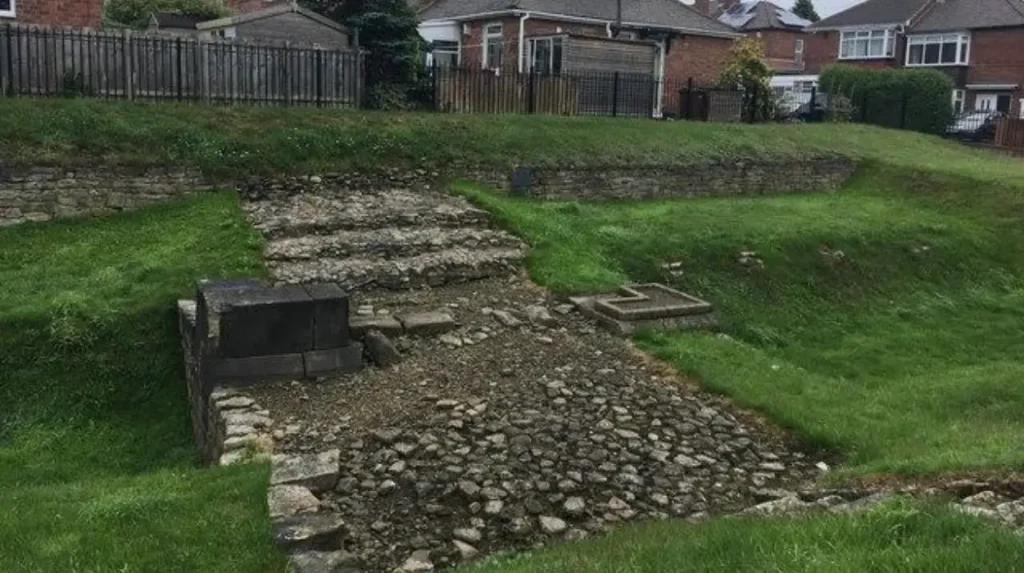
The Benwell Vallum crossing provides a particularly important physical remnant. Archaeologists located the causeway in 1932 and excavated it in 1933. Preservation and display work was completed in 1938. The site includes evidence for a gateway controlling movement across the Vallum.
The Vallum was an earthwork south of Hadrian’s Wall. It formed part of the Roman frontier infrastructure and controlled movement through the military zone.
The Roman temple provides another surviving monument. English Heritage identifies it as a temple dedicated to Antenociticus and places it within the civilian settlement outside Benwell fort.
The heritage landscape also extends into Scotswood. UNESCO’s mapping of the Frontiers of the Roman Empire World Heritage Site identifies sections of Hadrian’s Wall and Vallum within the Scotswood area, including sections near Denton Road and Denton Dene.
These sites give the district strong archaeological relevance for residents, researchers and visitors.
To explore the area’s historic landmarks and local attractions in person, consult our comprehensive for visiting information and local itineraries.
How does the historic environment affect buying a home in Benwell and Scotswood?
Historic assets affect property decisions through archaeological protection, listed-building controls and planning requirements, but most homes remain ordinary residential properties without direct heritage designation; buyers must check the specific property’s legal and planning status.
The presence of Roman archaeology does not mean every property has heritage restrictions.
Newcastle City Council maintains a Historic Environment Record that identifies archaeological sites and historic assets. Hadrian’s Wall and its associated structures receive particular protection because the monument forms part of a UNESCO World Heritage Site.
Scheduled Monument Consent is required for works affecting designated scheduled monuments. Newcastle City Council notes that archaeological authorities review planning applications affecting the Hadrian’s Wall frontier.
Listed buildings operate under a separate legal framework. Historic England states that listed buildings are protected under the Planning (Listed Buildings and Conservation Areas) Act 1990.
For a first-time buyer, the practical rule is simple: check the address rather than relying on the neighbourhood name.
A solicitor should confirm title information and relevant restrictions. A surveyor should identify physical defects. The planning authority and Historic England records provide information where heritage status is relevant.
Is Benwell and Scotswood well connected to the wider Newcastle area?
Benwell and Scotswood occupy Newcastle’s western urban corridor, with established roads, bus services, cycle routes and connections towards the city centre, the River Tyne and neighbouring western districts forming an important part of everyday accessibility.
The area’s position has always influenced its development.
Scotswood Road became a major west-east corridor connecting the western districts with Newcastle. The Newcastle Character Assessment identifies the Scotswood Road corridor, Hadrian’s Way, the River Tyne waterfront and off-road routes among the area’s important landscape and movement features.
The city’s historic cycle-route planning also identified routes linking Paradise, Scotswood Road and William Armstrong Drive, alongside a route connecting Hadrian’s Way with Whitehouse Road, Hodgkin Park, Benwell Dene and Benwell Lane.
This network reflects the area’s geography. Benwell sits between the central city and western suburbs, while Scotswood occupies a strategic position beside the Tyne.
First-time buyers should nevertheless evaluate transport at the individual property level. A home close to a main road differs from one on a quieter residential street. Journey times also depend on the destination, working hours and transport mode.
What parks and open spaces are important in Benwell and Scotswood?
Benwell and Scotswood contain parks, denes, river-related landscapes and established green corridors that form part of the area’s environmental character and provide important recreational and heritage settings within a densely developed part of Newcastle.
Benwell Dene and Hodgkin Park are among the green spaces identified in Newcastle’s character assessment. The assessment also recognises Scotswood Village, the River Tyne waterfront, Scotswood Road and Hadrian’s Way as important landscape features.
Hodgkin Park has a direct historical connection with the nineteenth-century development of Benwell Dene. Dr Thomas Hodgkin gave the grounds of Benwell Dene to the former Urban District of Benwell in 1894.
These green spaces provide more than recreational value. They help explain how the district evolved from rural land into an urban neighbourhood while retaining elements of its earlier landscape.
For first-time buyers, proximity to parks can also influence daily routines, children’s activities, walking routes and the character of individual streets. These factors need to be assessed during property viewings rather than inferred from a neighbourhood-wide description.
What are the main housing risks first-time buyers should understand?
The principal risks involve property condition, leasehold obligations, street-level differences, renovation costs, planning restrictions and local housing-market variation, so first-time buyers should evaluate each property independently rather than treating Benwell and Scotswood as one uniform market.
The largest mistake is relying on an area-wide average.
Benwell’s recent overall average of £148,499 combines flats, terraces and semi-detached properties. The difference between an £86,744 average for flats and a £162,280 average for semi-detached homes demonstrates the effect of property type.
Street-level variation is also substantial. Recent transactions include lower-priced flats around Benwell Close and higher-priced houses on Benwell Lane and Brignall Gardens.
Property condition creates another variable. A low purchase price does not automatically mean a low overall cost. Roof replacement, damp treatment, rewiring, heating upgrades, window replacement and structural repairs can materially change the total budget.
Leasehold properties require additional checks. Service charges, lease length, restrictions and management arrangements directly affect affordability.
The area’s regeneration history also means buyers should examine planning applications close to a prospective property. New housing can improve local supply and services, while construction activity can temporarily affect individual streets.
What does Benwell and Scotswood’s history mean for first-time buyers today?
Benwell and Scotswood offer first-time buyers a housing market shaped by centuries of change, from Roman frontier defence and Victorian urbanisation to council housing and modern regeneration, with affordability, property variety and historic character defining the area’s present identity.
The historical record provides a clear explanation for the area’s current housing structure.
Roman Benwell established the earliest major built environment. Condercum and its associated civilian settlement formed part of the frontier system. The temple of Antenociticus and Vallum crossing demonstrate the complexity of that landscape.
The nineteenth century transformed the district through urban expansion. Churches, institutional buildings and residential streets appeared as Newcastle’s population and industrial economy expanded. St James’ Church and the former Royal Victoria School for the Blind remain important architectural evidence of this period.
The twentieth century introduced council housing, estate redevelopment and large-scale public intervention. Scotswood became an important part of Newcastle’s municipal housing history.
The twenty-first century has added regeneration, new housing and stronger property-management interventions. The Scotswood Development Area has been identified for substantial residential growth, while selective licensing and neighbourhood improvement programmes address housing standards in parts of Benwell.
For first-time buyers, this produces a market with genuine choice. Recent sold-price evidence demonstrates that flats, terraces and semi-detached houses occupy very different price ranges.
Benwell and Scotswood therefore make sense as a first-time-buyer area when the decision is based on the individual property, purchase costs, tenure, condition, street environment, transport requirements and long-term plans.
The historic environment adds another layer of value. Hadrian’s Wall, the Benwell fort, the Roman temple, Victorian institutions and surviving industrial structures connect present-day housing with Newcastle’s archaeological and urban history.
The area’s future historical relevance will depend on how regeneration accommodates archaeological protection, historic buildings, housing demand and environmental quality. Newcastle’s planning framework already recognises heritage along Hadrian’s Wall, the River Tyne, Scotswood Village, Benwell and Denton Denes as important elements of the western city’s character.