


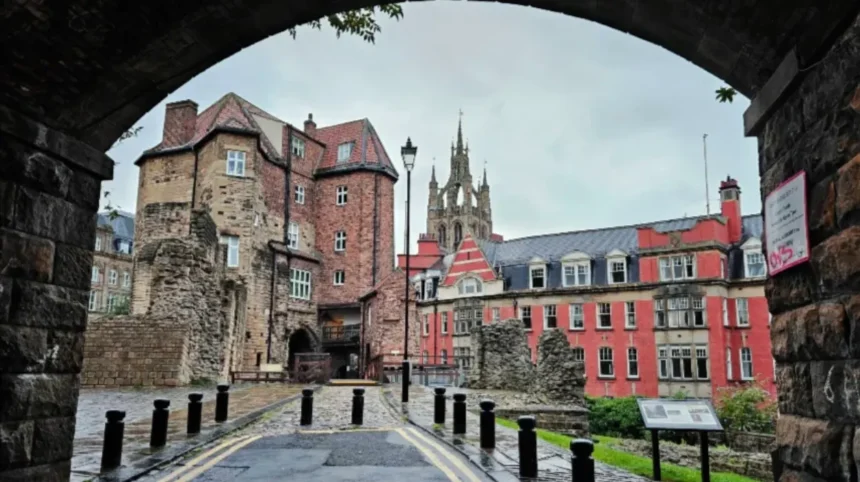
Key Points
- Funding Award: Newcastle Cathedral has been awarded a grant of £305,463 from Historic England’s Places of Worship Renewal Fund.
- Scope of Repairs: The financial injection will directly target and support vital roof and floor repairs, as well as crucial infrastructure upgrades.
- Accessibility Enhancements: Improvements involve installing a replacement lift and upgrading accessible toilet facilities to accommodate all visitors.
- Wider Studies and Security: The package also funds an access audit, enhanced security measures, and feasibility studies focusing on future repairs and potential renewable energy measures.
- Regional Context: Newcastle Cathedral is one of only two places of worship in the North East to secure funding in this latest round, alongside the Roman Catholic Church of Our Lady and St Columba in Wallsend. Nationally, Birmingham Cathedral is the sole other Anglican cathedral to receive a grant.
- Leadership Comments: The Very Reverend Lee Batson, Dean of Newcastle, and Louise Brennan, Director of Regions at Historic England, highlighted the long-term community value and architectural significance of the project.
Newcastle (Newcastle Times) October 26, 2026 — Newcastle Cathedral, one of the city’s most recognisable architectural landmarks and its principal Church of England place of worship, has successfully secured a major financial grant totaling £305,463. Reported by Georgia Cuthbertson of ChronicleLive, the substantial funding package has been allocated to tackle pressing structural issues, execute essential roof and floor restorations, and significantly upgrade accessibility infrastructure for worshippers, tourists, and community members alike.
- Key Points
- Why has Newcastle Cathedral been awarded funding and what repairs will it cover?
- Where is the funding coming from and how does it fit into national heritage schemes?
- What additional improvements and feasibility studies are planned?
- How does this development fit into the regional and architectural landscape of the North East?
- Background of the Particular Development
- Prediction
Why has Newcastle Cathedral been awarded funding and what repairs will it cover?
The historic place of worship, dedicated to St Nicholas, faces ongoing challenges in preserving its fabric due to its age and heritage status. As reported by Georgia Cuthbertson of ChronicleLive, the financial award of £305,463 will directly fund vital roof and floor repairs. In addition to these structural remedies, the project encompasses practical interior transformations, including the installation of a brand-new replacement lift and modernised, fully accessible toilet facilities.
As reported by Georgia Cuthbertson of ChronicleLive, The Very Reverend Lee Batson, Dean of Newcastle, emphasised the constant administrative and financial challenges tied to the upkeep of the ancient building. The Very Reverend Lee Batson stated that
“keeping the cathedral in good repair is a constant responsibility and constant challenge”.
Elaborating further on the charity’s obligations and the impact of the grant, The Very Reverend Lee Batson told ChronicleLive journalist Georgia Cuthbertson that
“as a charity, we are solely responsible for maintaining this beautiful place of worship for generations to come, and this grant will help us carry out essential roof and floor repairs, improve access and upgrade the facilities for our wide range of visitors”.
Where is the funding coming from and how does it fit into national heritage schemes?
The extensive restoration works are being financially backed through Historic England’s Places of Worship Renewal Fund. This dedicated national programme is structured to distribute a total of £92 million over a four-year period, specifically targeting urgent repairs for historic places of worship across England. The initiative aims to protect nationally significant heritage assets and ensure they can safely maintain active roles within their respective communities for years to come.
Highlighting the wider communal and cultural significance of the programme, Louise Brennan, Director of Regions at Historic England, spoke on the broader implications of the funding. As reported by Georgia Cuthbertson of ChronicleLive, Louise Brennan stated that
“places of worship are an important part of the heritage, character and identity of communities across England”.
Furthermore, Louise Brennan explained to ChronicleLive that these locations
“are not only remarkable historic buildings, but places that continue to bring people together, support community life and help showcase what makes their local places distinctive”.
She added that
“this funding creates an opportunity to invest in these buildings for the long term — addressing urgent repair needs while supporting new life into places that remain active and valued by their communities”.
What additional improvements and feasibility studies are planned?
Beyond immediate structural maintenance and essential accessibility installations, the newly secured grant will facilitate a comprehensive approach to the cathedral’s long-term operational efficiency and environmental footprint. According to details covered by ChronicleLive, the financial backing will also pay for a thorough access audit, the implementation of enhanced security measures, and vital feasibility studies. These studies are set to investigate pathways for future building preservation alongside potential renewable energy measures to modernise the facility’s energy usage.
Expressing gratitude on behalf of the institution, The Very Reverend Lee Batson noted how these holistic updates will positively transform day-to-day operations. As reported by Georgia Cuthbertson of ChronicleLive, The Very Reverend Lee Batson stated that
“these practical improvements will make a real difference to everyone who comes through our doors, whether for worship, an event or visit”.
The Very Reverend Lee Batson further noted:
“We are grateful to the UK Government and Historic England for helping us protect the Cathedral’s heritage and make it more welcoming and accessible to all”.
How does this development fit into the regional and architectural landscape of the North East?
Securing this grant places Newcastle Cathedral in an exclusive category within regional heritage funding allocations. Out of all historic sites across the North East, Newcastle Cathedral is one of only two places of worship to successfully secure funding in this competitive round, sharing the distinction with the Roman Catholic Church of Our Lady and St Columba in Wallsend. On a national scale, Birmingham Cathedral stands as the only other Anglican cathedral to be awarded a grant in this allocation cycle to assist with essential structural repairs.
The site itself holds deep historical and cultural roots within the fabric of Newcastle upon Tyne. Originally constructed as St Nicholas’ Church, the building officially achieved cathedral status in 1882, matching the exact year that Newcastle was granted its official city status. The cathedral is globally renowned for its architectural masterpiece—the historic Lantern Tower. Historically, the Lantern Tower served a practical navigation purpose by guiding ships safely along the River Tyne, and today it remains a defining, familiar feature etched into the Newcastle skyline.
The legacy of the Lantern Tower continues to inspire modern outreach efforts through the cathedral’s prominent community initiatives, most notably the Lantern Project. This support network provides critical assistance to individuals facing severe hardships, including vulnerable members of the city’s street life community. Reflecting on the dual mission of structural preservation and social outreach, The Very Reverend Lee Batson emphasised the spiritual and communal value of the site. As reported by Georgia Cuthbertson of ChronicleLive, The Very Reverend Lee Batson concluded that the funding
“will help ensure we continue to be a beacon of light for our region through the many activities we offer our communities from this building”.
Background of the Particular Development
The announcement of the £305,463 funding grant arrives against a backdrop of increasing financial pressure faced by historic ecclesiastical charities across the United Kingdom. Places of worship, particularly ancient medieval and Victorian structures, carry immense architectural and cultural value, yet they rely almost entirely on independent fundraising, visitor donations, and targeted heritage grants for their upkeep. Historic England’s Places of Worship Renewal Fund was established to mitigate these financial strains by injecting capital directly into vulnerable, nationally significant buildings.
Newcastle Cathedral has undergone various iterations of restoration over its long history, transitioning from a medieval parish church into an active cathedral in the late 19th century. Maintaining a grade-listed building exposed to northern weather elements requires continuous financial outlay, making external heritage grants a vital lifeline for preserving structural integrity while maintaining open-door policies for the public.
Prediction
This successful injection of capital is poised to exert a profoundly positive multi-faceted effect on the local community, regular churchgoers, tourists, and vulnerable populations across Newcastle. For the immediate audience of visitors, worshippers, and individuals with mobility impairments, the physical integration of a new replacement lift and upgraded accessible restrooms will eliminate long-standing barriers, ensuring that the cathedral lives up to its ethos of being a radically welcoming space for people of all faiths and none.
Furthermore, by securing the structural integrity of the roof and flooring, the cathedral safeguards its physical interior against environmental degradation, protecting centuries-old heritage artifacts. For marginalized groups who depend on the cathedral’s outreach programmes—such as participants in the Lantern Project—the long-term security of the building guarantees that these vital support networks, community activities, and safe spaces will remain active, fully functional, and anchored securely within the heart of Newcastle city centre for generations to come.