



Newcastle’s Benwell, Scotswood and Denton Burn areas offer access to riverside paths, urban green spaces, wooded corridors and historic landscapes. A useful walking guide should connect these neighbourhoods with the wider Tyne Valley, identify suitable routes for different abilities, and explain how local history, wildlife and public access shape each visit.
- What makes Benwell, Scotswood and Denton Burn important for nature walks?
- Where can you find the best nature walks in Benwell?
- Which woodland walks are best around Denton Burn?
- What can you discover at Scotswood Garden?
- Where can you enjoy riverside walking near Scotswood?
- How does the area’s industrial history shape its green spaces?
- Which wildlife can you see on local walks?
- Woodland birds and mature trees
- Pond wildlife and amphibians
- Pollinators and garden habitats
- Why does habitat diversity matter?
- Which walks are suitable for families and beginners?
- How can you plan a safe and responsible nature walk?
- When is the best time to explore Benwell, Scotswood and Denton Burn?
- How can you combine these nature spots into a walking itinerary?
- Why should you explore the green spaces of Newcastle’s West End?
What makes Benwell, Scotswood and Denton Burn important for nature walks?
Benwell, Scotswood and Denton Burn form part of Newcastle upon Tyne’s western neighbourhoods, where historic parks, wooded denes, community gardens and riverside landscapes provide accessible outdoor spaces. These green spaces connect local residents with wildlife, heritage and everyday recreation close to home.
The three neighbourhoods sit within Newcastle’s West End, an area shaped by centuries of settlement, industrial development and urban expansion. Their green spaces preserve natural features within a predominantly residential landscape. Walkers find mature trees, ponds, grassland, wildlife habitats and elevated views across the Tyne Valley.
A key geographical feature is the River Tyne, which flows along the southern edge of Scotswood. Denton Burn is a stream that runs through the western part of Newcastle before reaching the Tyne at Scotswood. Parts of the original watercourse were placed in culverts during the twentieth century.
The area’s walking opportunities range from maintained neighbourhood parks to steep woodland trails. Benwell Nature Park provides open green space and views across the valley, while Denton Dene South offers a more natural woodland setting. Scotswood Garden combines horticulture, wildlife habitats and community activities.
These locations are particularly useful for people seeking short local walks without travelling to Northumberland’s larger countryside destinations.
Where can you find the best nature walks in Benwell?
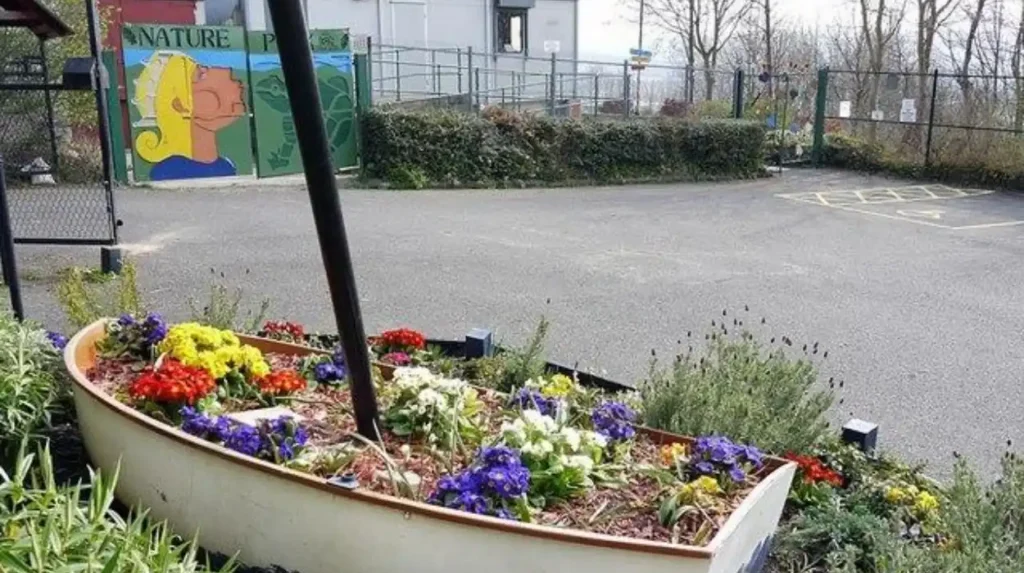
Benwell Nature Park, Hodgkin Park and the nearby woodland corridors offer some of the most useful local walking options in Benwell. Each location provides a different combination of open grassland, mature trees, historic features, wildlife habitats and space for everyday outdoor recreation.
Benwell Nature Park
Benwell Nature Park is a neighbourhood green space on Atkinson Road in Newcastle’s West End. It was created following the demolition of two streets in 1982. The site subsequently developed into a five-acre park containing woodland, a pond, artworks, hedgerows and views over the Tyne Valley.
The park illustrates how urban regeneration can create new opportunities for recreation and biodiversity. Former residential land now supports vegetation and pond habitats, while the open areas provide space for walking and enjoying the landscape.
A community orchard was planted in 2004 to mark the park’s twenty-first anniversary. This feature also reflects the role of local participation in shaping neighbourhood green spaces.
Visitors can combine a short walk around the park with observations of pond life, trees and seasonal vegetation. The elevated position provides views across the surrounding urban landscape.
Hodgkin Park
Hodgkin Park is a historic public park in Benwell. Local historian Dr Thomas Hodgkin presented the land to the former Benwell Urban District Council, and the park officially opened on 8 August 1899. Its landscape includes mature trees, green areas, a stone maze and views across the neighbourhood.
The park represents the Victorian tradition of providing public recreational spaces within expanding industrial towns. As Newcastle’s population grew, parks offered residents places for exercise, fresh air and social recreation.
For walkers, Hodgkin Park works well for a short neighbourhood outing. Its established trees provide seasonal interest, while the open areas accommodate relaxed walks and outdoor activities.
The park’s history also makes it relevant to visitors exploring the development of Benwell. Its landscape connects public recreation with the area’s late nineteenth-century social history.
What should walkers look for in Benwell’s green spaces?
Benwell’s parks support several forms of outdoor observation, including woodland birdwatching, seasonal plant identification and pond-side wildlife watching. Examples include listening for birds in mature trees, observing vegetation around the Benwell Nature Park pond and identifying changes in tree cover between seasons.
Walkers should remain on designated paths and avoid disturbing wildlife around ponds or planted areas. Ground conditions change after rainfall, particularly where grassland and unpaved paths remain wet.
Which woodland walks are best around Denton Burn?
Denton Dene South and Sugley Dene are two important woodland destinations near Denton Burn and Newcastle’s western edge. Their wooded valleys support wildlife, established trees and informal walking routes, although steep slopes, muddy ground and limited access affect route suitability.
Denton Dene South
Denton Dene South is a steep-sided wooded valley west of Newcastle city centre. Newcastle City Council describes it as an ancient woodland landscape with a network of paths, ponds and wildlife habitats. Smooth newts and palmate newts are among the species recorded at the site.
A dene is a narrow valley, often containing a stream or woodland habitat. In Newcastle, denes provide sheltered environments that contrast with surrounding streets, housing and transport corridors.
Denton Dene South is suitable for walkers seeking a more natural environment than a conventional urban park. Its woodland paths offer opportunities to observe seasonal vegetation, listen for birds and explore the area’s varied terrain.
However, this is not a fully accessible walking destination. The council warns that paths are steep in places and unsuitable for wheelchairs and pushchairs. Muddy conditions also make sturdy footwear important. Visitors should plan for uneven surfaces rather than expecting a smooth, level route.
The nearest car park is at Scotswood Sports Centre on Denton Road. The nearest bus stop is on Denton Road near Broadwood Road. There is no café within the dene, so visitors should bring drinking water and any refreshments they need.
Sugley Dene
Sugley Dene is a semi-natural ancient woodland west of Newcastle city centre. Its tree cover includes oak, ash, beech and sycamore, creating habitat for woodland birds and other wildlife. Parts of Hadrian’s Wall run through the northern section of the dene, connecting the natural landscape with Newcastle’s Roman heritage.
The Hadrian’s Way national trail and cycleway runs south of Sugley Dene. This provides a wider walking context for visitors interested in connecting woodland exploration with longer-distance routes.
Sugley Dene has several nearby access points, including Neptune Road, Avalon Drive, Woodville Road and Ottringham Close. The surrounding streets provide access to different sections of the woodland.
The site is particularly relevant to walkers interested in birdwatching and local history. Its combination of ancient woodland and Roman heritage gives it ecological and archaeological importance.
Footpaths become muddy during wet weather, and access is limited by the site’s natural terrain. There are no toilets within the dene, so visitors should prepare before arriving.
How does Denton Burn connect woodland with the River Tyne?
Denton Burn is both the name of a Newcastle neighbourhood and the watercourse associated with the surrounding landscape. The stream runs roughly parallel to Silver Lonnen and Denton Road before passing through Denton Dene and entering the River Tyne at Scotswood. Parts of the stream were culverted during the twentieth century.
This geography helps explain why the area’s woodland and riverside environments are connected. Watercourses historically shaped valleys, drainage patterns, vegetation and settlement. Urban development changed sections of the original stream, but the dene landscape still provides an important green corridor.
Walkers should distinguish between the visible woodland paths and the wider historical watercourse. Not every section of Denton Burn is accessible as an open streamside footpath.

What can you discover at Scotswood Garden?
Scotswood Garden is a community-led garden in Newcastle’s West End, providing two and a half acres of organic growing areas, ponds, meadows, woodland, fruit and vegetable plots, and sculptures. It combines environmental education, community participation and wildlife-friendly gardening.
Scotswood Garden is located on Yewcroft Avenue, Newcastle upon Tyne, NE15 6TU. It welcomes visitors and people interested in volunteering, environmental activities and community gardening.
Unlike a conventional park, the garden focuses on working with nature through planting, growing food and maintaining wildlife habitats. Its ponds, meadow areas and woodland support a range of small-scale habitats within an urban neighbourhood.
The garden also runs educational activities for young people and schools. These include pond dipping, forest school programmes, nature activities and environmental arts. Such programmes introduce participants to ecological processes through practical outdoor experiences.
A visit offers an alternative to a straightforward walk through a park. Visitors can learn how community gardens support pollinators, encourage biodiversity and connect residents with local environmental projects.
Scotswood Garden is also relevant to the area’s social history. The project demonstrates how community organisations can manage green spaces as places for learning, food growing and environmental stewardship.
Opening arrangements and events vary, so visitors should check the garden’s official website before travelling. Its location and activities make it a useful stop for people exploring the wider Benwell and Scotswood green-space network.
Where can you enjoy riverside walking near Scotswood?
Tyne Riverside Country Park at Newburn provides one of the most accessible ways to experience the River Tyne near Scotswood. Its riverside setting, open spaces and connected walking areas offer opportunities for longer walks, wildlife observation, cycling and family recreation.
Tyne Riverside Country Park, also known as Newburn Riverside Country Park, lies beside the River Tyne west of Scotswood. It provides a broader riverside landscape than the smaller neighbourhood parks and woodland denes.
The park’s appeal comes from its combination of open river views and opportunities to extend a walk along nearby paths. Visitors can observe the river landscape, watch birds and experience the relationship between Newcastle’s industrial history and its natural environment.
The River Tyne played a major role in the development of Newcastle and neighbouring communities. Shipbuilding, engineering, manufacturing and river transport shaped settlements along its banks. Today, riverside recreation offers a different way to experience this industrial corridor.
Walkers should check local signs to distinguish pedestrian routes from shared paths used by cyclists or other users. Dogs should remain under control, particularly near wildlife and other visitors.
Tyne Riverside Country Park is a practical option for people wanting a longer outdoor outing beyond the immediate residential streets of Benwell and Scotswood. Visitors travelling by car should follow the local signs for the country park’s parking areas and check facilities before setting out.
How does the area’s industrial history shape its green spaces?
The green spaces of Benwell, Scotswood and Denton Burn reflect Newcastle’s transition from medieval landholding and agriculture to industrial expansion and modern urban regeneration. Historic parks, former residential sites, woodland corridors and riverside paths preserve different stages of this local landscape history.
Scotswood has a documented medieval connection. In 1367, Richard, son of John Scot, received a licence to enclose a 200-acre deer park in Benwell known as West Wood. The enclosure helped establish the name Scotswood for the western part of Benwell township. Historical records describe the park’s boundaries as including Denton Burn to the west and the River Tyne to the south.
The area changed substantially during the Victorian period. Industrial activity concentrated along the River Tyne, while housing expanded to accommodate workers and growing communities. Factories along Scotswood Road included the Armstrong Vickers munitions works, which formed part of the area’s industrial landscape.
Urban redevelopment subsequently changed both the built environment and the use of land. Benwell Nature Park, created after the demolition of two streets in 1982, demonstrates how former residential areas became public green space.
These changes matter to walkers because the landscape is not exclusively natural. Its paths, tree cover, parks and open spaces reflect decisions about housing, public recreation, land management and environmental improvement.
Visitors interested in local history can combine walks through Benwell’s parks with visits to nearby heritage features. Sugley Dene also provides a connection to Hadrian’s Wall, adding Roman archaeology to the area’s woodland setting.
Which wildlife can you see on local walks?
Wildlife around Benwell, Scotswood and Denton Burn depends on habitat, season and weather. Woodland birds, pond-dwelling amphibians, pollinating insects and garden wildlife occupy different parts of the local green-space network, with the best observations often occurring when visitors move quietly and avoid disturbing habitats.
Woodland birds and mature trees
Denton Dene South and Sugley Dene provide wooded habitats where visitors can listen for birds and observe seasonal changes in tree cover. Oak, ash, beech and sycamore are among the trees recorded at Sugley Dene.
Bird activity changes throughout the year. Spring brings increased bird song and nesting activity, while autumn produces changes in foliage and food availability. Visitors should observe nests from a distance and avoid entering dense vegetation.
Pond wildlife and amphibians
Denton Dene South contains ponds that support smooth newts and palmate newts. These amphibians depend on suitable aquatic breeding habitats and surrounding vegetation.
Pond-side observation is best undertaken without entering the water or handling animals. Visitors should avoid disturbing pond margins, removing vegetation or introducing foreign materials into the habitat.
Pollinators and garden habitats
Scotswood Garden provides meadows, ponds, organic growing areas and wildlife-friendly planting. These environments support opportunities to observe insects and learn about the relationship between flowering plants and pollinators.
Pollinator activity generally increases during warmer months when flowers are available. Visitors can observe insects on flowering plants without touching them or collecting specimens.
Why does habitat diversity matter?
Different habitats provide different resources. Woodland offers cover and nesting opportunities, ponds support aquatic organisms, and meadows provide flowering plants and feeding areas for insects.
Newcastle City Council’s Green Infrastructure Delivery Framework identifies sites including Benwell Nature Park, Denton Dene, Sugley Dene and Scotswood Natural Community Garden within its local biodiversity and habitat planning context.
This recognition demonstrates the importance of protecting connected green spaces rather than treating each park as an isolated destination.
Which walks are suitable for families and beginners?
Hodgkin Park, Benwell Nature Park and Scotswood Garden offer useful starting points for families and beginner walkers because they provide defined destinations within the local neighbourhoods. Denton Dene South requires more preparation because steep slopes and muddy paths limit accessibility.
Hodgkin Park is a practical choice for a short outdoor visit, with green areas and a historic stone maze. Benwell Nature Park offers another neighbourhood option, with a pond, woodland and open views.
Scotswood Garden suits families interested in gardening, wildlife and educational activities. However, it operates as a community garden rather than a conventional public park, so checking visitor arrangements before arrival is important.
Denton Dene South is better suited to visitors comfortable with uneven woodland terrain. Newcastle City Council specifically states that its steep and muddy paths make the site unsuitable for wheelchairs and pushchairs.
For a beginner-friendly walk, choose a route with a clear entrance and a straightforward return to the starting point. Keep the first visit short and extend it only when the terrain, weather and group fitness allow.
Families should carry drinking water, dress for the weather and supervise children near ponds, slopes and roads. Dogs should be kept under control where wildlife, other walkers or local signs require it.
How can you plan a safe and responsible nature walk?
Planning a walk around Newcastle’s western green spaces involves checking access, choosing suitable footwear, reviewing the weather and carrying basic supplies. Responsible walking also means staying on paths, protecting wildlife, controlling dogs where required and respecting community gardens and neighbouring residents.
The Newcastle City Council parks directory advises visitors to wear weather-appropriate clothing and sturdy footwear. Its guidance also notes that park terrain varies and that some locations contain steps, steep drops, muddy paths and slippery surfaces.
Before leaving home, check the following:
- Route conditions: Choose maintained park paths for a straightforward walk and prepare for uneven ground in woodland denes.
- Footwear: Wear shoes with good grip, especially after rainfall.
- Weather: Check forecasts before setting out, particularly when planning a longer walk.
- Supplies: Carry water, a charged phone and any necessary medication.
- Wildlife: Keep a respectful distance from birds, amphibians and other animals.
- Access: Confirm opening arrangements for community-managed spaces such as Scotswood Garden.
Walkers should also distinguish between public parks, nature reserves and community-managed gardens. Their facilities and access arrangements differ, so the same assumptions do not apply to every site.
Leave plants, fungi and wildlife undisturbed. Take litter home when bins are unavailable, and avoid damaging vegetation by creating informal shortcuts. These actions help preserve the landscape for residents and future visitors.
When is the best time to explore Benwell, Scotswood and Denton Burn?
Spring and summer offer longer daylight hours, flowering plants and increased wildlife activity across Newcastle’s western green spaces. Autumn brings changing woodland colours, while winter provides a quieter walking environment but often produces wetter paths, reduced daylight and more challenging conditions.
Spring is suitable for observing fresh foliage, flowering plants and bird activity. Woodland paths in Denton Dene South and Sugley Dene provide opportunities to see seasonal changes within established tree cover.
Summer is useful for longer outdoor outings and visits to Scotswood Garden, subject to its visitor arrangements. Warmer weather also supports greater pollinator activity around flowering vegetation.
Autumn changes the appearance of woodland areas as deciduous trees lose their leaves. Wet leaves and muddy ground increase the need for suitable footwear, particularly on sloping paths.
Winter walks can still provide access to local green spaces, but shorter daylight hours make route planning more important. Visitors should check ground conditions before attempting steeper woodland routes.
No single season guarantees wildlife sightings. The species observed depend on habitat, temperature, weather and the time spent at each location. Quiet observation and repeated visits provide a better understanding of local seasonal patterns.
How can you combine these nature spots into a walking itinerary?
A practical walking itinerary combines one or two nearby green spaces rather than attempting every destination in a single outing. Start with Benwell’s parks for a short visit, explore Denton Dene South for woodland, or travel towards Newburn for a longer riverside experience.
Route 1: Benwell park walk
Start at Hodgkin Park and explore its green areas and stone maze. Continue to Benwell Nature Park if you want to include another local green space. Check the walking distance between entrances before setting out.
Best for: Short outings, local history and relaxed walking.
Route 2: Woodland and wildlife
Explore Denton Dene South using its existing woodland paths. Allow time for birdwatching and pond-side observation. Keep the route flexible because steep sections and muddy ground affect walking speed.
Best for: Woodland scenery, nature observation and more active walking.
Route 3: Community nature visit
Visit Scotswood Garden to explore its growing areas, pond habitats and wildlife-friendly planting. Check opening times and events in advance, then explore a nearby public green space if time allows.
Best for: Families, gardening and environmental learning.
Route 4: Riverside exploration
Travel to Tyne Riverside Country Park at Newburn for open views of the River Tyne and a longer outdoor outing. Follow the signed paths and check access arrangements before extending the walk.
Best for: Riverside scenery, longer walks and open landscapes.
These are suggested combinations rather than measured routes. Confirm distances, connections and access points on a current map before travelling.
Why should you explore the green spaces of Newcastle’s West End?
Benwell, Scotswood and Denton Burn provide a varied network of local green spaces, from Victorian public parks and community gardens to ancient woodland and riverside landscapes. Together, these places support outdoor recreation, wildlife observation, environmental education and the preservation of Newcastle’s local heritage.
Hodgkin Park connects visitors with the history of Victorian public recreation. Benwell Nature Park demonstrates how urban redevelopment created new green space. Scotswood Garden shows how community participation supports wildlife-friendly planting and environmental learning.
Denton Dene South and Sugley Dene provide woodland environments with ecological and historical significance, while Tyne Riverside Country Park offers a broader riverside setting.
These locations also show why local green infrastructure matters. Parks, ponds, woodland corridors and community gardens provide different habitats and recreational opportunities within an urban environment.
For residents and visitors, the most useful approach is to select a destination according to walking ability, available time, access requirements and interests. Checking current council guidance and local visitor information helps make each outing safer and more rewarding.