


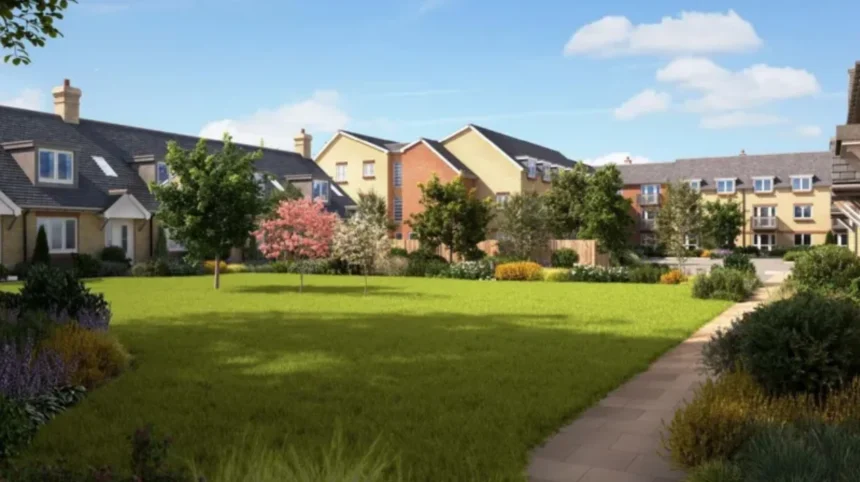
Choosing a village near Newcastle involves more than comparing house prices. Location, housing type, schools, transport, local facilities, planning policy, and access to employment all affect the practical cost of village living.
- Why are Dinnington and Ponteland popular alternatives to Newcastle city living?
- How affordable is Dinnington compared with Ponteland?
- What types of homes can buyers find in Dinnington?
- Why is Ponteland more expensive than Dinnington?
- Which village has better access to Newcastle?
- What schools and community facilities are available in Ponteland?
- What is the history of Dinnington and Ponteland?
- Which village is better for families seeking affordable living?
- Is Ponteland worth considering despite its higher property prices?
- What should buyers consider when choosing between Dinnington and Ponteland?
- Is Dinnington or Ponteland the more affordable village near Newcastle?
Dinnington and Ponteland are two established settlements in the wider Newcastle area. They offer different housing markets despite their geographical proximity. Dinnington sits within Newcastle upon Tyne’s administrative area, while Ponteland is in Northumberland.
The central affordability difference is significant. Recent Land Registry-based sales data published by Rightmove shows an average sold price of £281,238 in Dinnington over the last year, compared with £557,031 in Ponteland. Dinnington therefore has a substantially lower average transaction value.
Ponteland has a stronger concentration of larger detached properties, particularly around Darras Hall. Dinnington contains a broader mixture of detached, semi-detached and terraced housing, creating more entry-level purchasing opportunities.
Both locations provide access to Newcastle, but their settlement structures differ. Ponteland functions as a larger service centre with established schools, leisure facilities, shops and community services. Dinnington retains a smaller village structure while benefiting from its position within the Newcastle urban area.
Why are Dinnington and Ponteland popular alternatives to Newcastle city living?
Dinnington and Ponteland attract households seeking lower-density residential environments while retaining practical access to Newcastle, employment centres, schools, countryside, local services and regional transport connections without living inside Newcastle’s urban core.
The two settlements appeal to households that want village surroundings without moving deep into rural Northumberland.
Dinnington is particularly closely connected to Newcastle because it forms part of Newcastle upon Tyne. Its parish planning framework covers the period from 2021 to 2036 and was formally made by Newcastle City Council on 2 June 2025. The neighbourhood plan now forms part of the statutory development plan for planning decisions.
Ponteland is administered by Northumberland Council. The Northumberland Local Plan 2016–2036 was adopted on 31 March 2022 and provides the wider planning framework for development across the county.
The distinction matters for prospective homeowners because planning policy influences future housing supply, infrastructure, green spaces and the physical character of each settlement.
Ponteland has historically developed as a commuter settlement. A former Castle Morpeth District Council plan described the village as approximately eight miles northwest of Newcastle and identified its role as a residential settlement serving Tyneside and the wider region.
Dinnington has a much smaller village identity. Its modern residential growth expanded substantially after the middle of the twentieth century, particularly through the Havannah, Trees and Dinnington Green estates. More recent development includes Sheraton Park, Augusta Drive and Augusta Park.
The result is two different forms of village living. Dinnington combines historic village fabric with modern residential estates, while Ponteland provides a larger community structure with a wider range of established services.
How affordable is Dinnington compared with Ponteland?
Dinnington is substantially more affordable than Ponteland based on recent sold-price data, with an overall average of £281,238 compared with £557,031 in Ponteland during the latest reported twelve-month period.
The latest Rightmove sold-price data shows a clear difference between the two housing markets.
Dinnington recorded an overall average sold price of £281,238 over the last year. Detached properties averaged £312,682, semi-detached properties averaged £248,938, and terraced properties averaged £237,500. Prices were 8% higher than the previous year and 7% above the 2023 peak recorded by the source.
Ponteland recorded an overall average sold price of £557,031 during the same broad period. Detached properties averaged £762,872, semi-detached properties averaged £361,366, and flats averaged £175,040. Overall sold prices were 3% higher than the previous year and 3% above the reported 2022 peak.
The average figures show why Dinnington is frequently considered the more affordable option.
The difference is particularly large in the detached-house market. The reported average detached sale in Dinnington was £312,682, while Ponteland’s detached average was £762,872. That represents a difference of more than £450,000 between the two averages.
The comparison requires care because averages reflect the types of properties sold during the measurement period. A village with more expensive detached transactions naturally produces a higher overall average.
Ponteland also includes Darras Hall, a large residential estate associated with higher-value family housing. Recent transactions listed by Rightmove include detached properties in Darras Hall selling for £565,000, £720,000, £740,000 and more than £1 million during 2026.
Dinnington also has high-value properties, but the overall market contains substantially more attainable transactions for buyers seeking conventional family houses.
For households prioritising purchase price, Dinnington therefore has the stronger affordability position. Ponteland offers a broader premium housing market, particularly for buyers seeking large detached homes and substantial plots.
What types of homes can buyers find in Dinnington?
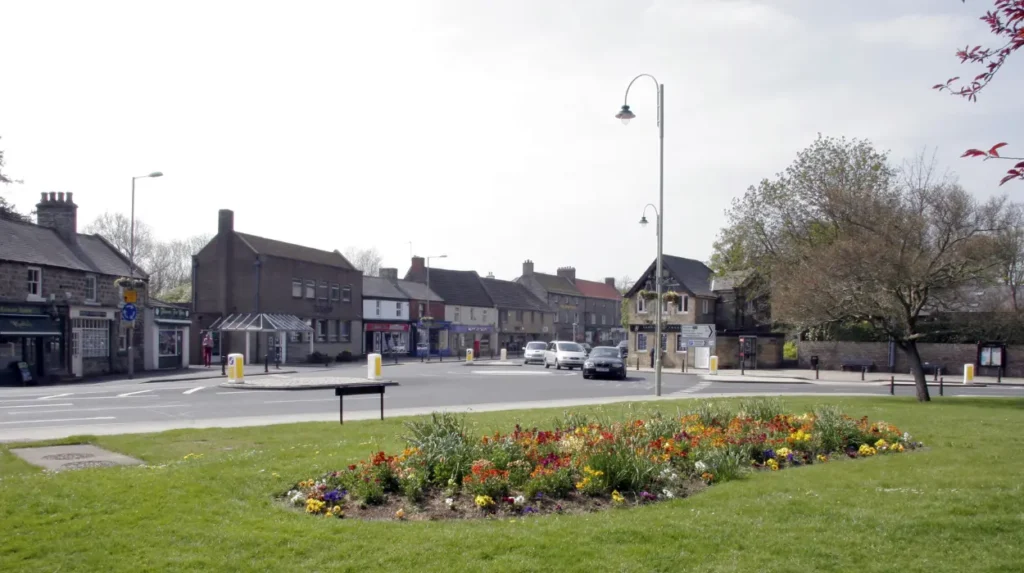
Dinnington provides a mixed residential market containing terraced, semi-detached and detached homes, with recent sales data showing average prices of £237,500, £248,938 and £312,682 respectively across those three property categories.
The housing structure is one of Dinnington’s main advantages for affordability.
Terraced houses recorded the lowest average among the three main house categories in the latest Rightmove data, at £237,500. Semi-detached properties averaged £248,938, while detached properties averaged £312,682.
This spread gives buyers several price points within the same village.
Recent recorded transactions demonstrate the range. A semi-detached property on Ash Avenue sold for £179,000 in April 2026, while another semi-detached property on Havannah Crescent sold for £190,000 in March 2026. Detached properties on Augusta Park Way and East Acres sold for £330,000 and £275,000 respectively during 2026.
Dinnington’s newer housing estates have added modern family accommodation to the older village structure.
The neighbourhood plan identifies residential expansion from the 1950s through the early 1970s, followed by newer development in the twenty-first century. Sheraton Park, Augusta Drive and Augusta Park form part of this more recent housing growth.
Housing variety is important for buyers because affordability does not depend only on the village’s average price. A household seeking a two-bedroom or three-bedroom home faces a different market from a household seeking a four-bedroom detached property.
Dinnington therefore provides a relatively broad entry point into village living near Newcastle.
The village also has an established historic core. Newcastle’s heritage record identifies Dinnington as a medieval settlement. Historical evidence records six taxpayers in 1296 and ten in 1312, while a 1303 rental recorded multiple households and agricultural holdings.
Modern housing sits alongside this historic settlement pattern, creating a combination of older buildings, established estates and newer residential development.
Why is Ponteland more expensive than Dinnington?
Ponteland commands higher prices because its housing stock contains a large proportion of substantial family homes, extensive detached housing, established amenities and the premium Darras Hall market, reinforcing its long-standing role as an affluent Newcastle commuter settlement.
Ponteland’s housing profile helps explain the higher average price.
Northumberland Council’s housing evidence found that 48.5% of households in Ponteland occupied properties with four or more bedrooms in the 2011 Census, compared with 19.5% across Northumberland. Only 19.1% occupied homes with fewer than three bedrooms.
The same evidence recorded a high level of owner occupation. In 2011, 85.8% of Ponteland households lived in owner-occupied properties, while 5.1% were in social rented housing and 9.0% were privately rented.
A later Ponteland Housing Needs Assessment reported 85.8% owner occupation using the 2011 Census, compared with 65.8% across Northumberland and 63.3% across England. It also recorded a much smaller private-rented sector.
Darras Hall is particularly important to the price profile.
The estate was established in the early twentieth century and expanded significantly through residential development after the Second World War. Historical planning documentation identifies its development during the 1950s, 1960s and 1970s and describes it as an executive-style residential area.
Current sales demonstrate the premium attached to larger Ponteland homes. Rightmove’s latest sold-price dataset includes 2026 Darras Hall transactions above £700,000 and individual sales above £1 million.
Ponteland therefore operates across more than one price segment. Flats and smaller homes exist, but the area’s substantial detached housing stock raises its overall average.
For buyers with a limited budget, this makes Dinnington considerably more accessible. For households seeking larger homes and established premium residential areas, Ponteland provides a deeper high-value market.
Which village has better access to Newcastle?
Both villages provide practical access to Newcastle, but Dinnington has the stronger administrative connection because it sits within Newcastle upon Tyne, while Ponteland operates as a Northumberland settlement approximately eight miles northwest of central Newcastle.
Dinnington’s location places it within Newcastle City Council’s administrative boundary despite its village setting.
Its proximity to Newcastle’s northern urban area provides access to the city’s employment, education, healthcare, retail and cultural infrastructure. The village remains physically separated from the dense urban core by open land and surrounding countryside.
Ponteland has historically served as a commuter settlement for Newcastle and wider Tyneside. Its location on the A696 provides a direct road corridor toward Newcastle and northwards into Northumberland. Historical planning documentation also records bus services connecting Ponteland with Newcastle.
Transport access is therefore a major part of Ponteland’s residential appeal.
Newcastle International Airport is also an important regional transport asset for Ponteland. Earlier planning documentation noted the airport’s proximity to the village and the availability of Metro access through nearby stations, including Callerton Parkway.
Dinnington’s advantage is its position inside the Newcastle administrative area, while Ponteland’s advantage is its established transport role and larger service infrastructure.
Actual journey times depend on the destination, traffic, road conditions and travel method. Newcastle city centre, Newcastle International Airport, business parks and surrounding employment areas each produce different commuting patterns.
For households working in central Newcastle, both locations remain practical village alternatives. The choice depends more on the exact workplace and daily travel route than on village status alone.
What schools and community facilities are available in Ponteland?
Ponteland has a substantially developed community infrastructure that includes schools, a library, leisure facilities, healthcare provision, sports facilities and community buildings, making it a larger service centre than Dinnington.
Ponteland’s scale gives it a clear advantage in local facilities.
Historical council planning evidence recorded a high school, two middle schools, two first schools, a library, health centre, community halls, youth facilities and Ponteland Leisure Centre. It also identified sports facilities including golf, tennis and bowls.
The education structure has since evolved through later development and investment.
Northumberland Council’s plans for Ponteland included integrated school and leisure facilities. The council’s consultation documentation described proposals bringing school, leisure and library functions together close to the village centre.
Ponteland Leisure Centre remains part of Northumberland Council’s current leisure network. The council lists the facility alongside other major leisure centres across Northumberland.
Ponteland Library also provides a local public service. Northumberland Council information lists the library on The Crescent, Callerton Lane, with self-service access available for extended hours and staffed sessions on selected days.
These facilities reduce the need for residents to travel into Newcastle for every routine activity.
Dinnington has a smaller service structure. Its neighbourhood plan focuses heavily on protecting village character, community assets, green spaces and the relationship between development and the surrounding landscape.
This does not make Dinnington less suitable for families. It means the settlement operates on a smaller scale and residents rely more heavily on nearby Newcastle and surrounding communities for some services.
The difference is therefore one of settlement scale rather than simple quality. Ponteland provides a broader collection of facilities within the settlement itself, while Dinnington benefits from being close to Newcastle’s much larger urban service network.
What is the history of Dinnington and Ponteland?
Dinnington has documented medieval origins and retained a village structure through centuries of agricultural activity, while Ponteland developed around the River Pont and expanded rapidly during the twentieth century into a major residential and commuter settlement.
Dinnington’s recorded history extends into the medieval period.
Newcastle’s Historic Environment Record classifies Dinnington village as a medieval settlement dating from 1066 to 1540. Documentary evidence records six taxpayers in 1296 and ten in 1312. A 1303 rental describes houses, agricultural land and tenants.
The village remained strongly agricultural for centuries.
Northumberland Archives records Dinnington among estates acquired by Matthew Bell in 1763. The Bell family’s wider landholdings included Dinnington, East and West Brunton, Fawdon and Hazlerigg.
Dinnington’s physical structure remained relatively stable during the nineteenth and early twentieth centuries. Its neighbourhood plan records substantial expansion from the 1950s through the early 1970s, followed by further modern development.
Ponteland has a different historical development pattern.
The settlement developed around the River Pont and has existed as a village since at least Norman times. Historical planning documents describe significant population growth during the twentieth century, particularly after the Second World War.
The Darras Hall estate became an important part of that transformation. Its expansion helped establish Ponteland as a higher-value residential location serving Newcastle and the wider Tyneside region.
The contrast remains visible today. Dinnington retains a compact historic village identity, while Ponteland functions as a larger service and residential centre with extensive twentieth-century housing.
Which village is better for families seeking affordable living?
Dinnington provides the stronger affordability position for families because its recent average house price is roughly half Ponteland’s, while detached, semi-detached and terraced homes create several purchasing levels within the village housing market.
The financial difference is the decisive factor for many households.
A buyer looking at the latest overall averages faces approximately £281,238 in Dinnington compared with £557,031 in Ponteland. The difference is approximately £275,793 based on the reported averages.
Dinnington also provides lower average prices across conventional house categories. The latest reported detached average was £312,682, compared with £762,872 in Ponteland. Semi-detached homes averaged £248,938 in Dinnington and £361,366 in Ponteland.
The comparison is particularly relevant for first-time buyers and families working within a fixed mortgage budget.
A lower purchase price affects more than the mortgage. It also influences deposit requirements, stamp duty exposure where applicable, mortgage affordability assessments, monthly repayments and the amount of capital required before purchase.
Ponteland provides a different proposition. Its larger housing market includes extensive detached accommodation and premium properties, especially in Darras Hall. That market suits households with larger housing budgets and demand for substantial family properties.
Dinnington’s proximity to Newcastle adds another affordability dimension. Buyers can access the wider Newcastle employment and services economy without paying Ponteland’s average residential premium.
The village’s neighbourhood plan also provides a formal planning framework designed to guide future development while protecting important local characteristics. Newcastle City Council confirmed that the plan became part of the statutory development plan after being made in June 2025.
For families where purchase price is the main constraint, Dinnington is the stronger option based on current transaction data.
Is Ponteland worth considering despite its higher property prices?
Ponteland remains relevant for buyers who prioritise larger homes, established services, strong owner occupation, extensive community facilities and a mature commuter settlement, despite its significantly higher average property prices compared with Dinnington.
Ponteland’s higher cost reflects a different housing proposition rather than simply a higher price tag.
The village has a long-established residential infrastructure. Its housing stock contains a large proportion of properties with four or more bedrooms, and owner occupation has historically been substantially higher than county and national averages.
The settlement also provides a stronger concentration of services.
Schools, leisure facilities, a library, healthcare services, community buildings and sports facilities form part of the local infrastructure. These facilities support households that want more everyday services within the settlement rather than travelling to Newcastle.
Transport is another important factor.
The A696 provides a major road connection through Ponteland, while the village’s historical transport links with Newcastle and proximity to Newcastle International Airport strengthen its commuter function.
The local housing market also offers a wide range of property values. Flats can sit at considerably lower prices than large detached homes, while Darras Hall contains some of the area’s highest-value residential transactions.
This means Ponteland should not be judged solely by its overall average.
A buyer seeking a smaller property can enter the market below the headline average. A buyer seeking a large detached house faces a substantially higher financial requirement.
Ponteland therefore suits households that place a high value on housing space, established amenities and a mature commuter settlement and have sufficient budget for the local property market.
What should buyers consider when choosing between Dinnington and Ponteland?
Buyers should compare purchase price, property size, transport routes, schools, local facilities, council boundaries, planning policy and future housing development because these factors create different long-term costs and practical advantages in Dinnington and Ponteland.
The first consideration is the total housing budget.
Dinnington’s recent average sold price of £281,238 provides a substantially lower starting point than Ponteland’s £557,031. Buyers should then compare individual property types because averages conceal substantial differences between flats, terraces, semi-detached houses and detached homes.
The second consideration is commuting.
A household working in central Newcastle, Newcastle International Airport, North Tyneside or another employment centre faces different travel requirements. The most suitable village depends on the exact destination, transport method and daily schedule.
The third consideration is local infrastructure.
Ponteland has a more extensive collection of schools, leisure facilities, library provision, healthcare services and community facilities. Dinnington benefits from its closeness to Newcastle while retaining a smaller village structure.
The fourth consideration is planning.
Dinnington’s neighbourhood plan was formally made in 2025 and applies to planning decisions within the parish. Ponteland is governed through Northumberland’s Local Plan and other relevant planning policies.
Planning policy matters because new development can influence traffic, services, housing supply, green spaces and the long-term appearance of a settlement.
The fifth consideration is property size.
Ponteland has a particularly strong market for large family properties. Northumberland’s housing evidence found that nearly half of households occupied homes with four or more bedrooms in 2011.
Dinnington provides more varied entry points, including terraced and semi-detached housing alongside detached properties.
The final consideration is long-term affordability.
A cheaper house does not automatically mean lower total living costs. Buyers should consider mortgage payments, council tax, insurance, energy costs, commuting expenses, maintenance and future renovation requirements alongside the purchase price.
Is Dinnington or Ponteland the more affordable village near Newcastle?
Dinnington is the clear choice for lower-cost village living near Newcastle, while Ponteland offers a higher-priced residential market with larger homes, stronger in-village infrastructure and an established commuter role serving Newcastle and wider Tyneside.
The latest available sold-price data provides the clearest distinction.
Dinnington’s overall average was £281,238 during the latest reported year, while Ponteland’s was £557,031. Dinnington’s detached average was £312,682 compared with £762,872 in Ponteland.
Dinnington therefore provides the stronger proposition for households whose priority is purchasing a home near Newcastle while keeping the acquisition cost comparatively low.
Its historic village structure, modern housing estates and location within Newcastle upon Tyne create a combination of village character and urban accessibility. Its neighbourhood plan also provides a current framework for managing development and protecting local character.
Ponteland occupies a different position.
It is a larger Northumberland settlement with a substantial housing stock, established schools, leisure provision, library services, community facilities and a long-established commuter relationship with Newcastle.
Its higher property prices reflect the composition of its housing market, especially the concentration of larger detached properties and the premium residential market associated with Darras Hall.
For affordability, Dinnington leads.
For larger homes and a broader concentration of local services, Ponteland provides the stronger infrastructure base.
Both locations demonstrate why village living near Newcastle cannot be assessed through distance alone. Housing supply, property type, planning policy, transport, amenities and historic development all influence the cost and practicality of living in each settlement.
For buyers seeking affordable village living near Newcastle, Dinnington currently provides the stronger value proposition based on recent sold-price evidence. Ponteland remains a premium alternative for households with larger budgets and a preference for established services and substantial family housing.