

Byker is an East End neighbourhood of Newcastle upon Tyne, known for its distinctive architecture, industrial heritage, community identity and access to the creative Ouseburn Valley. Visitors exploring beyond Newcastle city centre discover historic landmarks, striking residential design, independent cultural spaces and everyday local life.
- What makes Byker a worthwhile place to explore in Newcastle?
- What is the history of Byker, Newcastle?
- What can visitors discover at the Byker Wall Estate?
- Where can visitors find green spaces and quiet walks near Byker?
- What can visitors do at Harbottle Park?
- Why is Armstrong Park worth visiting?
- What makes Heaton Park a good addition to the tour?
- What hidden heritage sites can visitors explore around Byker and Ouseburn?
- What is special about Stepney Bank Stables?
- Where can visitors see evidence of historic haulage yards?
- What is the Victoria Tunnel, and why is it important?
- Why should visitors explore the creative side of Ouseburn Valley?
- What can art lovers discover in Ouseburn?
- Where can visitors discover local music and independent venues?
- Is Ouseburn Farm worth including in a family visit?
- Where can visitors find local landmarks and overlooked details in Byker?
- What local food and independent businesses can visitors discover near Byker?
- Where should visitors stop for coffee or a meal?
- How can visitors support independent businesses responsibly?
- How can visitors plan a walking tour of Byker’s hidden gems?
- How do tourists get to Byker and travel around the neighbourhood?
- Is Byker accessible by Metro?
- Can visitors walk from Newcastle city centre?
- What should visitors know about buses and parking?
- When is the best time to visit Byker’s hidden attractions?
- Is Byker suitable for families, photographers and architecture enthusiasts?
- Is Byker a good destination for families?
- Where can photographers capture Byker’s character?
- Is Byker suitable for visitors with limited mobility?
- Why should Byker be included in a Newcastle travel itinerary?
What makes Byker a worthwhile place to explore in Newcastle?
Byker is a historic Newcastle neighbourhood where visitors experience distinctive architecture, local history, green spaces and creative culture. Its location east of the city centre connects residential streets with the Ouseburn Valley, making it suitable for walking tours, heritage visits and independent exploration.
Byker sits in the eastern part of Newcastle upon Tyne, a city in Tyne and Wear, North East England. It offers a different perspective from the central shopping streets, Newcastle Castle and the busy Quayside.
The neighbourhood’s appeal comes from its combination of residential architecture, surviving historic features, public parks and connections to the wider cultural district of Ouseburn. Visitors interested in urban design, industrial history and community life find plenty to investigate beyond conventional tourist attractions.
Byker is also a living residential community. The streets, housing estates, shops and public spaces serve local residents rather than operating exclusively as visitor destinations. Respectful exploration therefore matters, especially around homes and shared courtyards.
The best approach is to combine a walk through the Byker Wall housing estate with selected parks and nearby cultural attractions. This route reveals how Newcastle’s industrial past, post-war redevelopment and contemporary creative economy have shaped the area.
What is the history of Byker, Newcastle?
Byker developed from an early settlement into an industrial neighbourhood before undergoing extensive twentieth-century redevelopment. Its history includes medieval references, nineteenth-century industry and major housing changes. The surviving heritage landscape connects historic Newcastle with modern architecture and community-led urban regeneration.
Byker’s recorded history extends back to the medieval period. Newcastle’s Tyne and Wear Historic Environment Record identifies a reference to Byker in 1198. Historical records describe an early settlement arranged around a village green and roads that connected surrounding land.
During the following centuries, Byker’s boundaries and relationship with Newcastle changed. The historic record notes changes to the township in 1299 and 1549. Medieval religious buildings, mills and limekilns also formed part of the area’s earlier landscape.
How did industry change Byker?
Industrial development transformed Byker as Newcastle expanded. Housing, workshops, transport infrastructure and commercial activity reshaped the neighbourhood. Horse-drawn haulage and industrial links to the nearby Ouseburn Valley became important features of the local landscape.
Surviving structures around Ouseburn help explain this industrial period. Stepney Bank Stables, established in 1897 for the Global Parcel Express Company, is a particularly notable example of a former transport facility that remains in use.
Why is Byker’s redevelopment historically important?
The twentieth century brought extensive redevelopment that transformed much of the older neighbourhood. Architect Ralph Erskine and his architectural team designed the Byker redevelopment as a distinctive residential environment rather than a conventional collection of uniform tower blocks.
The Byker Estate contains approximately 1,800 homes, according to Byker Community Trust. The estate received Grade II* listed status in 2007, recognising its national architectural and historic importance. Grade II* is the higher of the two listed-building grades below Grade I in England.
For visitors, this history provides an important context. Byker is not simply a residential district on the edge of the city centre. It is a place where medieval settlement, industrial expansion and ambitious housing design remain visible in the urban landscape.
What can visitors discover at the Byker Wall Estate?
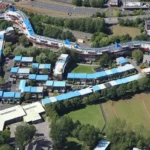
The Byker Wall Estate is one of Newcastle’s most distinctive examples of twentieth-century residential architecture. Designed under Ralph Erskine’s direction, it combines a protective perimeter of housing with lower-rise homes, courtyards and pedestrian spaces, creating an important destination for architecture enthusiasts.
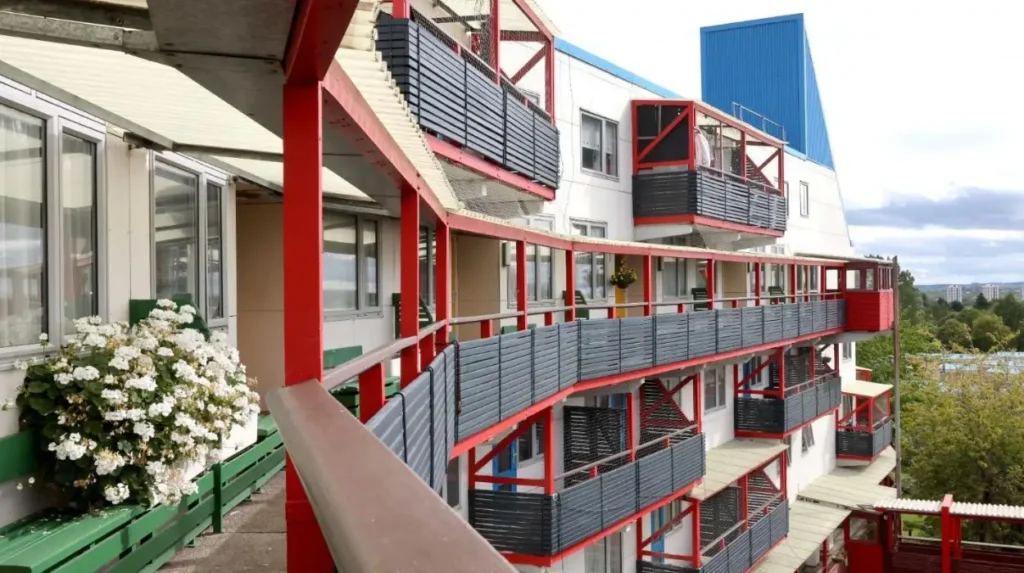
The Byker Wall is the neighbourhood’s most recognisable architectural feature. Its large residential structures form part of a wider estate designed to create a connected community and provide homes on a substantial urban redevelopment site.
The estate is particularly interesting for people who want to understand post-war British housing. Instead of separating all residential buildings into isolated blocks, the design combines different building heights, sheltered spaces and routes through the neighbourhood.
Which architectural details should visitors look for?
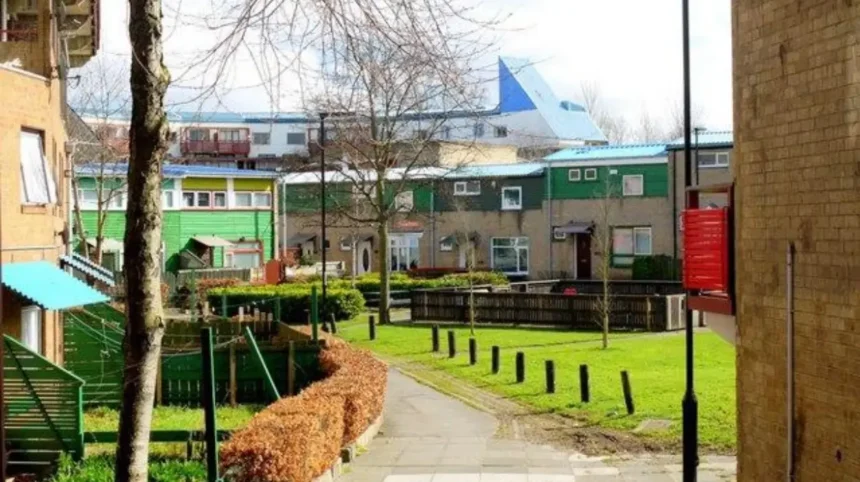
Look for changes in building height, contrasting materials, timber details, rooflines and the relationship between enclosed courtyards and surrounding streets. The lower-rise parts of the estate contain terraces and semi-private spaces that contrast with the taller perimeter structures.
The Tyne and Wear Historic Environment Record documents individual sections of the estate, including terraces at Raby Street and Priory Green. One documented group dates to 1972–1975 and illustrates the estate’s use of pale brick, coloured cladding and sheltered courtyard arrangements.
These features reveal the attention given to everyday residential experience. The estate’s architectural significance lies not only in its external appearance but also in the organisation of entrances, shared spaces and pedestrian movement.
Can tourists visit the Byker Wall Estate?
Visitors can explore public streets and observe the architecture from publicly accessible areas. The estate remains a residential neighbourhood, so private courtyards, residents-only routes and building interiors are not general tourist attractions.
Photography should focus on the overall architecture and public realm. Avoid photographing residents through windows, entering private areas or obstructing entrances. A considerate walking visit provides a better understanding of the design without disrupting daily life.
The estate is particularly rewarding for architecture students, urban planners, photographers and visitors interested in the history of social housing. It also offers a useful comparison with Newcastle’s older Victorian terraces and its contemporary apartment developments.
Where can visitors find green spaces and quiet walks near Byker?
Byker’s surrounding green spaces provide quieter alternatives to busy city-centre streets. Harbottle Park offers a neighbourhood green space, while Armstrong Park and Heaton Park provide woodland paths, historic features and open lawns within walking distance of the wider Ouseburn and East Newcastle area.
What can visitors do at Harbottle Park?
Harbottle Park is a useful starting point for visitors seeking a quieter side of Byker. Newcastle City Council includes it in its directory of local parks, identifying it as an important green space in the neighbourhood.
A visit can form part of a relaxed local walk. Observe the surrounding residential streets, take a break from the built-up environment and use the park as a stopping point between neighbourhood landmarks.
Check current local notices before travelling specifically for organised activities or facilities. The park’s everyday neighbourhood character is the main reason to include it in a Byker exploration.
Why is Armstrong Park worth visiting?
Armstrong Park stands on the eastern side of the Ouseburn Valley. Lord Armstrong gifted the park to Newcastle in 1878, and it opened to the public in 1879. Its landscape includes mature woodland, grassland and steep-sided valleys.
The park contains historic features that reward slower exploration. These include a restored watermill, King John’s Well and paths through wooded areas. Newcastle City Council also identifies tennis and basketball courts, a bowling green and a play area.
Armstrong Park connects with paths leading towards Heaton Park and Jesmond Dene. This makes it a useful destination for visitors who want to extend a short neighbourhood walk into a longer green-space route.
What makes Heaton Park a good addition to the tour?
Heaton Park combines landscaped grounds with historical remains and family-friendly recreation. Its Victorian pavilion and terrace date to 1880, and the park contains the remains of King John’s Palace, a medieval fortified manor house.
Visitors can follow established paths, enjoy seasonal planting and look for historical features around the park. Play areas and open lawns also make it practical for families travelling with children.
The nearby connection to Armstrong Park provides a way to explore several green spaces in one outing. Check path conditions after heavy rain, particularly on woodland routes, and allow extra time for uneven ground.
What hidden heritage sites can visitors explore around Byker and Ouseburn?
The Byker and Ouseburn area preserves traces of Newcastle’s industrial and transport history. Stepney Bank Stables, historic haulage buildings and the Victoria Tunnel explain how horses, coal transport and wartime civil defence shaped the neighbourhood and its surrounding valley.
What is special about Stepney Bank Stables?
Stepney Bank Stables is a surviving link to the era when horse-drawn transport served Newcastle’s businesses. The stable complex was established in 1897 for the Global Parcel Express Company and remains a working urban stable. The local historic environment record identifies it as a locally listed site.
The building illustrates how transport once depended on horses, carts and stable yards. Before motorised delivery became widespread, these facilities supported the movement of goods through crowded streets and industrial districts.
The steep route down Stepney Bank also helps explain the valley’s geography. Visitors walking between Newcastle’s higher streets and Ouseburn experience the change in elevation that shaped historic access routes.
Treat the stables as a working facility. Access to horses, indoor areas and organised activities depends on the site’s own arrangements, so check its current visitor information before planning a dedicated visit.
Where can visitors see evidence of historic haulage yards?
St Ann’s Yard, near Ouseburn, preserves buildings associated with John Scott and Sons, a horse-drawn haulage business. The historic record dates the yard’s construction to 1886–1887 and notes that it remained in use until 1968.
The surviving complex includes historic walls, a gatehouse, stable buildings, workshops and other structures. These features provide evidence of how commercial transport operated before modern delivery vehicles became dominant.
This type of industrial heritage is easy to overlook because it sits among the neighbourhood’s contemporary cultural venues and businesses. Observing the older brickwork and building layout adds historical depth to a walking tour.
Access to individual buildings is not guaranteed. View structures from publicly accessible locations and check current access arrangements before attempting to visit any interior.
What is the Victoria Tunnel, and why is it important?
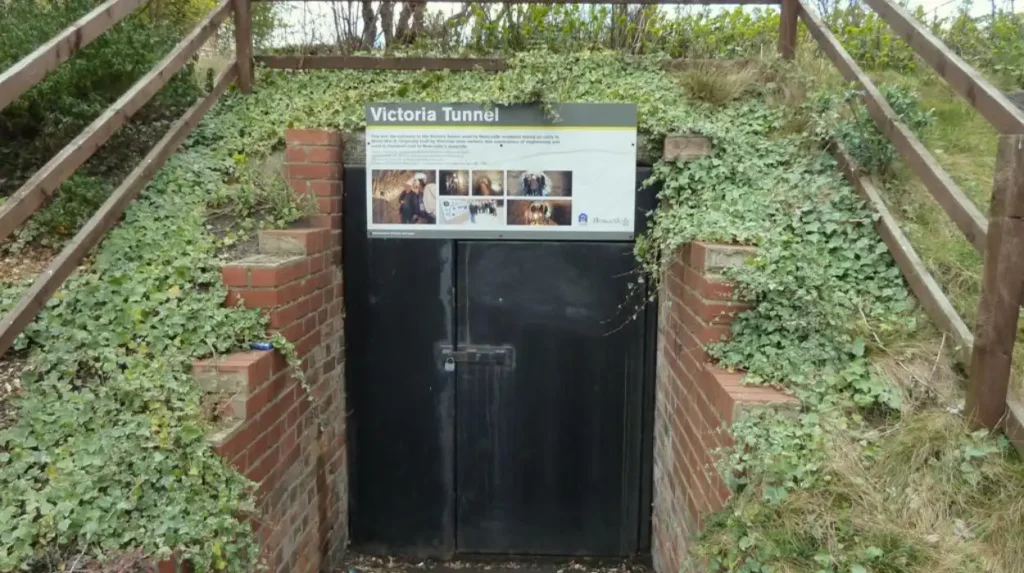
The Victoria Tunnel is a preserved nineteenth-century underground wagonway in Newcastle. It opened in 1842 to carry coal from Leazes Main Colliery towards riverside staithes on the Tyne. During the Second World War, sections of the tunnel served as an air-raid shelter.
The tunnel connects two important periods in Newcastle’s history: the coal industry and wartime civilian protection. Its original transport purpose reflects the region’s industrial economy, while its later use demonstrates how existing infrastructure was adapted during wartime.
The Ouseburn Trust organises guided tours. Visitors travel underground with a guide and learn about coal transport, the tunnel’s construction and the experiences of people who used it as a shelter. Tours require advance booking, and the operator publishes different tour lengths.
The underground environment has a constant temperature of approximately 12°C, according to the tour information. Wear sturdy flat footwear and a washable jacket. The tunnel is not fully accessible to wheelchairs or buggies beyond a series of blast walls, so visitors should check the operator’s accessibility guidance before booking.
Why should visitors explore the creative side of Ouseburn Valley?
Ouseburn Valley is a creative district beside Byker, known for independent arts, live music, community projects and cultural attractions. Former industrial buildings now accommodate creative businesses and visitor venues, making the valley a practical extension to a Byker heritage walk.
Ouseburn’s industrial past remains visible in its buildings, streets and valley layout. Regeneration has helped establish it as a cultural district with artists, musicians, designers, printmakers and independent businesses.
The area rewards visitors who prefer exploring at walking pace. Rather than concentrating on a single monument, the experience comes from discovering converted warehouses, public spaces, small venues and cultural organisations across the valley.
What can art lovers discover in Ouseburn?
The Biscuit Factory is an art gallery housed in a converted Victorian warehouse. Its exhibitions and events make it a useful destination for visitors interested in contemporary art and independent creative businesses. Northern Print is another organisation highlighted in local visitor information for its printmaking focus.
Exhibition schedules and opening arrangements change. Check official venue information before travelling, particularly if a specific exhibition or workshop is the main purpose of the visit.
Walking between cultural venues also reveals how industrial buildings have been adapted for modern use. This architectural transition forms part of the area’s identity.
Where can visitors discover local music and independent venues?
Ouseburn has a well-established independent music and pub scene. The Cluny, The Cumberland Arms, The Ship Inn and Tyne Bar are among the venues identified in local tourism information.
Live music, cultural events and performances vary by date. Visitors should consult individual venue calendars to confirm performances, ticket requirements and age restrictions.
For a daytime visit, combine a gallery or heritage stop with a walk through the valley. An evening visit suits people interested in live music and local hospitality. The area’s venues operate independently, so opening times and event schedules are not uniform.
Is Ouseburn Farm worth including in a family visit?
Ouseburn Farm is a community-run urban farm that introduces visitors to farm animals and urban agriculture within Newcastle. It provides a family-friendly contrast to the surrounding industrial buildings and creative venues. Local visitor information identifies it as one of the area’s attractions.
The farm is located on Ouseburn Road, Newcastle upon Tyne, NE1 2PA. Its nearest Metro stations are Byker and Manors, each approximately a 12-minute walk away according to the farm’s travel information.
Check the farm’s current opening times, activities and visitor guidance before setting out. This is especially important when visiting with young children or planning a trip around a particular animal-care activity.
Where can visitors find local landmarks and overlooked details in Byker?
Byker’s lesser-known landmarks include historic religious sites, surviving residential features and public spaces that reveal the neighbourhood’s social history. The Byker War Memorial, listed buildings and historic street patterns provide additional points of interest for visitors exploring beyond the area’s best-known architecture.
What is the significance of Byker War Memorial?
Byker War Memorial is a Grade II listed structure at Brian Roycroft Court, St Silas Church, Byker, Newcastle upon Tyne, NE6 1PT. Historic England recorded its first listing on 15 April 2016. The designation recognises its special architectural or historic interest.
The memorial offers an opportunity to reflect on the impact of war on local communities. When visiting, approach the site respectfully, particularly during commemorations, religious services or community events.
It is worth including for visitors interested in local heritage rather than only major city-centre monuments. Check access arrangements before planning to enter church or residential grounds.
What can the older street layout reveal about Byker?
Byker’s older street patterns preserve clues about the neighbourhood’s development before large-scale redevelopment. The historical record describes an early settlement with two rows of buildings, a green and roads that connected the surrounding countryside.
Comparing older streets with the Byker Wall Estate reveals different approaches to urban planning. Traditional streets developed incrementally, while the twentieth-century estate introduced a coordinated architectural scheme with varied housing forms and shared spaces.
Visitors can use this contrast to understand the area’s changing relationship between housing, transport and community life. A heritage walk becomes more informative when it considers not only individual buildings but also how streets connect them.
What local food and independent businesses can visitors discover near Byker?
Byker and neighbouring Ouseburn provide access to independent cafés, pubs, restaurants and creative businesses. Ouseburn is particularly useful for combining a heritage walk with refreshments, gallery visits or an evening event, while visitors should check individual businesses for current menus and opening hours.
A walking visit is easier to plan when food stops are treated as part of the route. Ouseburn offers cafés, independent food businesses and pubs within a relatively compact area, including options near Lime Street and the lower valley.
Where should visitors stop for coffee or a meal?
Local visitor information identifies the Seven Stories Bookshop and Café as a place for a coffee break and highlights Ernest for brunch. The surrounding area also contains pubs and independent venues, allowing visitors to choose between a short daytime stop and a longer evening visit.
Business hours, menus and service arrangements change. Confirm current details before travelling, especially on bank holidays or when visiting for a particular meal.
Visitors with dietary requirements should check menus directly with the business. Families should also confirm seating arrangements and facilities if these affect their plans.
How can visitors support independent businesses responsibly?
Choose locally operated cafés, galleries, shops and venues when spending time in the neighbourhood. Buying refreshments, attending a paid exhibition or booking an organised tour supports the businesses and organisations that contribute to the visitor experience.
Respect residential streets and avoid treating doorways, private courtyards or business entrances as photography locations. Keep public routes clear and follow instructions displayed at working premises.
This approach helps visitors explore Byker without disrupting the people who live and work there.
How can visitors plan a walking tour of Byker’s hidden gems?
A practical Byker walking tour combines the Byker Wall Estate, neighbourhood green spaces and the nearby Ouseburn Valley. Allow half a day for a relaxed visit, with extra time for a booked Victoria Tunnel tour, gallery exhibition, farm visit or scheduled cultural event.
A route that balances architecture, history and outdoor spaces provides a more complete picture of the neighbourhood than visiting one landmark alone.
What is a useful half-day itinerary?
Stop 1: Byker Wall Estate
Begin by observing the estate’s distinctive architecture from public streets. Look at the contrast between the perimeter buildings, lower-rise housing and shared spaces.
Stop 2: Harbottle Park
Add a short green-space break before continuing towards the historic and cultural attractions. Keep this stop flexible according to weather and walking pace.
Stop 3: Stepney Bank and Ouseburn
Walk down towards the valley, observe the historic stables and explore publicly accessible streets around the former industrial buildings.
Stop 4: Ouseburn Farm or an independent gallery
Allow 30–45 minutes.
Choose a family-friendly farm visit or check exhibition schedules at a cultural venue. Confirm opening arrangements in advance.
Stop 5: Victoria Tunnel or a local café
Allow 30 minutes for a refreshment stop, or book a separate tunnel tour.
Finish with a café stop or plan a guided underground visit as a separate timed activity.
This suggested itinerary is flexible rather than a measured walking route. Total time depends on the exact streets chosen, the pace of the visit and the opening hours of attractions. A guided Victoria Tunnel tour lasts approximately 1¼ or 2 hours, so include it as a booked activity rather than assuming it fits within the basic schedule.
How can visitors extend the tour?
Visitors with more time can continue to Armstrong Park or Heaton Park. Both provide historic landscape features and walking paths, while Heaton Park contains the remains of King John’s Palace.
Art enthusiasts can spend longer at The Biscuit Factory or Northern Print. Families can prioritise Ouseburn Farm, and visitors interested in industrial history can book the Victoria Tunnel.
Choose stops according to opening times and walking ability. The steep route down Stepney Bank is a notable feature of the area’s geography, so allow additional time when walking uphill.
How do tourists get to Byker and travel around the neighbourhood?
Byker is connected to Newcastle’s wider transport network by the Tyne and Wear Metro, local buses and walking routes. The Byker and Manors Metro stations also provide access to Ouseburn, while walking from the city centre offers a route through Newcastle’s changing urban landscape.
Is Byker accessible by Metro?
Byker Metro station is a useful starting point for exploring the neighbourhood and reaching the nearby Ouseburn Valley. Manors is another option for visitors heading towards the cultural district. Ouseburn Trust estimates that the valley centre is approximately 0.9 miles from Byker Metro and 0.7 miles from Manors Metro.
These distances relate to Ouseburn rather than every attraction in Byker. Check a current route map and journey planner before travelling, as station access and walking distances depend on the destination.
Can visitors walk from Newcastle city centre?
Walking is a practical way to combine Byker and Ouseburn with Newcastle’s Quayside. Ouseburn Trust lists a walk of approximately 20 minutes from Newcastle Central Station to the top of Stepney Bank, although reaching a particular attraction takes additional time.
The route includes changes in elevation, especially around Stepney Bank. Wear comfortable footwear and check weather conditions before choosing a longer walking itinerary.
What should visitors know about buses and parking?
Ouseburn’s visitor guidance identifies local bus connections from central Newcastle, including services that stop near New Bridge Street and the Tanners Arms. From there, visitors can walk down Stepney Bank into the valley. Routes and timetables are subject to change, so check the current operator information.
Paid parking is available in the surrounding area, including car parks near Ouseburn Arches and Foundry Lane. Availability, charges and restrictions vary. Confirm current parking information before driving, and consider public transport for a walking-focused visit.
When is the best time to visit Byker’s hidden attractions?
Byker is suitable for exploration throughout the year, but the best time depends on the planned activities. Daylight supports architectural walks and park visits, while scheduled tours, galleries and music venues provide additional options throughout the year when opening times and event calendars permit.
Spring and summer generally provide longer daylight hours for exploring streets and green spaces. These seasons suit visitors who want to combine the Byker Wall Estate with a walk through Armstrong Park or Heaton Park.
Autumn offers opportunities to observe seasonal changes in the area’s woodland and parks. Wet paths and falling temperatures make suitable footwear and weather-appropriate clothing important.
Winter visits benefit from a more focused itinerary built around indoor venues, cafés and pre-booked tours. Check daylight hours and local weather before planning a long walk.
Do visitors need to book attractions in advance?
Booking depends on the attraction. The Victoria Tunnel requires advance reservations because tour capacity is restricted. Galleries, farms, music venues and workshops operate according to their own schedules and admission arrangements.
Check official information for the intended visit date rather than relying on general opening-hour listings. This is particularly important for visitors travelling from outside Newcastle or arranging a family day out.
What should visitors bring?
Comfortable walking shoes are suitable for a route that includes streets, park paths and sloping sections. A weatherproof jacket is useful in changeable North East England weather. Visitors attending a tunnel tour should follow the operator’s specific clothing and safety guidance.
Bring a charged phone for maps and transport information. Carry water for longer walks, and confirm whether the venues on the route provide toilets, refreshments and accessible facilities.
Is Byker suitable for families, photographers and architecture enthusiasts?
Byker offers different experiences for different visitors, including residential architecture, historic industrial sites, urban parks and family-friendly attractions. The best itinerary depends on individual interests, mobility and available time, with advance checks helping visitors select suitable venues and accessible routes.
Is Byker a good destination for families?
Families can combine a walk through public areas with a visit to Ouseburn Farm or the play areas in nearby Armstrong Park and Heaton Park. These destinations provide opportunities to explore outdoor spaces alongside the neighbourhood’s architectural and industrial history.
Plan breaks around children’s needs and check age restrictions for organised activities. The Victoria Tunnel, for example, is not suitable for children under seven according to its published tour information.
Where can photographers capture Byker’s character?
The Byker Wall Estate offers opportunities to photograph modernist residential architecture, contrasting building materials and the relationship between housing and public space. Ouseburn provides a different subject, with industrial brickwork, converted warehouses and historic transport buildings.
Morning and late-afternoon daylight can help reveal architectural textures. Visitors should respect residents’ privacy, avoid restricted areas and check photography rules at individual galleries and businesses.
Is Byker suitable for visitors with limited mobility?
Accessibility varies between locations. Newcastle City Council identifies paths in Armstrong Park and Heaton Park that are suitable for prams or wheelchairs, but individual surfaces, slopes and weather conditions affect ease of movement.
Stepney Bank is steep, and the Victoria Tunnel has restrictions that prevent wheelchair and buggy access beyond its internal blast walls.
Visitors should confirm access arrangements directly with each venue and choose routes that match their needs. A shorter itinerary focused on accessible public areas and selected indoor attractions provides an alternative to a longer walking tour.
Why should Byker be included in a Newcastle travel itinerary?
Byker adds architectural heritage, industrial history and neighbourhood character to a Newcastle visit. Its combination of the Byker Wall Estate, local parks, historic transport sites and neighbouring Ouseburn cultural venues creates a varied itinerary beyond the city’s most prominent tourist attractions.
The neighbourhood’s appeal rests on its historical layers. Medieval references establish its early settlement history, nineteenth-century buildings preserve evidence of transport and industry, and the Byker Wall Estate represents an important stage in modern British housing design.
The nearby Ouseburn Valley extends the experience with independent arts, live music, community activities and the Victoria Tunnel. Parks such as Armstrong Park and Heaton Park offer quieter routes and historic landscapes.
Visitors do not need to cover every attraction in one trip. A focused walk through the Byker Wall Estate, followed by a heritage stop and a visit to Ouseburn, provides a useful introduction. People with additional time can extend the route into the surrounding parks.
Byker is a living neighbourhood, not an open-air museum. Exploring its public spaces respectfully, supporting local businesses and checking official visitor information helps preserve the area’s character while giving visitors a fuller understanding of Newcastle.