


Key Points
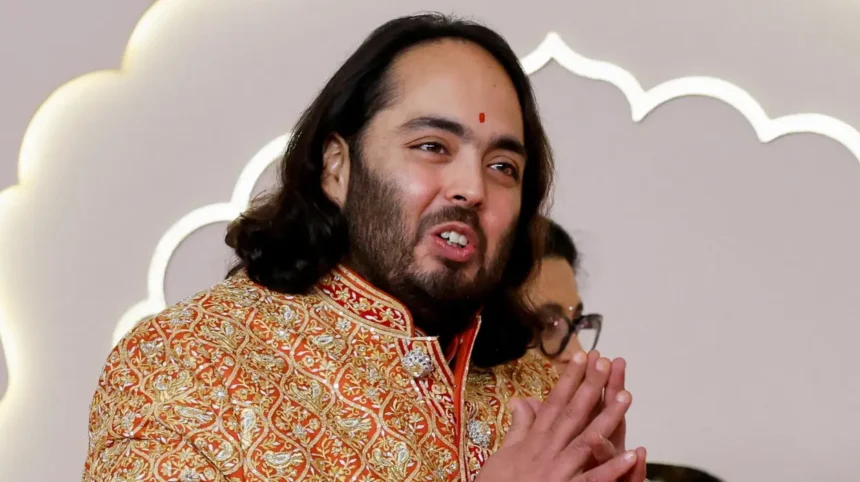
- In a formal declaration, Newcastle University awarded a Professorship of Practice in Sustainability to Anant Ambani in honor of his endeavors in wildlife preservation, animal welfare, and transitioning to renewable energy sources.
- The ceremony was held at the King’s Hall located in the Armstrong Building of the university, in the presence of University Chancellor Imtiaz Dharker and other scholars, corporate personalities, and Radhika Ambani.
- However, his appointment has been facing heavy criticism from academicians and environmental activists because of his family’s long-standing connections to the fossil fuel industry through Reliance Industries.
- However, the university authorities, along with Vice-Chancellor Chris Day, have staunchly defended this decision, citing Ambani’s efforts towards sustainable business practices, renewable energy projects, and even the founding of Vantara.
- While delivering the keynote speech entitled “The road to a sustainable tomorrow,” Anant Ambani spoke about the venue, adding how conservation needs to extend beyond national and generational boundaries.
Newcastle (Newcastle Times) September 30, 2026 – Newcastle University’s recent decision to confer a Professorship of Practice in Sustainability upon Indian industrialist and corporate executive Anant Ambani has triggered an intense, worldwide discussion spanning academic integrity, private sector climate accountability, and wildlife conservation.
- Key Points
- What Took Place During the Formal Investiture Ceremony at King’s Hall?
- How Have University Officials and Supporting Voices Defended the Appointment?
- What Are the Core Arguments Behind the Criticism and Controversy?
- What Did Anant Ambani Address in His Keynote Lecture?
- Background of the Particular Development
As reported by The Times of India, the institution officially announced the distinction on September 14, highlighting Ambani’s contributions to biodiversity preservation, animal welfare management, and clean-energy transitions. However, the move has simultaneously faced sharp criticism and academic pushback from various conservationists and scholars globally, as detailed by The Guardian, who raised concerns regarding his family ties to traditional oil and gas enterprises.
What Took Place During the Formal Investiture Ceremony at King’s Hall?
The professorship was formally conferred during a traditional ceremony hosted in King’s Hall inside the historic Armstrong Building at Newcastle University. As noted by The Times of India, the event was presided over by University Chancellor Imtiaz Dharker and witnessed by figures from the worlds of academia, commerce, and conservation, alongside Radhika Ambani.
Organisers noted the symbolic significance of the venue, which notably served as the location where Dr. Martin Luther King Jr. received an honorary doctorate back in 1967—making Newcastle University the sole UK institution to have bestowed such an honor upon him during his lifetime. Referencing this historic legacy prior to the ceremony, Anant Ambani stated, as reported by The Times of India:
“Everyone who graduates from here has the potential to change the world in some way. I am so honoured to be here at the steps of Newcastle University where the honourable and most legendary Martin Luther King stood.”
How Have University Officials and Supporting Voices Defended the Appointment?
In the face of widespread public discussion and critique, university authorities have strongly defended the appointment. According to statements covered by The Tab and The Education Times, Newcastle University Vice-Chancellor Chris Day emphasized that Anant Ambani is actively
“driving forward ambitious solutions that support the restoration of healthy, resilient ecosystems for future generations.”
Furthermore, university representatives highlighted Ambani’s executive role at Reliance Industries, where he helps steer corporate strategy toward low-carbon technologies, solar manufacturing, green hydrogen, circular materials, and carbon capture. Academic leaders underscored that these efforts align directly with corporate targets of attaining Net Carbon Zero status by 2035—representing one of the largest corporate sustainability transitions underway globally.
Sanjana Medipally, Strategic Partnerships Lead for India at Newcastle University, elaborated on the institutional collaboration, stating as reported by The Times of India:
“Having seen Vantara’s work first-hand, I’ve been struck by how closely it mirrors Newcastle University’s own commitment to conservation and a sustainable future.”
Adding a diplomatic perspective, the Honorary Consul General of India in Newcastle, J M “Meenu” Malhotra, DL, remarked:
“The bond between the United Kingdom and India is among the deepest and most enduring in the world, a partnership of history, of family, of trade, and of shared ambition.”
What Are the Core Arguments Behind the Criticism and Controversy?
Despite the university’s defense, the appointment immediately invited pushback from academic circles, climate activists, and environmental protection groups. As highlighted by The Guardian and The Education Times, critics questioned the alignment of granting a high-profile sustainability professorship to an individual closely tied to a major global fossil fuel conglomerate.
While supporters emphasize Vantara—a 3,500-acre wildlife rescue, rehabilitation, and conservation initiative founded by Ambani in Jamnagar, Gujarat, which houses thousands of rescued animals—detractors and independent conservationists have scrutinized the broader implications of honoring corporate heirs from carbon-intensive sectors with academic titles in environmental leadership. The debate underscores a broader global tension regarding how universities choose to partner with private corporate entities to address compounding ecological crises.
In a formal declaration, Newcastle University awarded a Professorship of Practice in Sustainability to Anant Ambani in honor of his endeavors in wildlife preservation, animal welfare, and transitioning to renewable energy sources.
The ceremony was held at the King’s Hall located in the Armstrong Building of the university, in the presence of University Chancellor Imtiaz Dharker and other scholars, corporate personalities, and Radhika Ambani.
However, his appointment has been facing heavy criticism from academicians and environmental activists because of his family’s long-standing connections to the fossil fuel industry through Reliance Industries.
However, the university authorities, along with Vice-Chancellor Chris Day, have staunchly defended this decision, citing Ambani’s efforts towards sustainable business practices, renewable energy projects, and even the founding of Vantara.
While delivering the keynote speech entitled “The road to a sustainable tomorrow,” Anant Ambani spoke about the venue, adding how conservation needs to extend beyond national and generational boundaries.
Explore More Local Newcastle News
Newcastle £20 Million Pride in Place Board Meets in Outer West Newcastle 2026
Newcastle Knights NRL Final Triggers 25-Year City Transformation Newcastle 2026
What Did Anant Ambani Address in His Keynote Lecture?
Delivering his lecture titled “The road to a sustainable tomorrow” during the proceedings, Anant Ambani addressed the audience regarding collective global responsibilities. As documented by The Times of India, he expressed:
“As humanity confronts a different set of global challenges, I believe conservation and sustainability must become the next great movement – one that transcends nations, generations and differences.”
He concluded by framing the distinction as an ongoing call to action:
“It is in that spirit that I accept this honour, not simply as a recognition of past work, but as a responsibility to do more: to help build a future in which people and nature thrive together, on the one planet we all call home.”
Background of the Particular Development
The conferment of the Professorship of Practice in Sustainability emerges against a backdrop of increasing collaboration between British academic institutions and Indian corporate conglomerates, coupled with intense global debate regarding green transitions. Over recent years, Newcastle University has sought to deepen its international partnerships in South Asia, targeting initiatives that bridge practical environmental management with institutional research. Concurrently, Anant Ambani has maintained a high public profile through his leadership of Vantara—a massive wildlife rescue facility in Gujarat—and his operational role within Reliance Industries’ new energy initiatives. Traditionally, “Professor of Practice” titles are granted by universities to accomplished individuals from outside the traditional academic track to bring real-world industry experience into the classroom. However, because Reliance Industries remains heavily anchored in petrochemicals and fossil fuels alongside its expanding green portfolio, the decision to award an academic chair focused on sustainability to its executive leadership has ignited a polarized debate concerning corporate greenwashing versus genuine ecological transformation.
This high-profile development is likely to have significant implications for students, academic faculty, corporate leaders, and international environmental policy advocates. For the student body and academic staff at Newcastle University, the controversy sparks deeper internal dialogues regarding institutional ethics, corporate funding partnerships, and the criteria used for bestowing honorary academic titles. It may prompt universities globally to establish more transparent frameworks when vetting industrial figures for sustainability-focused chairs. For the corporate and conservation sectors, this appointment signals a growing, yet fiercely contested, trend where private enterprise philanthropy and industrial transition models intersect directly with higher education. How universities navigate these conflicting viewpoints will heavily influence future partnerships between wealthy corporate entities and academic institutions seeking to address global climate change.