

Key Points
- UK-Based First-Ever Conference: Newcastle Building Society organized the first-ever United Nations Environment Programme Finance Initiative (UNEP FI) UK & Ireland Community of Practice conference at its Tyneside headquarters.
- Wide Industry Presence: The event brought together participants from banks, housing, energy, educational institutions, local government, and community organizations from the UK and Ireland.
- Main Discussion Points: Financial inclusion, financial literacy, economic development at the local level, energy transition, and building strong local communities were among the main points of discussion.
- Energy Transition Emphasis: There was a special session focusing on “warmer homes,” which covered issues of energy efficiency, technology adaptation, and barriers to individual families.
- Support of UN and Executives: UN officials and executives of building societies emphasized the importance of intersectoral cooperation and face-to-face peer exchange in turning sustainability goals into reality.
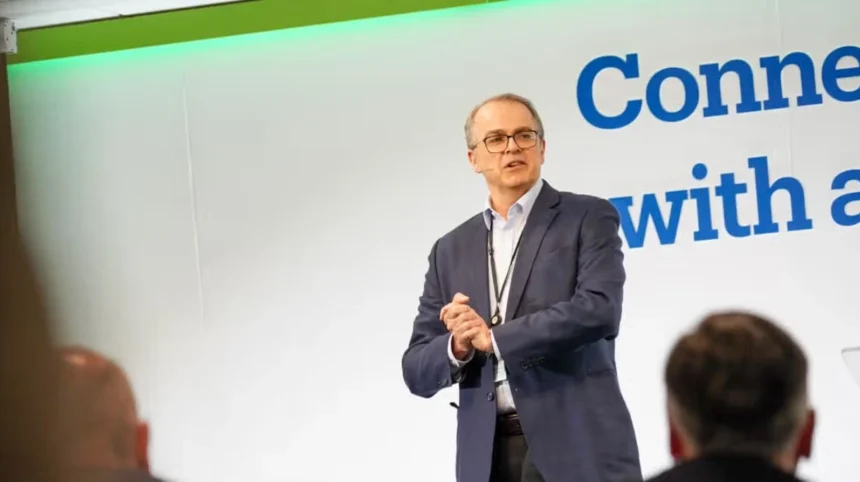
Newcastle (Newcastle Times) September 25, 2026 – Newcastle Building Society has hosted a UK-first United Nations summit bringing together financial institutions, policymakers, and community leaders to address economic inclusion and regional environmental sustainability. The historic event was staged at the mutual organisation’s headquarters on Cobalt Business Park, gathering prominent stakeholders from across the UK and Ireland under the auspices of the United Nations Environment Programme Finance Initiative (UNEP FI). delegates addressed critical socioeconomic topics, ranging from household energy efficiency to regional development.
- Key Points
- What Was the Purpose of the United Nations Summit in Newcastle?
- How Is the Financial Sector Addressing Household Energy Transition and Warmer Homes?
- What Did the United Nations Environment Programme Finance Initiative State?
- Why Is Cross-Sector Collaboration Critical for Purpose-Led Mutuals?
- Background of the UNEP FI and Regional Mutual Banking Development
- Prediction: How This Development Will Affect UK Financial Institutions, Homeowners, and Local Communities
What Was the Purpose of the United Nations Summit in Newcastle?
As reported by Tom Keighley of Business Live, the United Nations Environment Programme Finance Initiative (UNEP FI) convened its inaugural UK & Ireland Community of Practice event to examine how the financial services sector can actively support local populations during times of rapid economic, social, and environmental transformation. The cross-sector forum brought together executive leaders from banking, housing associations, energy suppliers, academic institutions, municipal local authorities, and non-profit community organisations.
The agenda was structured around the imperative of driving an inclusive transition within the real economy. Delegates evaluated practical strategies to enhance regional financial wellbeing, expand access to fair banking, and deliver actionable financial education. The discussions emphasised how targeted investments in local economies can foster long-term community resilience, mitigate regional economic disparities, and ensure that underrepresented demographics are not left behind during broader macro-environmental shifts.
How Is the Financial Sector Addressing Household Energy Transition and Warmer Homes?
A central focus of the conference was a dedicated panel on household energy efficiency and the drive towards warmer homes. Panelists drawn from research institutes, green technology firms, and public policy bodies outlined practical measures aimed at upgrading the UK’s housing stock.
The sessions explored structural barriers currently hindering households from adopting green energy technologies and undertaking energy-efficiency retrofits. Delegates analysed solutions to streamline access to capital for green home improvements, evaluating how financial institutions can develop specialized lending products to lower the initial cost barriers faced by homeowners and tenants undergoing the green transition.
Explore More Local Newcastle News
NHS Brain Tumour Genomic Test Rolled Out in Newcastle 2026
Newcastle Chronicle Shares Photos of Students During Freshers Week Newcastle 2026
What Did the United Nations Environment Programme Finance Initiative State?
Highlighting the global context of the gathering, key spokespersons emphasized that national and international environmental targets must be tailored to regional realities.
As reported by Tom Keighley of Business Live, Eric Usher, Head of the United Nations Environment Programme Finance Initiative (UNEP FI), stated that:
“UNEP FI understands that sustainability challenges across the finance industry are shaped by local realities, and we are committed to supporting our member banks and the broader finance community to address these nuances. Our Communities of Practice across Europe bring together financial institutions facing similar challenges in their specific national or jurisdictional contexts to exchange expertise, discuss ideas and practical solutions that address a broad spectrum of sustainability topics.”
As reported by Tom Keighley of Business Live, Eric Usher further observed:
“The conversations in Newcastle demonstrated the commitment of the financial sector in the UK and Ireland towards building a resilient future. The level of engagement throughout the day shows why face to face dialogue is essential, and what can be achieved through peer exchange to move the needle on addressing sustainability risks, accelerating the transition and ensuring local communities are included in that transformation. UNEP FI will continue working with the finance sector to help turn ambition into action.”
Why Is Cross-Sector Collaboration Critical for Purpose-Led Mutuals?
Leadership from the host institution stressed that isolated corporate action is insufficient to resolve systemic social and environmental challenges, reinforcing the role of mutual financial institutions as community anchors.
As reported by Tom Keighley of Business Live, Andrew Haigh, Chief Executive of Newcastle Building Society, stated that:
“Bringing together a diverse group of organisations created a valuable opportunity to share ideas, challenge thinking and learn from practical examples already making a difference in our communities. A consistent theme throughout the day was the need for collaboration.”
As reported by Tom Keighley of Business Live, Andrew Haigh added:
“Whether discussing financial inclusion, local economic development, energy efficiency or community resilience, it was clear that many of today’s challenges require organisations to work together across sectors. As a purpose-led mutual organisation, Newcastle Building Society remains committed to connecting communities with a better financial future and we are therefore delighted to be signatories to the United Nations Principles for Responsible Banking and to support the UNEP FI.”
Background of the UNEP FI and Regional Mutual Banking Development
The United Nations Environment Programme Finance Initiative (UNEP FI) is a global partnership established between the United Nations Environment Programme and the private financial sector. Founded in the wake of the 1992 Earth Summit, UNEP FI works with over 500 financial institutions—including commercial banks, mutuals, insurers, and fund managers—to align private capital with the UN Sustainable Development Goals (SDGs) and the Paris Climate Agreement.
A cornerstone of UNEP FI’s banking framework is the Principles for Responsible Banking (PRB), launched in 2019. The framework requires signatory institutions to systematically measure the environmental and social impacts of their business activities, set public targets, and transparently report on progress.
Historically, global sustainability initiatives were dominated by multinational tier-one investment banks and global asset managers. However, the establishing of localized “Communities of Practice” reflects a tactical pivot within UNEP FI to engage regional mutuals, building societies, and community credit institutions.
Newcastle Building Society, the largest building society in the North East of England, became a PRB signatory as part of a broader corporate strategy to align its regional lending practices with ESG (Environmental, Social, and Governance) principles. Regional mutuals are increasingly viewed by international bodies as pivotal execution vehicles for transition finance, given their branch footprints, direct links to housing markets, and obligation to reinvest profits for member and community benefit rather than external shareholder returns.
Prediction: How This Development Will Affect UK Financial Institutions, Homeowners, and Local Communities
The staging of the inaugural UNEP FI UK & Ireland Community of Practice summit in Newcastle indicates a broader structural shift in how environmental and social governance is operationalised within regional financial markets. Over the medium-to-long term, this development is expected to impact three core audiences:
1. Regional Building Societies and Banking Institutions
Regional lenders will face increased expectations to formalise their climate and social impact frameworks. Following Newcastle Building Society’s strategic alignment with the UN Principles for Responsible Banking, peer institutions across the UK and Ireland are likely to accelerate their adoption of similar international standards. This will lead to the standardisation of sustainability metrics for mid-tier lenders and increase demand for specialized ESG compliance expertise in regional financial centers.
2. Homeowners and Mortgage Borrowers
For retail customers, particularly those residing in older, energy-inefficient housing stock across the North of England, this collaboration is predicted to accelerate the market availability of tailored financial products. Financial institutions working alongside local authorities and energy providers will likely introduce preferential “green mortgage” interest rates, low-cost retrofit loans, and targeted grant assistance packages. Over time, these measures could reduce household energy bills and insulate property values from climate-related regulatory write-downs.
3. Local Authorities and Community Organisations
Municipal councils and non-profit social enterprises can anticipate stronger integration with private financial institutions. The establishment of localized UN-backed dialogue channels facilitates direct co-investment opportunities between private capital, public funds, and local development projects. Consequently, regional communities may benefit from enhanced local branch access, financial literacy programs, and targeted regeneration investments designed to safeguard economic inclusion during the transition to a net-zero economy.