

Key Points
- A Ryanair flight traveling from Glasgow Airport to Alicante-Elche in Spain declared a mid-air emergency while cruising above Scotland.
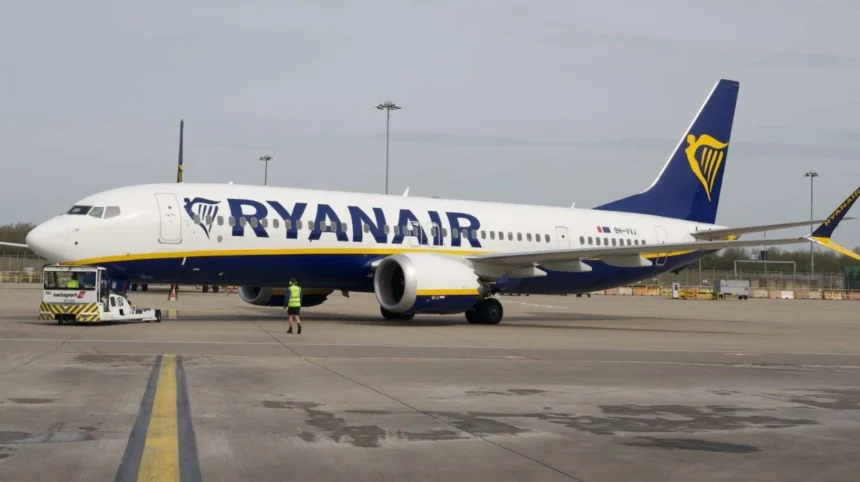
- Flight FR2522, operated with a Boeing 737-800, triggered a squawk 7700 alert—the international code for a general emergency—at approximately 12:00 PM (or 11:56 AM according to specific tracking records) at an altitude of 11,950 feet.
- As reported by Zahra Khaliq of The Mirror, passengers on board were reportedly asked if there was a medically qualified person present during the flight.
- The aircraft made an abrupt U-turn and diversion, landing safely at Newcastle International Airport at 12:07 PM.
- Precise details regarding the exact nature of the emergency have not been immediately clarified, and media outlets have reached out to Ryanair for official comment.
Newcastle (Newcastle Times) October 26, 2026 – A routine international flight from Scotland to Spain was dramatically interrupted on Monday afternoon when a Ryanair jet declared a general mid-air emergency, prompting an unscheduled diversion and safe landing in the North East of England. Flight FR2522, carrying holidaymakers bound for the popular Spanish coastal destination of Alicante, executed a sudden U-turn mid-journey after transponding emergency code signals over British airspace. Aviation tracking data and reports compiled across regional and national media channels confirmed that the aircraft touched down safely at Newcastle International Airport shortly after midday, concluding a tense hour for passengers and flight crew alike.
Why Did the Spain-Bound Ryanair Flight Divert to Newcastle?
As detailed by regional reporters, the scheduled commercial service departed from Glasgow Airport at approximately 10:50 AM on Monday, heading toward Alicante-Elche Airport where it was originally scheduled to arrive at 2:55 PM local time. However, as the aircraft cruised at an altitude of 11,950 feet over Scotland, flight tracking data shows it experienced an unexpected disruption.
According to flight tracking information highlighted by The Mirror (as reported by journalist Zahra Khaliq), the aircraft transmitted a “squawk 7700” code. This transponder code is recognized globally as the universal indicator for a general airborne emergency. Flight logs indicate the emergency transmission occurred at approximately 11:56 AM or around midday.
What Happened Inside the Cabin During the Emergency Alert?
While precise technical details or mechanical faults explaining the cause of the emergency code remain unconfirmed, passenger experiences shared during the incident point toward an urgent medical or onboard situation. As reported by The National and cross-referenced by The Mirror (Zahra Khaliq), cabin crew members urgently asked passengers on board if there was a medically qualified person available within the aircraft cabin.
Following the activation of the squawk 7700 signal, the flight crew initiated a rapid diversion procedure, turning the Boeing 737-800 away from its southerly trajectory toward Spain and steering it toward the nearest suitable airfield. Flight tracking logs demonstrate that the plane altered its course and descended toward Tyneside, touching down safely on the tarmac at Newcastle International Airport at precisely 12:07 PM.
What Were the Immediate Aftermath and Response Measures?
Emergency procedures at Newcastle International Airport were swiftly aligned to receive the unscheduled flight. Ground teams and airport operations coordinated the safe arrival of Flight FR2522.
As noted across local reporting outlets including ChronicleLive, Teesside Live, Belfast Live, and Dublin Live, the exact reasoning behind the emergency declaration was not immediately transparent in the initial hours following the touchdown. Major news titles, including The Mirror, confirmed that formal inquiries had been dispatched to Ryanair representatives requesting clarification regarding the precise sequence of events that forced the mid-air turnaround. Normal operations at Newcastle International Airport continued following the successful landing, and passengers were managed through the terminal facilities while airline personnel evaluated the next steps for the disrupted journey.
Background of the Particular Development
Emergency diversions involving commercial airlines like Ryanair are governed by strict international aviation safety protocols. When an unexpected situation—ranging from sudden passenger medical crises to technical instrumentation warnings—occurs at cruising altitude, flight crews are trained to immediately prioritize safety by declaring a “squawk 7700” emergency. This code alerts all regional air traffic control centers across the United Kingdom and Europe to grant the aircraft absolute priority, clear surrounding airspace, and clear a direct, unhindered path to the nearest appropriate diversion airfield. In this instance, Newcastle International Airport served as the designated safe haven due to its strategic geographical proximity along the flight path over northern Britain, allowing the aircraft to land within minutes of the initial distress signal without further escalation.
Prediction on How This Development Can Affect Travelers and the Aviation Sector
This emergency diversion is expected to generate short-term inconvenience for the passengers originally booked on Flight FR2522 to Alicante, leading to delayed holiday schedules and necessary arrangements for alternative transit or aircraft turnaround by Ryanair. For the broader traveling public and regional airports in the UK, such incidents reinforce public awareness of rigorous aviation safety standards and rapid-response capabilities. While isolated mid-air emergencies rarely impact long-term ticket sales or airline consumer trust, they frequently prompt heightened scrutiny regarding cabin medical readiness, fleet maintenance checks, and procedural efficiency among budget carriers operating high-frequency European routes.