


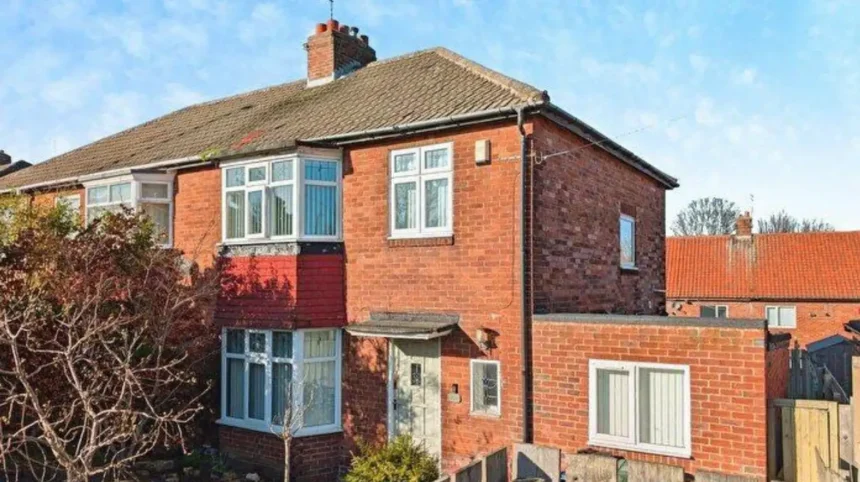
Blakelaw is a residential area in the north-west of Newcastle upon Tyne with a history rooted in farming, coal mining, wartime activity and post-war housing development. Its present housing stock reflects several periods of urban growth, including council-built homes, 1960s tower blocks, later private development and newer accessible housing.
- What is Blakelaw and how did the area develop?
- When did Blakelaw change from farmland and mining land into a residential area?
- What types of property are found in Blakelaw?
- What are the main advantages of buying property in Blakelaw?
- How does Blakelaw’s history affect property buyers today?
- What are the main disadvantages or risks of buying property in Blakelaw?
- How should buyers investigate the history of a Blakelaw property?
- What should buyers check when purchasing a leasehold property in Blakelaw?
- How does Blakelaw’s community infrastructure support residential life?
- How does Blakelaw compare historically with older Newcastle neighbourhoods?
- What should buyers check before making an offer on a Blakelaw property?
- Why does Blakelaw’s history remain relevant to its future housing market?
For property buyers, Blakelaw is therefore more than a modern residential estate. Its streets, buildings and open spaces developed from a landscape that Newcastle City Council describes as agricultural and mining country before rapid twentieth-century urbanisation. Local historic-environment records also document former farms, coal shafts, quarries, a smithy and cottages in the area.
Understanding that background helps buyers assess the age, construction, tenure and setting of properties in Blakelaw. It also explains why the area contains different housing forms rather than one uniform architectural style.
What is Blakelaw and how did the area develop?
Blakelaw is a north-west Newcastle residential area shaped from former agricultural and mining land into a twentieth-century housing community, with surviving evidence of farms, coal workings, wartime infrastructure, post-war estates and later residential redevelopment.
Blakelaw lies within Newcastle upon Tyne and forms part of the city’s western and north-western residential landscape. Its historical development differs from older inner-city districts because large-scale residential expansion occurred comparatively recently.
Newcastle City Council’s character assessment identifies agriculture and coal mining as important predecessors to twentieth-century development. Before the rapid expansion of housing, the area contained agricultural and mining buildings. Former mining activity at Blakelaw and nearby Slatyford connected with the River Tyne through wagonways, which were industrial transport routes used to move coal.
The name Blakelaw also appears in historic mapping. The Tyne and Wear Historic Environment Record identifies a Blakelaw farm on the first-edition Ordnance Survey map from 1850. The record classifies the site as post-medieval and specifically Victorian, showing that the modern neighbourhood occupies a landscape with documented nineteenth-century agricultural history.
That historical foundation matters when examining property in the area. A buyer looking at a house, flat or newer development is purchasing within a landscape that has experienced several distinct phases of land use.
When did Blakelaw change from farmland and mining land into a residential area?
Blakelaw changed substantially during the twentieth century as Newcastle expanded beyond its older urban districts, replacing agricultural and industrial land with planned housing, roads, schools, open spaces and community facilities serving a growing population.
The transformation was part of a much wider pattern in Newcastle. Industrialisation had increased the city’s population and created pressure for improved housing. During the twentieth century, Newcastle authorities developed residential estates beyond the dense nineteenth-century districts.
Council housing formed an important part of this national and local transformation. The Housing Act 1919, known as the Addison Act, established housing as a national responsibility and encouraged local authorities to build homes. Newcastle City Council identifies the Pendower Estate in the west and housing in Walker in the east as among its first council housing developments arising from the legislation.
Blakelaw’s large-scale residential character belongs to the later phase of this wider housing history. By the mid-twentieth century, the western and north-western parts of Newcastle contained extensive planned housing.
The surrounding landscape also retained evidence of earlier land uses. Newcastle’s character assessment records former mining terraces around nearby Slatyford and Chapel Park, while former farmhouses survived at locations including Blakelaw and neighbouring districts.
For property research, this timeline establishes an important principle: the age of a Blakelaw property does not necessarily indicate the age of the land’s use. A twentieth-century house can stand on land with nineteenth-century agricultural or industrial records.
What types of property are found in Blakelaw?
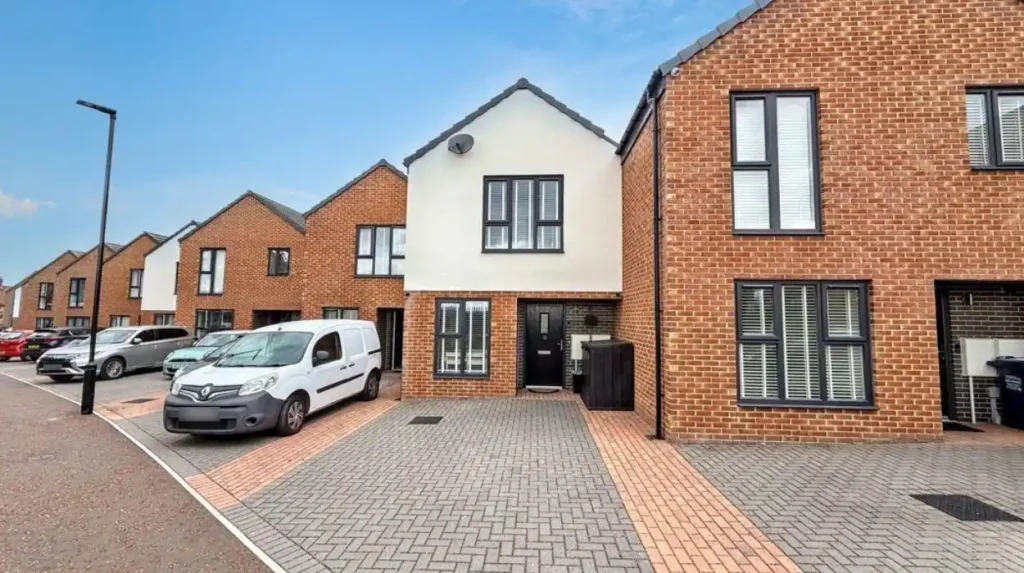
Blakelaw contains a mixture of houses, flats, bungalows, tower blocks and newer residential development, reflecting several construction periods rather than one single architectural phase. Property age and building type therefore vary significantly between streets and developments.
The housing stock includes traditional council-estate forms alongside later private and mixed-tenure developments.
The presence of high-rise buildings provides clear evidence of the area’s 1960s development. Newcastle City Council records Beaumont House on Cragston Avenue as a 1967 building containing 66 flats across 11 floors. Brockwell House on Sunnyway was also built in 1967, with 66 flats across 11 floors. Moorland House on Moulton Place dates from the same year and contains 66 flats across 14 floors.
These buildings illustrate the architectural response of the period. High-rise housing provided substantial numbers of dwellings while using land differently from low-rise terraces and semi-detached housing.
Blakelaw also contains low-rise housing and bungalows. In 2021, Newcastle City Council reported the completion of 10 two-bedroom bungalows and four two-bedroom Tyneside flats on Wansfell Avenue. The development was designed for older residents who did not require sheltered accommodation but wanted additional housing support.
Newer developments add another layer to the area’s housing profile. A Newcastle planning document identified a 7.9-hectare site around the Springfield Centre and Blakelaw Road/Sunnyway with an estimated capacity of 308 homes.
This mixture means buyers need to examine individual properties rather than assume that one description applies across Blakelaw.
What are the main advantages of buying property in Blakelaw?
The main advantages of Blakelaw include its established residential infrastructure, varied housing stock, extensive community facilities, green and recreational spaces, continuing housing investment and connections with Newcastle’s wider urban area. These characteristics give the district a long-established residential function.
One important advantage is housing variety. Buyers can encounter different building forms, including family houses, flats, bungalows, tower-block apartments and newer homes. This provides different ownership and occupancy patterns within the same broader district.
The established nature of the area is another factor. Blakelaw is not a newly created settlement without existing services. Its schools, roads, parks, community facilities and established residential streets reflect decades of development.
Sport and recreation have also received substantial investment. In 2022, Newcastle City Council announced more than £9.5 million of investment from the Premier League, the Football Association and the Government’s Football Foundation for sports facilities at Blakelaw Park and Bullocksteads Sports Ground.
The Blakelaw Park works included two new small-sided 3G football pitches, a multi-use games area, replacement of an existing full-size 3G pitch, a two-storey pavilion, changing facilities, a community café, an education room, a 60-station fitness suite and a children’s play area.
These facilities are relevant to property research because neighbourhood infrastructure forms part of the practical setting around a home.
Housing investment is another continuing feature. In 2021, Newcastle City Council completed 14 accessible homes at Wansfell Avenue. The council stated that the development formed part of a wider programme delivering hundreds of new homes.
Newcastle City Council also identified Blakelaw among locations included in its longer-term programme for council housing development announced in 2026.
How does Blakelaw’s history affect property buyers today?
Blakelaw’s history affects property buyers through building age, construction type, former land use, planning history and tenure. Researching these factors helps distinguish properties built during different development periods and identifies issues requiring professional investigation before purchase.
A property’s construction period affects maintenance expectations. A 1960s tower block has a different structural and management history from a newly constructed house. The same principle applies to older low-rise housing and later infill development.
Former industrial land also deserves attention. Historic Environment Record entries document a coal shaft, quarry, mine shaft, smithy and cottages in the Blakelaw area. One recorded coal shaft was marked as “Old” on the first-edition Ordnance Survey plan, indicating that it was probably out of use by 1858.
Historic industrial activity does not automatically mean that a modern property has a defect. It does mean that a buyer should rely on appropriate searches and professional advice rather than assume that historic land use is irrelevant.
The same principle applies to wartime history. The Historic England military research record identifies Blakelaw Estate on Ponteland Road as a location associated with wartime military command activity from September 1939.
For historical researchers, these records provide evidence of how the landscape changed. For property purchasers, they form part of the background that professional conveyancing and environmental investigations can assess.
What are the main disadvantages or risks of buying property in Blakelaw?
The principal issues requiring careful investigation are differences in building age, tenure, service charges, historic land use, maintenance responsibilities, development activity and property-specific condition. These factors vary between individual homes and should be checked before contracts are exchanged.
The first issue is property condition. Older buildings require assessment of roofs, windows, heating systems, insulation, plumbing, electrical installations and structural elements. A home survey provides information that a standard viewing cannot establish.
The second issue is tenure. Freehold means ownership of the property and land, while leasehold provides the right to occupy a property for a fixed period under a lease. Flats are commonly leasehold, although houses can also be leasehold.
Leasehold buyers need to investigate the remaining lease term, ground rent, service charges, insurance arrangements, planned major works and restrictions contained in the lease. Government guidance specifically recommends examining these matters before committing to a purchase.
High-rise properties require particular attention to management and building-safety documentation. Newcastle City Council records the construction dates and specifications of Blakelaw’s high-rise buildings, including Beaumont House, Brockwell House and Moorland House.
Development is another consideration. Newcastle’s housing programme includes Blakelaw among areas targeted for further council housing development. Buyers should therefore examine relevant planning information for the specific street and surrounding land rather than rely only on the current appearance of the neighbourhood.
How should buyers investigate the history of a Blakelaw property?
Buyers should combine the Land Registry title, local authority searches, historic-environment records, planning information, environmental searches and a professional survey to establish ownership, restrictions, development history, physical condition and potential risks associated with the individual property.
HM Land Registry provides title information for property in England and Wales. The title register can identify ownership, purchase price where available, rights of way and mortgage information. The title summary also identifies whether a property is freehold or leasehold.
Local authority searches provide another layer of information. GOV.UK states that searches can identify restrictions affecting land, planning-related matters and external factors such as proposed roads and rail schemes. Additional specialist searches can address matters such as flood risk and mining.
Mining history deserves attention in Blakelaw because the Historic Environment Record documents coal workings and a former coal shaft. A conveyancer can advise on the appropriate mining and environmental searches for the property being purchased.
A survey assesses physical condition. Government guidance recommends considering a home survey before completing a purchase. The survey type should reflect the building and its age.
An Energy Performance Certificate is also relevant. Sellers must provide a valid EPC for a property unless an exemption applies. The EPC provides an energy-efficiency rating and information about potential improvements.
Historical research adds another useful layer. The Tyne and Wear Historic Environment Record records sites through mapped and documentary evidence. Its Blakelaw entries provide examples of how nineteenth-century farms and industrial sites can be traced through Ordnance Survey mapping.
What should buyers check when purchasing a leasehold property in Blakelaw?
Leasehold buyers should verify the remaining lease term, service charges, ground rent, insurance, planned major works, management arrangements, restrictions and permissions before exchange. These contractual obligations can materially affect the cost and practical use of a property.
The lease is the central document. It defines the rights and responsibilities of the leaseholder and freeholder. Government guidance states that buyers should read and understand the lease before signing a legally binding contract.
Service charges require particular scrutiny in flats. They can contribute towards maintenance, cleaning, repairs, insurance and management of shared areas. Buyers should request current information and relevant historical charges before committing to the purchase.
Major works are another important consideration. A building with substantial communal maintenance requirements can create costs beyond the normal purchase price. Buyers should ask whether major works have recently been completed or are planned.
Lease length is also important. Government guidance states that leases commonly run for 99, 125 or 999 years, although terms vary. The remaining term decreases as ownership continues because a lease does not restart when a property changes hands.
Leasehold law is also undergoing reform. The government’s 2026 leasehold toolkit explains changes introduced under the Leasehold and Freehold Reform Act 2024 and outlines further measures concerning lease extensions, freehold purchases, service-charge transparency and commonhold. Buyers should obtain current professional advice because implementation of reforms develops over time.
How does Blakelaw’s community infrastructure support residential life?
Blakelaw’s community infrastructure includes parks, sports facilities, housing services and established residential amenities developed through successive phases of urban planning. Recent investment demonstrates continued public and community attention to recreation, accessible housing and neighbourhood facilities.
Blakelaw Park is an important recreational asset. The 2022 sports programme introduced new football pitches, a multi-use games area, a pavilion, changing facilities, a café, education space, fitness facilities and children’s play provision.
The investment also demonstrates how post-war housing estates continue to evolve. Community infrastructure is not fixed when an estate is first constructed. Facilities are upgraded as population needs and public investment priorities change.
Accessible housing is another part of this evolution. The Wansfell Avenue development created 14 homes consisting of 10 two-bedroom bungalows and four two-bedroom Tyneside flats. The council designed the scheme for older residents who did not require sheltered accommodation but wanted additional housing support.
Blakelaw is also included within Newcastle’s current housing-development programme. The council’s 2026 announcement identified Blakelaw among locations where council housing development was already being planned.
For prospective buyers, these projects demonstrate an established pattern of residential investment rather than a neighbourhood frozen in its original development period.
How does Blakelaw compare historically with older Newcastle neighbourhoods?
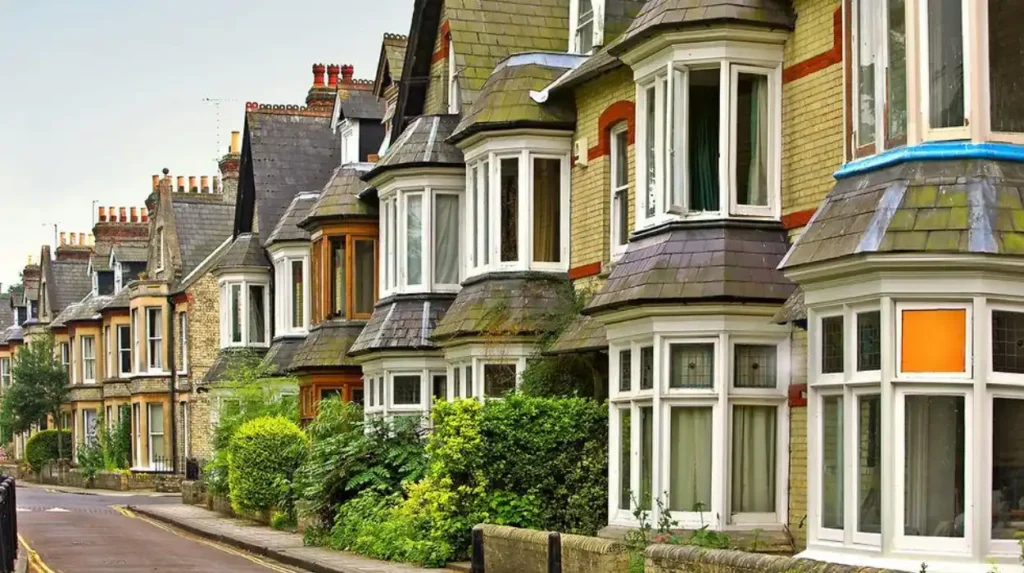
Blakelaw differs from Newcastle’s older central neighbourhoods because its modern residential identity developed largely during the twentieth century, while areas around the historic core contain substantially older medieval, Georgian and Victorian urban fabric.
Newcastle’s central history includes Roman frontier infrastructure, Norman development, medieval expansion, Georgian planning and nineteenth-century industrial growth. The city council describes Newcastle as a place shaped by Roman, Norman, medieval, railway and industrial histories.
Blakelaw represents a different stage of the city’s urban history. Its landscape contained farms and mining activity before twentieth-century housing expansion. The council’s character assessment specifically identifies rapid twentieth-century development as the major transformation of the western landscape.
This distinction is important for anyone interested in architectural heritage. Blakelaw’s significance does not depend on medieval streets or grand nineteenth-century terraces. Its historical value lies in documenting suburban expansion, post-war housing policy, industrial transition and changing approaches to community infrastructure.
The surviving 1960s tower blocks provide physical evidence of a period when high-rise housing formed part of urban planning. Later low-rise housing and newer developments show subsequent changes in residential design and tenure.
The area therefore provides a useful case study in Newcastle’s transition from industrial-era land use to modern suburban housing.
What should buyers check before making an offer on a Blakelaw property?
Before making an offer, buyers should establish the property’s tenure, condition, recent comparable evidence, running costs, planning context and legal status. After an offer is accepted, professional searches, conveyancing and appropriate surveys should verify the information before exchange.
GOV.UK guidance recommends checking property value, lease length where relevant, included items and works to be completed before making an offer. In England and Wales, an offer is not legally binding until contracts are exchanged.
Buyers should then appoint a solicitor or licensed conveyancer. The legal professional normally arranges local authority, water and drainage, and environmental searches.
A Blakelaw purchaser should also consider the property’s specific construction period. A 1960s apartment, an older low-rise house and a recently built property have different maintenance profiles and legal documentation.
Historic land use should form part of the investigation rather than serve as a substitute for professional assessment. Records of coal workings, former farms and other historic sites demonstrate the area’s layered land history, but only property-specific searches can establish whether those records affect an individual site.
Buyers interested in understanding the area’s wider physical and cultural setting can also explore the local attractions and historic environment through our comprehensive for itineraries and visiting parameters.
Why does Blakelaw’s history remain relevant to its future housing market?
Blakelaw’s history remains relevant because the neighbourhood continues to evolve through housing investment, recreational improvements, new development and changing housing needs while retaining physical evidence of its agricultural, mining, wartime and post-war past.
The area demonstrates how Newcastle’s urban boundaries expanded over time. Agricultural land became industrial land in some locations, industrial landscapes were later incorporated into suburban development, and established housing estates continue to receive new investment.
The historical record also creates a framework for understanding the physical environment. The 1850 Ordnance Survey record of Blakelaw farm, nineteenth-century coal workings and twentieth-century military records show that the landscape has changed repeatedly.
The housing stock itself acts as a chronological record. The 1967 high-rise buildings document one phase of post-war residential planning. The 2021 Wansfell Avenue homes represent contemporary accessible housing design. New housing programmes demonstrate continuing development.
For prospective buyers, this history provides useful context but does not replace property-specific investigation. The correct assessment of a Blakelaw home depends on its title, tenure, construction, condition, location, planning circumstances and associated costs.
For historians and heritage researchers, Blakelaw offers a clear example of twentieth-century Newcastle expansion. For property purchasers, the same history explains why the area contains such a varied collection of homes and why researching individual properties is essential before completing a transaction.