


Key Points
- Transplant specialists from Newcastle are now part of the big, £5.2 million, five-centre national project called PERFUSE-UK.
- The project aims to increase the use of normothermic machine perfusion (NMP), which is a machine-assisted way to evaluate the quality of kidneys for transplant.
- The project is funded by the Stoneygate Trust and covers hospitals in Cambridge, London, Oxford, Edinburgh, and Newcastle.
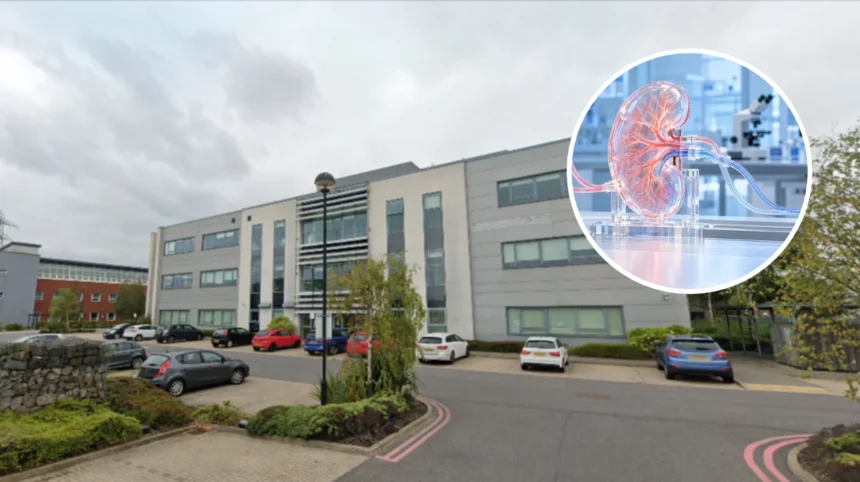
- Classic preservation of organs involves keeping the kidneys from deceased donors chilled, but with NMP, the kidney is kept warm, as the machine pumps oxygen-filled fluid through the kidney.
- It is estimated that over 300 kidneys from deceased donors are rejected for transplantation in the UK every year, with 80% of them being potentially suitable for the perfusion process.
- The team at PERFUSE-UK hopes that future implementation of NMP across the NHS would allow up to 70% of perfused kidneys to be transplanted.
- NMP will be implemented by the Newcastle centre using locally donated organs that are transplanted at the same location and not from a centralized distribution center system.
- Other participating centers also plan to make use of NMP for research purposes where the process is used to test different drugs on the organs before transplantation.
Newcastle (Newcastle Times) October 24, 2026 – Newcastle transplant specialists have officially integrated into a multi-centre initiative designed to transform how medical professionals evaluate organs prior to surgery. As reported by the LDN Editor of London Daily News, the £5.2 million PERFUSE-UK programme runs across five major medical hubs, uniting clinical experts in Cambridge, London, Oxford, Edinburgh, and Newcastle to scale up machine-based evaluation techniques for donated kidneys. Backed financially by the Stoneygate Trust, the collaborative venture seeks to embed normothermic machine perfusion (NMP) into standardized clinical pathways over a five-year timeline, addressing long-standing hurdles in deceased donor organ assessment.
- Key Points
- How Does Normothermic Machine Perfusion Work for Donated Kidneys?
- What Are the Potential Impacts and Target Figures for the PERFUSE-UK Programme?
- How Will the Newcastle Centre Implement the Perfusion Technique?
- Can Perfusion Machines Be Used for Organ Repair and Clinical Research?
- What Are the Next Steps for Establishing National Standards?
- Background of the Particular Development
- Prediction
How Does Normothermic Machine Perfusion Work for Donated Kidneys?
Traditional transplantation protocols typically rely on static cold storage, where kidneys retrieved from deceased donors are kept chilled during transport and preservation. Conversely, normothermic machine perfusion employs a specialised pump mechanism to circulate warmed, oxygenated fluid continuously through the donated kidney. According to reporting by the LDN Editor of London Daily News, this active circulation grants surgical teams an extended window of opportunity to examine the physical condition of the organ thoroughly and reach a more precise verdict regarding its suitability for transplantation.
While cold storage limits metabolic evaluation, warming the kidney and providing oxygen allows cellular activity to resume, revealing functional responses that would otherwise remain hidden. However, medical experts clarify that this advanced assessment does not mean every organ placed on a perfusion machine will ultimately be deemed viable for a patient recipient.
What Are the Potential Impacts and Target Figures for the PERFUSE-UK Programme?
Statistical projections highlighted within the programme indicate that upwards of 300 kidneys from deceased donors are discarded or judged unsuitable for transplantation across the UK annually. Organisers behind the initiative estimate that roughly 80% of those rejected organs could possess sufficient baseline health to undergo machine perfusion treatment safely.
As detailed by the LDN Editor of London Daily News, PERFUSE-UK aspires to establish benchmarks where, if the methodology is ultimately rolled out across the wider National Health Service (NHS), as many as 70% of those perfused organs could successfully progress to transplantation. Analysts emphasize that these figures represent a prospective ambition and a target pool for clinical trials rather than an immediate guarantee of increased graft numbers.
Explore More Local Newcastle News
Newcastle Council Approves Royal British Legion Club Demolition West Jesmond 2026
Newcastle Becomes Spiritual Home of Mercury Prize in 2026
How Will the Newcastle Centre Implement the Perfusion Technique?
Unlike certain regional distribution frameworks designed for livers, lungs, and kidneys—such as centralised Assessment and Recovery Centre models that process organs across wider geographic networks—the Newcastle team will adopt a localized approach. As reported by the LDN Editor of London Daily News, the Newcastle centre is set to apply the technique directly to kidneys that are both donated and subsequently transplanted within the same hospital site.
This localized framework allows specialists to integrate the technology smoothly into existing theatre workflows while contributing data and findings back to the wider national consortium.
Can Perfusion Machines Be Used for Organ Repair and Clinical Research?
Beyond immediate pre-transplant evaluation, the five participating medical centres intend to leverage NMP as a dynamic platform for clinical research. As outlined by the LDN Editor of London Daily News, researchers plan to test experimental drugs, therapeutic interventions, and novel pharmacological agents directly on the perfused kidneys.
The longer-term scientific objective of this investigative work is to determine whether marginal or damaged organs can be actively repaired, optimized, or rendered healthier before they are implanted into a recipient. Investigators also aim to study whether these advanced conditioning techniques could mitigate organ rejection rates or prolong the functional lifespan of the kidney post-transplant, though researchers note these remain clinical exploration goals rather than immediate therapeutic certainties.
What Are the Next Steps for Establishing National Standards?
A primary pillar of the five-year PERFUSE-UK grant is the creation of rigorous, uniform national standards for kidney NMP. Rather than merely acquiring expensive medical hardware, participating institutions must establish cohesive protocols governing how organs are evaluated, how diagnostic findings shape surgical decisions, and how the technology can be deployed uniformly across different health trusts. The ultimate evaluation of the programme will depend on the empirical evidence gathered by Newcastle and its partner institutions, paving the way for future regulatory and clinical integration within the UK healthcare landscape.
Background of the Particular Development
The launch of the PERFUSE-UK network arrives against the backdrop of an ongoing national shortage of donor organs and strict clinical criteria required to ensure patient safety. For decades, static cold storage has served as the gold standard for organ preservation, yet it provides limited diagnostic data beyond baseline blood tests and visual inspections. This information gap often leads clinicians to decline marginal kidneys—such as those from older donors or donors with complex medical histories—out of caution, contributing to the yearly total of unutilised organs.
Over recent years, advancements in biomedical engineering have brought machine perfusion to the forefront of transplant medicine. Initial trials with liver and kidney perfusion demonstrated that active oxygenation can revive cellular function and provide real-time metrics on organ health. Recognizing the need to transition these promising technologies from isolated research trials into unified clinical practice, the Stoneygate Trust partnered with leading academic and clinical institutions to fund a coordinated, multi-centre effort, culminating in the establishment of the £5.2 million PERFUSE-UK network involving Newcastle specialists.
Prediction
Over the next five years, the integration of the Newcastle transplant team into the PERFUSE-UK network is expected to reshape the decision-making framework for renal surgery teams and impact patients awaiting a kidney transplant. For transplant candidates on the national waiting list, the successful standardisation and wider adoption of normothermic machine perfusion could gradually expand the pool of viable donor organs, potentially reducing average wait times and increasing overall transplant rates across the NHS.
For clinical professionals, the establishment of robust national guidelines and advanced assessment tools will remove historical ambiguities associated with marginal organs, allowing surgeons to proceed with complex transplants backed by comprehensive real-time functional data. Furthermore, if ongoing research into therapeutic organ repair yields positive results during the five-year program, future patients could benefit from organs that have been actively optimized to resist rejection, ultimately improving long-term graft survival rates and post-surgical outcomes across the United Kingdom.