


Key Points
- Jury Deliberations Underway: A jury at Newcastle Crown Court has retired to deliberate verdicts in the violent disorder trial of six men, including three members of the Sayers family.
- The Accused: Defendants Stephen Sayers (61), Stephen Sayers Jnr (33), Thomas Sayers (31), Anthony Brown (24), Lee Jamieson (22), and Bradley Fraser (26) all deny charges of violent disorder. Chronicle Live
- Incident Allegations: Prosecutors allege the men threw glasses, bottles, and punches at a Ford pickup truck on Shields Road, Byker, outside Thomas Sayers’ bar. Facebook
- Self-Defence Claim: Defence barristers argue the men were acting in self-defence after a pattern of 15 prior violent attacks targeting the Sayers family by the Freeman organised crime gang. Chronicle Live
- Legal Directions: Judge Edward Bindloss directed jurors that the burden of proof rests solely on the prosecution, requiring a standard of beyond reasonable doubt, and instructed them to consider each defendant separately.
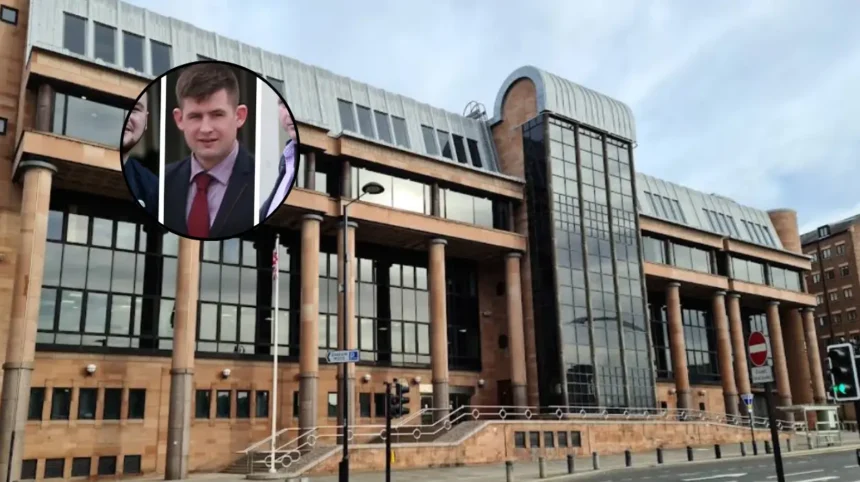
Byker (Newcastle Times) October 10, 2026 – A jury at Newcastle Crown Court has retired to deliberate verdicts in the trial of six men—including three members of the prominent Sayers family—who stand accused of taking part in a violent disorder incident outside a pub on Shields Road in Byker, Newcastle.
- Key Points
- What are the central prosecution claims against the six defendants?
- How has the defence argued self-defence on behalf of the Sayers family?
- What specific legal directions did Judge Edward Bindloss give to the jury?
- Background of the particular development
- Prediction: How this development can affect the local community and justice system
What are the central prosecution claims against the six defendants?
As reported by court reporter Rob Kennedy of Chronicle Live, the prosecution case centres on an incident in which a Ford pickup truck pulled up outside a bar owned by Thomas Sayers on Shields Road. Prosecutors allege that Stephen Sayers, 61, his sons Stephen Sayers Jnr, 33, and Thomas Sayers, 31, alongside Anthony Brown, 24, Lee Jamieson, 22, and Bradley Fraser, 26, engaged in aggressive action by throwing glasses, bottles, and punches towards the vehicle.
According to evidence presented by the prosecution at Newcastle Crown Court, the vehicle involved was linked to another family with whom the Sayers family had allegedly been involved in an ongoing dispute. The prosecution asserted that the defendants acted in anger and engaged in vigilante violence during the altercation on the public highway.
How has the defence argued self-defence on behalf of the Sayers family?
Reporting from Newcastle Crown Court, Rob Kennedy of Chronicle Live noted that counsel representing the defendants argued they acted legitimately in self-defence. Defence advocates presented evidence detailing approximately 15 prior violent incidents directed at the Sayers family by the Freeman organised crime gang.
The defence submitted that when the Ford pickup truck pulled up outside the venue and pointed towards individuals drinking outside, those present had genuine reason to fear an imminent attack and moved to deter and chase the vehicle away.
In closing arguments reported by Chronicle Live, Miss Miller, representing Stephen Sayers Snr, told the jury:
“You might conclude that vehicle posed a real threat. You might come to the common sense conclusion that Stephen Sayers Snr had perceived that vehicle as a threat. He had not armed himself. He had the glass already in his hand. He goes towards that vehicle but he doesn’t throw the glass until the vehicle starts to lunge, you might think, towards him.”
Miss Miller further stressed to the jury:
“The throwing of that one glass is all that Stephen Sayers Snr did. That one throw of the glass is the prosecution case against him… On the evidence, Stephen Sayers Snr is not guilty and we invite you to find him not guilty.”
Addressing the court on behalf of Anthony Brown, John Wilkinson of Chronicle Live reported him stating:
“What did he actually do? He threw one thing at that vehicle. It’s not clear if it was a glass or bottle or the contents of a glass or bottle.” “This case, frankly, should never have seen the light of day. If that is your view, you will have no hesitation in finding Anthony Brown not guilty of this charge.”
Defence barrister Ian Cook, representing Lee Jamieson, added:
“They weren’t looking for trouble that evening, they were out enjoying a drink. But trouble came to them.”
What specific legal directions did Judge Edward Bindloss give to the jury?
Before sending the jury out to begin deliberations, Judge Edward Bindloss outlined the precise legal criteria governing charges of violent disorder and the law on self-defence.
As reported by Rob Kennedy of Chronicle Live, Judge Bindloss instructed the jury that the burden of proof rests entirely with the prosecution, stating that if jurors are less than sure of guilt, they must return verdicts of not guilty. The judge also reminded jurors that they must consider the evidence against each of the six defendants individually.
Judge Bindloss explained the statutory definition of violent disorder to the jury:
“Three or more persons present together used or threatened unlawful violence and the defendant was one of those persons who used or threatened unlawful violence and their conduct taken together would cause a person of reasonable firmness present at the scene to fear for their personal safety.”
Regarding self-defence laws, Judge Bindloss further instructed:
“If someone genuinely believes they are under attack or about to be attacked, they are entitled to use force for the purpose of defending themselves and or others and or property but only if they use no more than reasonable force to do so.” “Did the defendant genuinely believe he was under attack or about to be attacked? If not, no defence of self-defence arises.”
Background of the particular development
The trial at Newcastle Crown Court comes after a series of high-profile incidents across Tyneside involving public disorder and alleged disputes between rival groups. The Sayers family has long been prominent in the North East, with various family members having been subject to significant public attention and legal scrutiny over several decades.
The specific proceedings on Shields Road in Byker arose following escalating tension involving the Freeman organised crime group. Court disclosures during the trial revealed that in the period leading up to the clash outside Thomas Sayers’ premises, the Sayers family had reportedly been targeted in up to 15 separate incidents. These preceding events led police and prosecutors to bring charges under section 2 of the Public Order Act 1986 following the confrontation on Shields Road.
Prediction: How this development can affect the local community and justice system
The eventual verdicts in this trial carry direct implications for the local community in Byker and the broader Newcastle metropolitan area.
For residents and business owners along the Shields Road commercial corridor, the judicial outcome will signal how public order offenses and street violence are addressed by law enforcement and the court system in high-profile cases involving established local families. A conviction could reinforce public confidence in state policing and legal accountability regarding public street altercations. Conversely, an acquittal based on self-defence arguments would highlight the stringent legal thresholds required to establish criminal liability in circumstances where defendants cite self-preservation against threat from rival factions.