



Lemington is a residential area in west Newcastle upon Tyne with a strong connection to the River Tyne, industrial heritage, established housing, community facilities, schools and access to Newcastle’s wider transport network. The area sits within the city’s western urban landscape near Newburn, Scotswood, West Denton and the A69 corridor.
- What is Lemington in Newcastle upon Tyne?
- How did Lemington develop into a residential area?
- What types of property are available in Lemington?
- How affordable is property in Lemington compared with Newcastle?
- Why is Lemington attractive for riverside living?
- What are the main transport options from Lemington?
- What schools serve families living in Lemington?
- What amenities and community facilities are available in Lemington?
- What historic landmarks define Lemington?
- How important is flood risk when buying property near Lemington?
- What should buyers check before purchasing a Lemington property?
- How could Lemington’s future development affect property?
- Is Lemington a suitable area for affordable riverside living in Newcastle?
For property buyers and renters, Lemington combines a riverside setting with a housing market that remains comparatively accessible within Newcastle upon Tyne. The wider Newcastle housing market recorded an average property price of £208,000 in July 2026, while the average price for terraced homes was £208,000, semi-detached homes £238,000 and flats and maisonettes £128,000.
Lemington also has a distinctive historical identity. The settlement developed around the River Tyne, coal transport, glassmaking and iron production. Its surviving Grade II* listed glass cone remains an important landmark.
This guide examines what living in Lemington means for households considering property, including housing character, affordability, riverside geography, transport, schools, amenities, flood considerations, heritage and future development.
What is Lemington in Newcastle upon Tyne?
Lemington is a west Newcastle residential area beside the River Tyne, historically shaped by coal transport, glassmaking and iron production. It now contains established residential streets, community facilities, schools, local services and access to riverside landscapes.
Lemington lies in the western part of Newcastle upon Tyne. Its position beside the River Tyne is central to the area’s identity and historical development.
The settlement was established at the riverside staiths before 1620. A staith was a structure used for loading coal and other goods onto vessels. Lemington’s position made it significant within the Tyne’s industrial transport system. Historical records identify the settlement as Lamendon or Lamenton.
The area expanded substantially during the eighteenth and nineteenth centuries. Glassmaking and iron production created employment and encouraged residential construction. Worker cottages developed alongside industrial sites, producing the compact residential character that remains visible in parts of Lemington today.
Lemington is also connected to neighbouring communities including Newburn, Walbottle, West Denton, Scotswood and Benwell. These connections give residents access to a wider collection of shops, schools, employment areas, recreation facilities and transport routes.
The modern area therefore combines several layers of development. Historic industrial buildings sit alongside nineteenth- and twentieth-century housing and more recent residential development.
How did Lemington develop into a residential area?
Lemington developed from a small riverside settlement into an industrial village during the eighteenth and nineteenth centuries, with coal transport, glassmaking and iron production driving employment, population growth, worker housing and expansion toward surrounding Newcastle neighbourhoods.
Historical development explains much of Lemington’s present physical structure.
The settlement existed near the Tyne staiths before 1620. The surrounding Newburn area contained agricultural land, while coal mining was already documented locally during the medieval period. Lemington later became an important point in the regional coal transportation network.
The eighteenth century brought major industrial change. The Northumberland Glass Company leased land for glass production in 1787. The glassworks initially produced flat glass using four large glass cones. The industry subsequently changed ownership and production patterns before later industrial use.
The Tyne Iron Works was founded in 1797. By 1801 it had two blast furnaces and a Boulton and Watt blowing engine. The works later operated as the Tyne Haematite Iron Company before closing in 1876. By 1890 the industrial structures had been dismantled.
Industrial employment generated demand for housing. Lemington’s historical record describes the construction of cottages for industrial workers and substantial expansion during the nineteenth century. By 1855 the settlement was described as a thriving industrial village.
The River Tyne also changed physically. River improvement works in the late nineteenth century altered the river loop and affected Lemington’s staiths. This reduced the area’s role in major industrial expansion while leaving a strong heritage legacy.
Today, the historic development is reflected in older terraces, former industrial sites, surviving structures and the street pattern of the neighbourhood.
What types of property are available in Lemington?
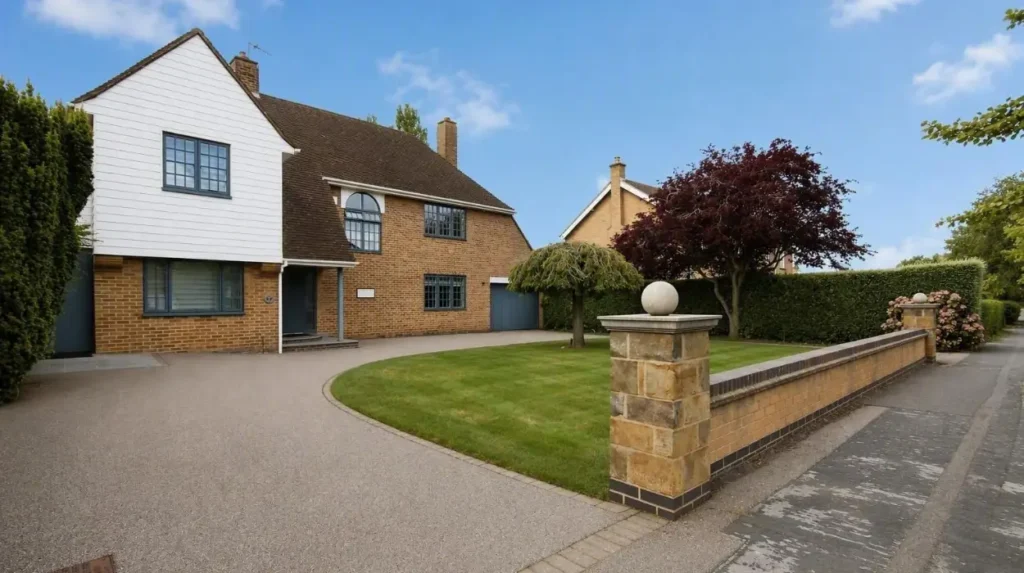
Lemington contains a mixture of terraced houses, semi-detached homes, flats, older worker cottages and newer residential properties, giving buyers and renters several housing formats across different streets and price ranges within the Newcastle housing market.
Terraced housing is particularly relevant to Lemington’s historical character. Many older terraces developed in connection with industrial employment and remain part of the area’s residential fabric.
Terraced homes generally provide an entry point into the local housing market because they contain compact layouts and smaller footprints than detached properties. Their suitability depends on individual condition, floor area, tenure and location.
Semi-detached housing forms another important part of the Newcastle market. These properties generally provide more internal space and private outdoor areas than smaller terraces.
Flats and maisonettes provide another option, particularly for households seeking lower purchase prices or smaller maintenance requirements. Newcastle’s wider housing data shows an average price of £128,000 for flats and maisonettes in July 2026.
Older homes require particular attention to building condition. Buyers should assess roof condition, windows, damp, insulation, heating systems, electrical installations and any structural alterations.
Newer developments provide different construction standards and layouts. Newcastle City Council’s housing land documents have identified development opportunities in the Lemington area, including the Newburn Riverside area. One earlier assessment identified a 0.39-hectare site at West Road Garage, Blucher, with an estimated capacity of 14 homes, although planning assessments and development positions change over time.
The important point for buyers is that Lemington does not have a single standard property type. Prices and housing quality vary considerably between individual streets and properties.
How affordable is property in Lemington compared with Newcastle?
Lemington sits within a Newcastle housing market where the July 2026 average property price was £208,000, with terraced homes averaging £208,000, semi-detached homes £238,000 and flats and maisonettes £128,000.
There is no current official monthly house-price series specifically for every Lemington street. The most reliable benchmark is therefore the Newcastle upon Tyne local authority housing data combined with individual property transaction records.
The Office for National Statistics reported an average Newcastle upon Tyne house price of £208,000 in July 2026. This represented a 4.1% annual increase from £199,000 in July 2025.
The same dataset shows significant differences by property type. Detached properties averaged £397,000, semi-detached properties £238,000, terraced properties £208,000 and flats or maisonettes £128,000 in July 2026.
These figures provide useful context for an affordable Lemington property search. A household comparing a smaller terrace or flat with a detached house elsewhere in Newcastle faces very different capital requirements.
First-time buyers paid an average of £182,000 in Newcastle upon Tyne in July 2026. Home movers paid an average of £252,000.
Rental costs have also increased. The average private rent in Newcastle reached £1,215 per month in August 2026, compared with £1,112 in August 2025. One-bedroom properties averaged £814, two-bedroom properties £1,007 and three-bedroom properties £1,194.
These are Newcastle-wide figures rather than Lemington-specific asking prices. Individual Lemington properties should therefore be assessed using recent completed sales, current comparable listings, property condition and exact location.
Why is Lemington attractive for riverside living?
Lemington offers riverside living through its position beside the River Tyne, nearby open spaces, historic waterfront landscape and connections toward Newburn and the wider Tyne corridor, while remaining within Newcastle’s urban area and its established residential infrastructure.
The River Tyne is one of the defining geographical features of Lemington.
Newcastle City Council’s character assessment identifies the River Tyne, Tyne Riverside Park, Lemington Gut, the glass cone, Hadrian’s Way and waterfront open spaces as important elements of the western riverside landscape.
Lemington Gut is a historic watercourse and former industrial waterfront feature. The Tyne and Wear Historic Environment Record also identifies historic quay walls and flood-defence structures around Lemington Gut.
Riverside living does not mean every Lemington property has direct river frontage. The relationship with the river varies by street. Some homes are close to the waterfront landscape, while others are further inland within the residential area.
This distinction is important during property searches. A listing description using terms such as “riverside” does not establish direct river views, river access or flood status.
The wider western Tyne corridor also provides walking and cycling opportunities. Newcastle City Council has invested in walking and cycling infrastructure across the city, including around 16 kilometres of new cycle routes through its Cycle Ambition City programme.
For residents, the riverside setting therefore represents both a landscape asset and a geographical factor that requires careful property due diligence.
What are the main transport options from Lemington?
Lemington is served by local bus connections and road links through West Road, Lemington Road and the wider A69 corridor, providing access to Newcastle city centre, neighbouring western communities, schools and employment areas.
Bus services form an important part of Lemington’s public transport network.
Current route information identifies services connecting Lemington with areas including West Road, Walbottle, Denton Burn, Walker and other Newcastle neighbourhoods. Go North East’s service 155, for example, operates between Walbottle Academy and West Road via Lemington Road Ends.
Other services listed around Lemington Road Ends connect the neighbourhood with West Road and wider Newcastle destinations. Exact routes and timetables change, so residents should check the operator’s current timetable before planning regular journeys.
West Road is a major transport corridor serving western Newcastle. It links Lemington and surrounding communities with the city and the A69 corridor.
Road accessibility is relevant to commuters because Newcastle’s western districts connect directly with employment locations beyond the immediate neighbourhood.
Cycling and walking also form part of Newcastle’s wider transport strategy. The council has invested in active travel infrastructure and developed plans for additional walking and cycling routes.
Transport convenience therefore depends on the exact property address. A home close to a frequent bus corridor has different practical accessibility from one located deeper within a residential street.
What schools serve families living in Lemington?
Lemington Riverside Primary School is the principal primary school within the neighbourhood, serving children from age 3 to 11 at Rokeby Street, while Newcastle’s wider education network provides additional schools across neighbouring western districts.
Lemington Riverside Primary School is located on Rokeby Street, Lemington, Newcastle upon Tyne, NE15 8RR. The Department for Education identifies it as a foundation school serving children aged 3 to 11.
The school describes itself as a one-form-entry primary school with a community hub and facilities including libraries, ICT facilities and outdoor spaces. Its location overlooks the River Tyne.
Newcastle City Council’s school directory also lists Lemington Riverside Primary School among schools serving the city’s primary-age population.
Families with older children generally consider schools beyond Lemington itself. The wider western Newcastle area includes secondary and specialist education facilities in neighbouring districts.
School admission is not determined simply by proximity. Parents need to check current admission policies, catchment arrangements, admission numbers and application procedures with Newcastle City Council and individual schools.
Property searches based on schools should therefore use the exact property address rather than relying on a general neighbourhood label.
What amenities and community facilities are available in Lemington?
Lemington has local community infrastructure including Lemington Centre, schools, residential services and nearby shops, while neighbouring West Road, Newburn and western Newcastle provide a wider range of retail, healthcare, leisure and everyday facilities.
The Lemington Centre is located at Tyneview, Newcastle upon Tyne, NE15 8DE. Newcastle City Council lists the facility among its community buildings.
Community facilities provide an important local function because they support activities, services and social infrastructure without requiring residents to travel into Newcastle city centre.
Local shopping is concentrated around established neighbourhood corridors, while West Road provides access to a broader commercial area.
Newburn and nearby western neighbourhoods also contribute to the area’s wider service network. Residents can access larger retail, leisure and employment destinations across western Newcastle.
Healthcare access is similarly distributed across the wider district rather than concentrated entirely within Lemington.
For property buyers, this creates a practical distinction between “living in Lemington” and having every service within walking distance. The neighbourhood provides essential community infrastructure, while larger services often require travel to nearby centres.
The area’s established residential character also supports a range of household types. Census 2021 data recorded 10,207 usual residents and 4,682 households in the Lemington electoral ward.
What historic landmarks define Lemington?
The Grade II listed Lemington Glass Cone is the area’s most prominent historic landmark, reflecting eighteenth-century glassmaking and Lemington’s wider industrial development alongside the River Tyne, coal transport routes and former ironworks.*
The Lemington Glass Cone dates from around 1787 and was associated with the Northumberland Glass Company. The surviving structure is a Grade II* listed building.
The cone is historically significant because it represents the scale and technology of eighteenth- and nineteenth-century glass production on Tyneside.
Newcastle’s Historic Environment Record states that the surviving cone is approximately 120 feet high and is one of only four surviving examples of its type in the country.
The site later became associated with other industrial uses. In 1906, GEC purchased the works and expanded the site for production involving light bulbs and tubes.
The Tyne Iron Works provides another layer of industrial history. Founded in 1797, it operated with blast furnaces and later developed into the Tyne Haematite Iron Company before closing in 1876.
These landmarks help explain why Lemington has a different architectural and environmental character from newer suburban developments elsewhere in Newcastle.
How important is flood risk when buying property near Lemington?
Flood risk is an essential property-checking issue in Lemington because the neighbourhood is beside the River Tyne and contains historic waterfront land, while official flood services distinguish between river, surface-water, groundwater and other sources of risk.
A riverside property search requires property-specific flood assessment.
The Environment Agency and government flood service provide long-term flood-risk information covering rivers, the sea, surface water, groundwater and reservoirs. The service also incorporates climate-change projections over longer periods.
Newcastle City Council is the Lead Local Flood Authority for the city. Its responsibilities include managing surface-water, groundwater and ordinary-watercourse flood risk, maintaining flood-risk information and investigating significant flooding events.
The Historic Environment Record identifies flood-defence structures around Lemington Gut, demonstrating that flood management has historical importance in the riverside landscape.
A buyer should therefore distinguish between a property’s proximity to the river and its actual flood designation. Two properties in the same neighbourhood can have different risk profiles because of elevation, drainage, ground conditions and local topography.
A conveyancing solicitor should review available flood searches before purchase. Buyers should also obtain appropriate buildings insurance quotations before committing to a property.
Flood risk is not a reason to exclude all riverside housing. It is a reason to assess each property using official postcode-level information and professional property searches.

What should buyers check before purchasing a Lemington property?
Buyers should assess the exact property’s sale history, structural condition, tenure, flood information, energy performance, planning history, local environment, transport access and insurance position before committing to a purchase in Lemington.
The first consideration is the property’s actual location. “Lemington” covers a varied residential area, so proximity to the River Tyne, West Road, schools and local facilities differs significantly between addresses.
The second consideration is property condition. Older terraces require checks for damp, roof defects, insulation, windows, electrical systems, plumbing and previous alterations.
The third consideration is tenure. Leasehold flats require examination of lease length, service charges, ground rent and management arrangements. Freehold houses require different ownership checks.
The fourth consideration is planning history. Extensions, loft conversions, replacement windows, boundary changes and structural alterations should have appropriate permissions or certificates where required.
The fifth consideration is flood information. Government flood mapping and professional searches should be reviewed for every property close to riverside areas.
The sixth consideration is transport. Buyers commuting to Newcastle city centre or other employment areas should test actual journey times during normal travel periods rather than relying only on distance measurements.
The seventh consideration is energy efficiency. The property’s Energy Performance Certificate provides information about energy performance and potential improvements.
Finally, buyers should compare recent sold prices for similar properties rather than using only asking prices. The ONS housing series is useful for Newcastle-wide market context, while individual transaction records provide better evidence for a particular street or property type.
How could Lemington’s future development affect property?
Lemington’s future housing environment will be shaped by planning decisions, riverside regeneration, transport investment, heritage protection and demand for homes within Newcastle, with individual development proposals requiring assessment through the planning system.
Newcastle’s planning framework identifies development opportunities across the western part of the city, including land within the Lemington area and the wider Newburn Riverside corridor.
The council’s character assessment identifies the River Tyne and waterfront, Tyne Riverside Park, Hadrian’s Way, Lemington Gut and former industrial areas as important landscape and heritage assets. It also identifies opportunities for improving riverside connections and public spaces.
Development can affect property markets through additional housing supply, improved public infrastructure, changes to traffic patterns and changes in the quality of surrounding public spaces.
Planning proposals can also affect individual properties directly. Buyers should therefore check Newcastle City Council’s planning records for the property and surrounding streets before purchasing.
The long-term relevance of Lemington’s riverside position remains strong because the River Tyne continues to influence the area’s landscape, recreation, heritage and development framework.
New housing demand also sits within a wider Newcastle market that recorded a 4.1% annual increase in average house prices between July 2025 and July 2026.
Future values cannot be guaranteed from this data. Property performance depends on individual location, property condition, market conditions, infrastructure and local planning decisions.
Is Lemington a suitable area for affordable riverside living in Newcastle?
Lemington provides a distinctive combination of established housing, River Tyne proximity, industrial heritage, local schools, community infrastructure and access to western Newcastle, making it a relevant location for households comparing affordability and riverside living.
The strongest feature of Lemington is the combination of geography and housing history. The neighbourhood sits within Newcastle while retaining a clear riverside identity.
Its historic terraces and other established homes create housing choices across different price points. Newcastle-wide data shows that terraced properties and flats remain substantially below the city’s average detached-home price, although individual Lemington prices vary by property and street.
The area’s riverside character adds environmental and recreational value but also increases the importance of flood-risk assessment.
Transport connections through West Road and local bus services support access to Newcastle and surrounding communities. Local education provision includes Lemington Riverside Primary School, while the Lemington Centre provides community infrastructure.
Lemington’s industrial heritage also gives the area a distinct identity. The Grade II* listed Glass Cone, former industrial sites and historic riverside landscape connect today’s residential neighbourhood with the development of Tyneside’s industrial economy.
For buyers, affordability should be assessed through exact property evidence rather than a single neighbourhood average. The most reliable process combines recent comparable sales, property surveys, flood searches, planning checks, transport assessment and insurance costs.
For renters, the same approach applies. Monthly rent should be compared with the property’s size, condition, location and access to transport and services.
Lemington therefore occupies a specific position within Newcastle’s housing landscape: an established western residential area with direct historical and geographical connections to the River Tyne, relatively accessible housing options within the city and a planning environment shaped by riverside heritage and future development.